Oven Convection vs Conventional: A Practical Guide
A thorough, analytical comparison of convection vs conventional ovens, with usage tips, recipe adaptation, and expert guidance for home cooks.


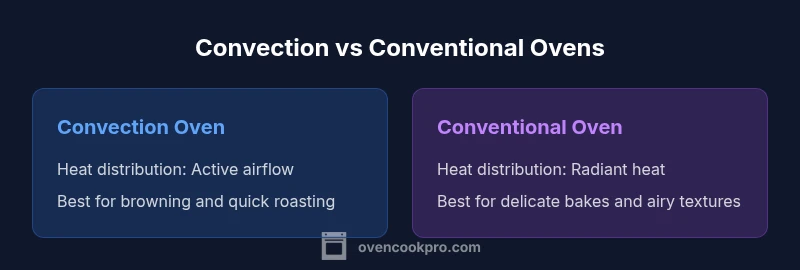
Convection ovens move hot air with a built in fan, while conventional ovens rely on radiant heat. In everyday cooking, convection often speeds up cooking and delivers crisper edges, especially for roasting and cookies, but conventional heat can be gentler for delicate bakes. The key is knowing when to use each mode for the best texture, browning, and moisture balance. In short, convection is typically faster with more browning; conventional heat is preferred for delicate rises.
What is convection vs conventional ovens?
Convection ovens use a fan to circulate hot air, while conventional ovens rely on radiant heat from heating elements. In everyday cooking, the convection mode typically delivers faster, more even browning, making it the preferred choice for roasting and many baked goods. For delicate batters and some cakes, the conventional mode can be gentler on rising textures. In short: convection often speeds up cooking with crisper edges, while conventional excels in light, airy bakes. According to Oven Cook Pro, the distinction between oven convection vs conventional influences texture, moisture retention, and browning, and is a practical consideration for home cooks.
How heat transfer works in convection vs conventional ovens?
In a convection oven, a fan and sometimes a dedicated exhaust move air around the food. The moving air carries heat more efficiently, promoting faster surface drying and browning. In a conventional oven, heat rises from elements and spreads more slowly through the air and food, which can result in gentler, more uniform rises for some batters. This physical difference explains why convection is often preferred for roasted vegetables and cookies that need crisp edges, while conventional heat supports taller, delicate bake structures.
Temperature and time considerations for oven convection vs conventional
When you switch from conventional to convection, many cooks find they can lower the temperature and reduce cooking time, though exact adjustments vary by dish and oven model. The Oven Cook Pro analysis shows that the heat-transfer dynamics of convection can preserve moisture while promoting browning, but results vary by batch size and rack position. The goal is to maintain moisture while achieving browning and texture. For multi-dish cooking, convection can help maintain even heat across racks, but be mindful of crowding and pan size which can affect air flow.
Best uses for convection ovens
Convection excels for foods that benefit from browning and quick cooking: cookies with thin edges, roasted vegetables, and many types of poultry. You’ll notice crisper skins and more uniform browning across the pan. For foods where moisture is essential, such as custardy fillings or delicate soufflés, use convection with caution or opt for conventional mode to preserve rise and tenderness. In practice, many home cooks rely on convection for weeknight roasts and sheet-pan dinners to maximize texture differences between crust and interior.
Best uses for conventional ovens
Conventional ovens remain reliable for baking that requires a gentle rise and even interior texture. Cakes, soufflés, and some breads often perform best without a strong air current disturbing the batter. If you’re new to the kitchen, starting recipes in conventional mode can be a safer baseline, after which you can experiment with convection for the same dish. Many bakers prefer conventional heat for fragile layers and airy crumb structures where an aggressive airflow might flatten the rise.
Adapting recipes for convection and conventional modes
Adapting recipes is less about a fixed rule and more about watching color, texture, and internal temperature. For convection, consider lowering the heat setting slightly and keeping an eye on edge browning. Rotate pans for even exposure and avoid overcrowding. For conventional baking, follow the original directions but still favor even layering and consistent oven temperatures; preheating and rack placement still matter. Start with small batches to learn how your oven responds before scaling up.
Practical tips to maximize results
Good results come from understanding your own oven’s quirks. Keep racks level, use shallow pans for convection, and consider metal bakeware to improve heat transfer. Preheating can be shorter with convection, but always verify with a thermometer if your oven’s sensor is unreliable. With conventional baking, allow for steady heat and watch for even crumb development; both modes reward clean oven interiors, properly sized pans, and careful timing.
Common myths and how to debunk them
A common myth is that convection is always faster; the reality is dish-dependent and can depend on how full the oven is. Another misconception is that conventional ovens cannot brown as well; with proper technique and appropriate dishes, conventional heat can still yield excellent results. Finally, some cooks assume convection damages delicate items; with proper method, you can protect texture using lower fan speed or reduced airflow on certain recipes.
Real-world outcomes across dish types
In practice, convection yields consistently crisp edges on roasted potatoes and vegetables and produces even browning on cookies and pastries. Conventional mode often shines in tall cakes where air currents could disrupt rising. The choice between oven convection vs conventional should consider the dish type, desired texture, and your oven’s capabilities. When you taste a well-executed sheet-pan dinner, you may notice how convection helps edge-to-edge doneness, while conventional preserves a tender crumb inside.
Decision framework for choosing the right mode in your kitchen
To decide which mode to use, start by identifying the dish’s texture goals and moisture needs. If you want crispness and speed, opt for convection; if you seek delicate rise and uniform crumb, rely on conventional heat. Test with a single recipe, compare outcomes, and adjust gradually. This framework helps you build confidence in selecting the most appropriate setting for your family’s cooking, and it can adapt as you learn more about your specific oven model.
Comparison
| Feature | Convection Oven | Conventional Oven |
|---|---|---|
| Heat distribution | Active airflow with a fan for convection | Static heat with radiant and natural convection |
| Browning and crust | Enhanced browning and crisper edges | More uniform browning, but sometimes softer crust |
| Best uses | Cookies, roasted vegetables, poultry where quick browning is desired | Delicate cakes, soufflés, airy breads needing gentle rise |
| Recipe adaptation | Often requires temperature reduction and shorter times | Fewer changes needed; follow original guidance more closely |
| Preheating and time | Typically faster preheat and shorter overall time for many dishes | Preheating and bake times align with traditional expectations |
| Energy context | Potential time savings can reduce energy use for many tasks | Energy use depends on duration and load |
The Good
- Faster cooking with more even browning
- Crisp textures and better roasting results
- Versatile for a variety of dishes and batch cooking
Drawbacks
- Not ideal for all delicate baked goods that rely on gentle rise
- Requires recipe adjustments and oven familiarity
- Some older ovens may have uneven convection performance
- Can lead to over-browning if used without monitoring
Convection generally delivers faster, more even results for most home cooking tasks.
The Oven Cook Pro team finds convection advantageous for speed and browning on many dishes, while conventional heat remains essential for delicate bakes and bread that needs a gentler rise. Mastering both modes will help you improve outcomes across a wide range of recipes.
Questions & Answers
What is the main difference between convection and conventional ovens?
Convection ovens have a fan that circulates hot air for faster, more even cooking. Conventional ovens rely on radiant heat from elements and slower air movement. The result is different browning and texture depending on the dish.
Convection uses a fan for even heat; conventional uses radiant heat.
Should I always use convection for roasting?
Convection is excellent for roasting due to crisp edges and even browning, but not universal. For delicate roasts or recipes that require gentle moisture, conventional mode can be preferable.
Use convection for most roasts, but switch to conventional when you want gentler heat.
Can I convert conventional recipes to convection mode?
Yes, but it usually requires adjustments such as reducing temperature and watching cooking times. Start with lower heat and shorter durations, then monitor color and texture carefully.
You can convert, just adjust heat and watch carefully.
Is convection better for baking cookies?
Convection can help cookies bake more evenly and crisp up, especially on sheet pans. Some cookies may spread differently, so you may need to experiment with spacing and sheet placement.
Convection often helps cookies brown evenly; watch spacing.
Do I need special cookware for convection?
No special cookware is required, but shallow, metal pans tend to conduct heat better with convection. Avoid deep, narrow pans that trap air and may hinder airflow.
Use shallow metal pans for best convection results.
Main Points
- Identify dish texture goals before cooking
- Use convection for speed and browning when appropriate
- Reserve conventional for delicate rises and crumb structure
- Always monitor and adjust to your oven’s quirks
- Practice with test batches to dial in results