What is Convection Oven vs Bake? A Practical Guide
Explore the differences between convection oven mode and traditional bake, how heat circulation changes results, when to use each, and practical tips for reliable outcomes in everyday cooking.


Convection oven mode and traditional bake are two distinct heat-application methods. Convection uses a fan and exhaust to circulate hot air around food, while bake relies on radiant heat from elements. For many weeknight dishes, convection can shorten time and improve crusts; bake remains ideal for delicate interiors. This guide explains when to use each.
What is Convection Oven vs Bake? A Practical Introduction
According to Oven Cook Pro, understanding what is convection oven vs bake helps home cooks decide which setting to trust for different recipes. Convection ovens introduce a fan and exhaust system to move hot air around food, while traditional bake relies on radiant heat from stationary elements. This distinction matters for crusts, moisture retention, and cooking speed. In this section, we’ll establish the definitions, clarify the underlying physics, and set the stage for practical comparisons. By the end, you’ll know which method to reach for when a recipe calls for precision, flavor, and texture. The role of oven design, door seals, and rack positioning all influence results, so your understanding should extend beyond a single setting.
How Convection Works
Convection relies on an integrated heating element and a fan that pushes hot air around the food. The moving air removes surface moisture more quickly and delivers heat to the product evenly from all directions. Modern ovens use varying fan speeds and dampers to control airflow. Real-world practice shows that convection can reduce hotspots and generate uniform browning on cookies, sheet-pan meals, and roasted vegetables. However, misusing the setting can dry out lean proteins or create overly rapid crusts if you overcook. To maximize results, remember that airflow patterns change with rack height and pan size, so position matters.
Bake Mode: Traditional Heating
Traditional bake uses radiant heat from the top and bottom elements with limited air movement. This mode excels when you want steady, gentle heat that slowly penetrates the food, which is particularly useful for delicate pastries, custards, and cakes where you want a uniform rise and soft crumb. Bake tends to be more forgiving for items that require even interior texture without aggressive crust formation. It also avoids blowing moisture away from foods that need to stay moist inside. Understanding bake’s limitations helps you decide when to reserve this setting for outcome-sensitive recipes.
Key Differences in Cooking Results
The most noticeable differences between convection and bake are speed, browning, and texture. Convection accelerates surface browning and can shorten overall cooking time for many tray-based dishes. It promotes crispier exteriors on vegetables and cookies, while often delivering a drier finish if not monitored. Bake produces a more gentle rise and even interior texture, which is ideal for airy cakes and delicate pastries. The choice often depends on the desired crust, moisture level, and whether you want to minimize cooking time without sacrificing tenderness. In practice, you’ll notice smoother, more uniform browning with convection and a softer grain with traditional bake.
Temperature and Time Adjustments
When you switch from bake to convection, you should anticipate changes in heat delivery, while keeping overall cooking goals in mind. Rather than relying on fixed numbers, use visual cues and recipe timing as your guide. In convection mode, monitor the crust formation sooner and consider lowering the energy input slightly and checking earlier than ongoing bake times would suggest. Conversely, some delicate items benefit from baking with convection on a lower rack or by partially blocking airflow to regulate heat. The key is to start with the recipe’s guidance, observe, and adjust next time based on the results you observe.
Best Uses for Convection
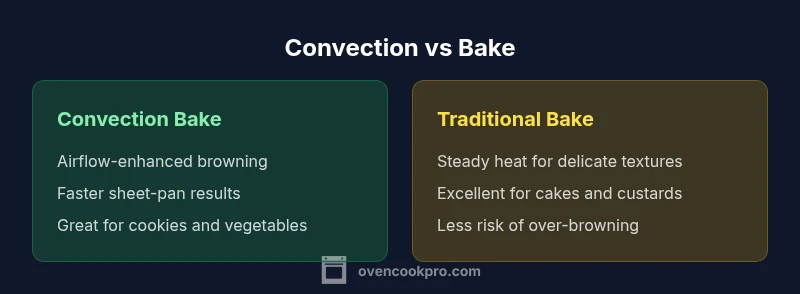
Convection shines for sheet-pan meals, roasted vegetables, and foods with edges that benefit from rapid moisture loss and browning. It’s excellent for cookies, pastries with a crust, and protein roasts where even surface texture and golden edges enhance the dish. When you’re aiming for a crisp exterior without sacrificing interior juiciness, convection is often the preferred choice. If you’re cooking multiple trays at once, convection helps maintain consistent results across the stack because heat is circulated more evenly.
Best Uses for Traditional Bake
Traditional bake excels for cakes, custards, soufflés, and other baked goods that demand a gentle, stable heat. The lack of aggressive airflow reduces the risk of uneven domes or cracked tops in delicate batter. This mode is also favorable for casseroles and slow-baking dishes where moisture retention and a consistent interior texture are priorities. When flavor and tenderness take precedence over crust or browning, traditional bake is usually the better option. Bake remains a staple for recipes that rely on a steady thermal environment rather than rapid surface reactions.
Energy Efficiency and Practical Considerations
From an energy perspective, convection can save time and potentially reduce energy use, but only if you polarize cooking habits toward shorter runs and higher turnover. In practice, the energy impact depends on how you use the oven, what you cook, and how many layers you’re baking at once. Practical considerations also include oven design, shelf placement, and cookware choice. Aluminum pans and dark-coated bakeware can heat more quickly in convection, while lighter pans may heat more slowly in bake mode. Understanding these interactions helps you optimize energy use without compromising results.
Practical Tips for Home Cooks
To get the most from both modes, start with the recipe’s base guidance and then tailor the approach to your oven’s behavior. For convection, lower the rack height to maximize airflow around foods, use shallow pans to promote even heat exchange, and rotate trays halfway through cooking. For bake, center the rack for balanced heat, preheat fully, and avoid crowding the oven so air can circulate where needed. A simple practice is to bake two close-in items that tolerate similar temperatures together on convection to observe how airflow affects each item.
Common Pitfalls and Troubleshooting
Common errors include assuming convection is always faster, over-sharpening browning, and crowding pans that block airflow. Another pitfall is failing to adjust for pan size or material, which can dramatically alter heat absorption. If you notice uneven browning, recalibrate rack height and consider rotating trays. If moisture feels excessive inside baked goods, reassess sugar content and moisture balance. Poor results are often tied to airflow restrictions, inaccurate preheating, or inconsistent rack placement. Treat these issues as opportunities to refine your process.
Maintenance and Cleaning for Convection Ovens
Convection ovens require regular cleaning of fans, vents, and seals to sustain consistent airflow. Wipe down surfaces after cooking to prevent residue buildup that can hinder airflow. Check the door gasket for leaks, and run a light cleaning cycle as recommended by your appliance manufacturer. Replacing worn seals and keeping vents clear ensures efficient airflow and consistent results. A clean oven not only improves performance but also reduces the risk of smoke or burnt flavors lingering in subsequent dishes.
Quick-Start Weeknight Guide
When time is tight, use convection for sheet-pan dinners and roasted vegetables to save minutes without sacrificing texture. For cakes or custards that require tenderness, choose bake and monitor outcomes closely. If you’re unsure, start with bake, then switch to convection for a finishing broil or crust formation in the last few minutes. Keep a small log of what works for your specific oven—your future self will thank you for the data.
Case Studies: Foods That Show Convection Advantage
Roasted potatoes often develop crisp, even edges when cooked in convection due to improved air circulation. Bake-friendly cookies can achieve uniform browning and a flatter surface when convection airflows are well managed. Conversely, delicate sponge cakes benefit from traditional bake to avoid over-aeration and dense crumb. These practical examples illustrate how the same oven can produce different outcomes depending on the mode and dish, reinforcing the idea that mode choice should be recipe-driven and oven-aware.
Decision Framework: When to Pick Which Setting
A practical rule of thumb is to reserve convection for items that benefit from browning and speed: vegetables, crispy coatings, and cookies. Use bake for delicate breads, airy cakes, custards, and moisture-rich dishes where gentle heat preserves tenderness. If you cook multiple trays, convection helps with even heat distribution, while bake may be preferred for a central, uniform rise. With practice, you’ll develop a mental map of which setting aligns with your favorite recipes.
Comparison
| Feature | Convection Bake | Traditional Bake |
|---|---|---|
| Heat distribution | Airflow-circulated heat | Radiant heat with limited airflow |
| Cooking speed | Usually faster for many dishes | Typically slower, steady pace |
| Browning and crust | Enhanced browning and crisp edges | More uniform interior texture, softer crusts |
| Moisture retention | Can dry surfaces if overused | Better moisture retention in some pastries |
| Best for | Sheet-pan meals, cookies, vegetables | Delicate cakes, custards, casseroles |
| Temperature adjustments | Often lower temperature or shorter time | Follow traditional bake guidelines |
| Energy use | Potential time savings; depends on dish | May use similar energy for longer processes |
| Pan and rack setup | Shallow pans; avoid overcrowding | Center rack; avoid blocking heat |
The Good
- Faster and more even browning for many dishes
- Better heat transfer across multiple pans
- Potential time savings with careful monitoring
Drawbacks
- Not ideal for fragile baked goods that need gentle heat
- Requires recipe adjustments and careful airflow management
- Can dry out lean proteins if misused
Convection generally wins for speed and browning; bake remains best for delicate, moist interiors
Choose convection for roasted, crispy results and quicker cook times. Choose traditional bake for tender cakes and custards where gentle, even heat is key. The best approach is to understand your oven’s quirks and adjust accordingly.
Questions & Answers
Can I use convection mode for all recipes?
Not every recipe benefits from convection. Delicate pastries, custards, and some casseroles may suffer from excessive browning or uneven rise. Start with bake for those, and reserve convection for sheet-pan meals, cookies, and dishes that benefit from crisp edges.
Convection isn’t ideal for every recipe. Use bake for delicate items and convection for crispy, quick results, especially with sheet-pan meals.
Should I lower the temperature when using convection?
In many cases, yes. You’ll often want to monitor and adjust based on how your oven behaves. Start with the recipe guidance and watch the first batch closely to learn how your oven responds to convection.
Yes, convection often needs a temperature adjustment. Watch the first batch carefully to learn your oven’s behavior.
What foods benefit most from convection browning?
Foods with outer layers that you want crisp and browned—cookies, roasted vegetables, potatoes, and fish or poultry with a crust—tend to perform very well with convection.
Convection excels with crispy edges on cookies, veggies, and roasted proteins.
Can convection cause dryness in baked goods?
If used aggressively, convection can dry surfaces or interiors. Use shorter times, watch closely, and consider covering delicate items or using a lower rack to moderate airflow when needed.
Yes, if overused, convection can dry out baked goods. Monitor and adjust as needed.
When is bake mode the better choice?
Bake is preferable for delicate cakes, custards, and loaves where a steady, less intrusive heat helps achieve a smooth crumb and even rise.
Choose bake for delicate cakes and custards when you want steady heat.
How can I tell which setting to use for a recipe?
Check the recipe's written guidance first. If it doesn’t specify, consider the texture you want: crisp and fast baked goods suggest convection; tender interiors suggest bake.
If unsure, start with bake for tenderness and switch to convection for browning if needed.
Main Points
- Start with recipe guidance, then tailor to your oven's behavior
- Use convection for crispy textures and faster results
- Reserve bake for delicate pastries and moist interiors
- Monitor closely and rotate trays for even results
- Keep your oven clean to maintain airflow efficiency