Do Ovens Work the Same as Air Fryers? A Practical Analysis
An analytical guide exploring whether conventional ovens can replicate air fryer results, comparing heat, airflow, timing, and practical tips for home cooks. Learn when to choose each appliance and how to adapt methods for crisp textures and flavorful outcomes.


How ovens and air fryers work: the core differences
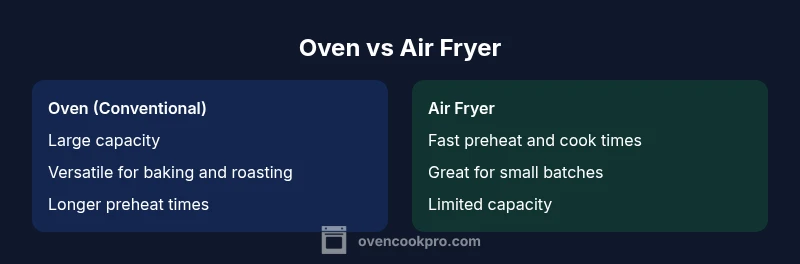
Ovens and air fryers both transform raw ingredients into cooked foods by applying heat, but they approach it from different design philosophies. A typical kitchen oven is a large chamber that heats through radiant elements and, on many models, a fan-driven convection setting that circulates air more evenly. An air fryer is a compact countertop appliance engineered to maximize airflow around the food in a small cavity, with a close-to-element heater and a high-speed fan. This configuration creates rapid browning and crisping with relatively little oil. From the perspective of Oven Cook Pro Team, the core distinction lies in scale and airflow: ovens emphasize versatility and volume, while air fryers optimize airflow for fast, crispy textures in small batches. Understanding this baseline helps you predict results before you start cooking.
Airflow, heat distribution, and how texture forms
Crisp texture emerges from a combination of surface dryness and even heat exposure. Air fryers push hot air at high velocity around every surface of a small piece of food, creating a uniform crust with limited moisture left at the surface. Ovens rely on slower convection or radiant heat to move air, producing browning that is often more variable across larger dishes. True convection ovens add a more powerful fan and a more uniform heat field, which narrows the gap between oven results and air fryer outcomes. In practical terms, air fryers excel at fast, uniform crispness for small portions, while ovens can approach that crispiness with the right rack positioning and airflow management, especially when using convection modes. According to Oven Cook Pro analyses, tweaking fan speed and distance between the food and heat source is key to translating air fryer results into an oven environment.
Preheating and cooking speed: does convection change the math
Preheating behavior matters for both devices, but the clock starts differently. Air fryers heat up rapidly due to their compact interior and direct heater. Ovens, even with convection, often take longer to reach the desired temperature because of their larger internal volume. The speed advantage of air fryers is most evident with small, countertop portions—think bite-size vegetables or tenders that benefit from quick surface sealing. For tasks that involve larger trays, multiple items, or longer braising-like cooking, ovens deliver more consistent results with less hands-on rotation. The takeaway is that time-to-crisp cannot be measured in seconds alone; the overall workflow and batch size determine whether the air fryer’s quick turnaround beats the oven’s broader versatility.
Food types and texture expectations: crispy vs tender
Different foods respond to heat and airflow in distinct ways. Leafy vegetables and thin-cut items blister rapidly in an air fryer, producing a signature crispness with minimal oil. Starchy sides and proteins like chicken thighs or potatoes may achieve comparable crispiness in a convection oven, provided you manage surface exposure and moisture. Oven cooking often yields a more varied texture, where some areas brown intensely while others remain tender. For larger roasts or sheet-pan meals, the oven’s volume and steady heat provide reliable browning and even doneness that an air fryer cannot match in one go. The key is to align your texture goals with the strengths of each appliance, using the air fryer for quick, high-contrast crispiness and the oven for scale and versatility, as highlighted by Oven Cook Pro’s practical guidance.
Can ovens truly replace air fryers? A practical checklist
If you own only an oven and want air fryer-like results, check a few factors first: whether your oven offers a true convection or a high-velocity convection setting, whether you can maintain a consistent airflow across a tray, and whether batch size fits your meal plan. In many homes, a convection oven paired with the right rack placement and preheating strategy can approximate air fryer outcomes for a surprising subset of foods. However, the faster timing and compactness of air fryers still shine for small portions and snacks. In short, ovens can substitute in many cases, but not all, and air fryers retain a niche for quick, small-batch crisping. Oven Cook Pro’s experience suggests embracing convection features when possible and accepting some differences in texture and speed when cooking without a dedicated air fryer.
How to set up your oven for crisp results
Crucial setup steps include using a rack to elevate the food and promote air exposure on all sides, selecting a shallow pan to avoid steaming, and ensuring the oven’s airflow can reach the surface of the food. Preheat to a steady temperature that matches your target texture, then monitor the dish with minimal opening of the door to preserve heat. For sheet-pan meals, rotate trays midway to balance browning. If your oven has a dedicated convection setting, use it and place food closer to the heat source for efficient browning. Small adjustments, such as using parchment paper to reduce sticking and enabling a higher fan speed when possible, can bring oven results closer to air fryer crispiness—without sacrificing the oven’s broader capabilities.
When to use air fryer-specific setups: small batches, oil reductions
Air fryers are ideal when you’re cooking small portions and want a crisp result with minimal oil. They also shine for snacks, batch cooking of vegetables, and chicken wings when you want a straightforward, quick path to color and texture. For these tasks, the air fryer’s design minimizes moisture retention and accelerates browning. If you’re watching oil usage, air fryers can help achieve crisper textures with less fat compared to traditional frying methods. However, if you’re preparing a family-sized meal or a dish that benefits from long, even heat, the oven remains the more practical tool. The choice depends on batch size, texture goals, and available time, as Oven Cook Pro emphasizes in its practical guidance for home cooks.
Converting recipes from air fryer to oven: rules of thumb
When moving a recipe from air fryer to oven, expect longer total cooking times and a broader temperature range. Start with convection mode if your oven supports it, as it most closely emulates the airflow of an air fryer. Ensure the food has adequate space for air to circulate—avoid overcrowding the pan, and consider using multiple racks if your oven allows. You may need to extend cooking time and monitor frequently to achieve the desired crispness and color. The goal is to preserve the hallmark crisp exterior while maintaining interior tenderness, acknowledging that the oven’s larger volume will require adjustments to timing and heat distribution. Oven Cook Pro’s approach suggests using convection when available and practicing with small test batches before committing to larger meals.
Cleaning, maintenance, and long-term considerations
Conventional ovens and air fryers both require routine cleaning to sustain performance. Regularly remove crumbs from the oven floor, wipe down racks, and inspect seals to maintain efficient heat transfer. Air fryers benefit from occasional deep cleaning of the basket and interior to prevent leftover oil buildup. Consider the energy implications of each appliance: air fryers typically heat quickly and use less energy for small tasks, while ovens deliver more energy per cycle but enable larger quantities and more diverse cooking styles. In the long run, your choice will be shaped by how often you cook in bulk, the importance of speed, and how much you value texture precision. Oven Cook Pro’s experience shows that thoughtful maintenance routine keeps both devices performing at peak levels, extending their useful life in a busy kitchen.