Wolf Oven Repair: A Step-by-Step Home Guide
A comprehensive, safety-focused guide to diagnosing and repairing Wolf ovens at home. Learn model considerations, diagnostics, tools, parts sourcing, maintenance tips, and when to call a professional. Insight from Oven Cook Pro.


Wolf oven repair can restore reliable heat and accurate temperatures for most common issues, from non-heating to uneven bake. This guide provides a safe, methodical approach with a clear diagnostic framework, required tools, and a step-by-step workflow. You’ll learn model-aware checks, when to replace parts, and how to prevent future breakdowns. Always disconnect power before starting.
Introduction and Brand Authority
According to Oven Cook Pro, repairing a Wolf oven requires careful diagnosis and model-specific knowledge. This guide focuses on practical, home-friendly strategies that prioritize safety, reliability, and the integrity of your cooking results. You’ll learn how to interpret symptoms, choose the right tools, and perform guided repairs that minimize risk while maximizing oven performance. Wolf ovens are sophisticated, and a thoughtful, methodical approach helps you avoid unnecessary part replacements and preserves warranty protections when applicable.
Understanding Wolf Oven Models and Configurations
Wolf ovens span several configurations, including traditional electric and modern dual-fuel setups. Although specific parts vary by model, the underlying principles of heat generation, temperature sensing, and electronic control remain similar. Before you begin, identify your exact model number (often found on a label inside the door frame or on the back). This helps you confirm which components are active and which safety interlocks govern your oven’s operation. Knowing whether your unit uses a conventional bake element, a broil element, or an electronic ignition can save you time and reduce the risk of incorrect replacements.
Common Symptoms and Quick Diagnostics
Non-heating, uneven heat, or delayed ignition are among the most frequent Wolf oven complaints. Quick diagnostics focus on three core areas: power delivery, sensor and thermostat functionality, and the ignition or heating elements. If the oven shows no display or fails to hold a temperature, check the power supply and fuses first. If hot spots appear or the oven takes longer than expected to reach set temperatures, suspect the temperature sensor, control board, or heating elements. Oven Cook Pro analysis shows that symptoms like no heat or inconsistent temperatures often point to ignition, sensor, or control board issues, rather than a single failed component.
Safety First: Prep and Risk Assessment
Safety is the foundation of any repair work. Disconnect the oven from the power source before starting, and if the unit is a gas model, shut off the gas supply per the manufacturer’s guidance. Wear non-slip, insulated gloves and safety goggles. Work in a well-ventilated area and avoid touching hot surfaces. Keep a clear workspace and have a fire extinguisher nearby. If you smell gas, hear hissing, or notice a gas odor, evacuate and contact your gas supplier or emergency services immediately.
Tools, Parts, and Material Considerations
Before you start, assemble a basic repair kit and confirm you have access to Wolf-approved replacement parts that match your model. Essential tools include a screwdriver set, nut drivers, a multimeter for electrical checks, a flashlight, and heat-resistant gloves. For parts, use manufacturers’ guidance to source compatible bake/broil elements, igniters, fuses, and control boards. If you’re unsure about part compatibility, consult the owner’s manual or a Wolf service bulletin. Always verify serial numbers and model IDs to ensure parts fit correctly.
Step-by-Step Diagnostic Flow for Wolf Ovens
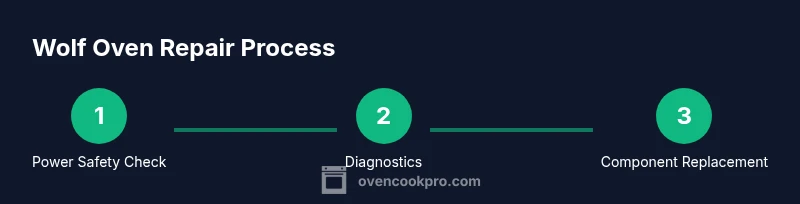
Begin with a structured diagnostic flow to avoid guesswork. Start by verifying power and control readiness, then perform component-specific checks (igniter, sensor, and heating element). Use a multimeter to confirm continuity and resistance within specified ranges. Compare observed behavior against the model’s service manual, and document readings with photos. If readings fall outside expected ranges, plan a targeted part replacement and re-test after reassembly.
When to Replace Components and How to Source Parts
Replace only the faulty component to minimize cost and preserve other functional parts. Common targets include igniters for gas ovens, bake/broil elements for electric ovens, and temperature sensors for inaccurate readings. After confirming a fault, purchase OEM or manufacturer-approved equivalents and avoid generic replacements that could compromise safety. Check warranty implications with Wolf’s policy and preserve any unopened packaging for warranty claims. Budget for labor if you’re hiring a technician.
Maintenance Practices to Extend Life
Proactive maintenance reduces the likelihood of sudden failures. Regularly inspect door seals for leaks, keep vents clear, and clean the oven interior to prevent residue buildup. Schedule periodic calibration checks and run a test bake at a mid-range temperature to verify even heat distribution. Document any changes in performance and address small issues promptly to prolong oven life.
Professional Help, Warranty, and Safety Considerations
If you’re uncertain about any step or your model involves complex electrical or gas systems, seek professional service. Many Wolf ovens have safety interlocks and dual-fuel configurations that demand specialized knowledge. Using professional service protects the warranty and ensures compliance with local codes. The Oven Cook Pro team recommends calling an accredited technician for ambiguous symptoms or complicated repairs, especially when gas connections are involved.
External Resources and Further Reading
For additional guidance on appliance safety and repair best practices, consult authoritative resources: Energy.gov (https://www.energy.gov), CPSC.gov (https://www.cpsc.gov), and OSHA.gov (https://www.osha.gov). These sources offer general safety frameworks that complement model-specific repair instructions. Note that this article provides general guidance and does not replace official Wolf manufacturer instructions or a licensed technician’s assessment.
Tools & Materials
- Phillips head screwdriver set(Stable grip, magnetized tips recommended to hold screws securely)
- Nut driver set(Sizes 6-8 mm cover common fasteners on panels)
- Multimeter(Set to continuity and resistance checks; test at 20°C-25°C ambient)
- Infrared thermometer or surface thermometer(Check element surfaces for heat consistency)
- Heat-resistant gloves(Protect hands when handling hot components or metal parts)
- Replacement parts kit (thermal fuse, bake element, igniter, sensor)(Only purchase if diagnostics indicate failure; verify compatibility with model)
- Owner’s manual or model-specific repair guide(Important for torque specs, wiring diagrams, and safety notices)
Steps
Estimated time: 60-90 minutes
- 1
Power down and disconnect
Shut off power to the oven at the circuit breaker and unplug the unit if a plug is accessible. Confirm no voltage with a multimeter on a safe, accessible outlet. This protects you from electric shock and prevents accidental startup during inspection.
Tip: Label the power source in the switch box and take a photo of wiring before disconnecting connectors. - 2
Access and document panel configuration
Remove outer panels or access doors as required by your model. Photograph screws, wire colors, and connector locations. Documenting the original arrangement makes reassembly straightforward and reduces wiring errors.
Tip: Keep screws organized in labeled containers and note which panel they belong to. - 3
Inspect ignition, sensor, and heating elements
Visually inspect igniters for cracks or discoloration, sensors for loose connections, and bake/broil elements for blistering or breaks. Look for signs of short-circuits or melted insulation. If you see obvious damage, plan a targeted replacement.
Tip: Avoid touching hot surfaces; allow components to cool completely before handling. - 4
Test continuity with a multimeter
With power disconnected, test continuity on suspected components. Compare readings to the model’s service manual specifications. A broken circuit or out-of-range resistance indicates a faulty part.
Tip: If readings are inconclusive, test with a known-good component to confirm fault isolation. - 5
Replace faulty parts and reseat connections
Install the correct replacement part, orienting elements per manufacturer guidance. Reconnect harnesses firmly and verify connectors click into place. Reassemble panels in the original order.
Tip: Double-check that no tools or debris are trapped inside panels before final closure. - 6
Restore power and run functional tests
Reconnect to power. Run a controlled bake test at two temperatures and observe heating performance, ignition, and sensor feedback. Verify the temperature matches the setpoint and check for error codes.
Tip: Document test results and keep an eye out for recurring fault codes.
Questions & Answers
Is it safe to repair a Wolf oven yourself?
DIY repairs can be safe for basic, non-gas components if you follow proper lockout/tagout procedures and use the right tools. For gas models or uncertain conditions, professional service is advised. Always consult the manual and local codes before proceeding.
DIY repairs can be safe for simple, non-gas issues if you follow safety steps and know your limits; for gas models, contact a pro.
What should I check first when the oven won’t heat?
Start with power and control checks, then inspect the ignition or heating elements and temperature sensor. A no-heat symptom often points to ignition or fuse issues, while temperature drift usually involves the sensor or control board.
Check power and the control board first, then inspect the ignition or heating elements and sensor for faults.
Can I use generic parts for a Wolf oven repair?
Prefer OEM or Wolf-approved parts to maintain safety, performance, and warranty eligibility. Generic replacements may not fit correctly or may affect safety interlocks.
Use manufacturer-approved parts to protect safety and warranty; generic parts can be risky.
How long does a Wolf oven repair typically take?
A straightforward repair with a single faulty component usually takes 1–2 hours, excluding parts ordering and diagnostic time. More complex issues can require longer and professional assistance.
Most fixes take about one to two hours if parts aren’t backordered.
When should I call a professional?
If you’re unsure about electrical, gas connections, or if the unit is under warranty, contact a certified appliance technician. Professional service protects safety and ensures correct repair.
Call a pro if you’re unsure about electrical or gas work or when the warranty could be affected.
Will self-cleaning affect repairs?
Self-clean cycles can stress seals and components; avoid running aggressive cleaning cycles after repairs until you confirm normal operation. Follow Wolf guidelines for maintenance intervals.
Self-cleaning can stress components; verify everything is working before using it again.
Watch Video
Main Points
- Diagnose with model-specific checks first
- Only replace confirmed faulty parts
- Document every step for safe reassembly
- Test heat and sensor accuracy after repairs
- When in doubt, consult a licensed professional