Why Is Your Oven Not Cooking Evenly? A Step-By-Step Troubleshooting Guide
Learn practical steps to diagnose and fix uneven oven cooking. Test temperatures, calibrate, rotate pans, and know when to call a pro with Oven Cook Pro's expert guidance.


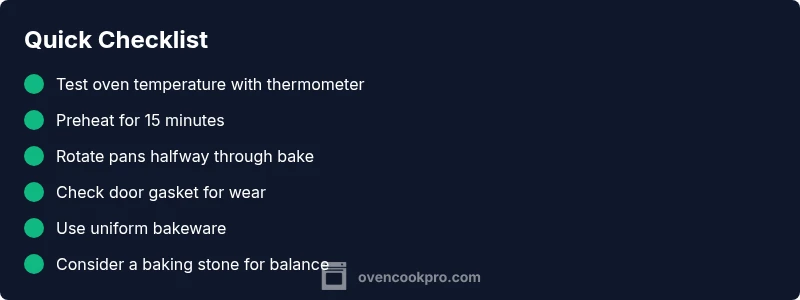
Most likely cause is temperature drift and uneven heat distribution. Quick fix: verify actual oven temperature with an oven thermometer in the middle rack, preheat for 15 minutes, then compare. If the thermometer reads significantly different from the dial, calibrate if your model allows or replace the thermometer. For a fast check, rotate pans and use identical bakeware.
Why Is the Oven Not Cooking Evenly
If you’re asking why is the oven not cooking evenly, you’re not alone. Ovens are complex systems that rely on even heat distribution, calibrated temperatures, and consistent airflow. When any of these fail, you’ll notice hot spots, edges that bake faster than centers, or uneven crusts. According to Oven Cook Pro, many households deal with uneven results, especially after moving or upgrading appliances. The good news is that most issues are fixable with a structured approach and some routine checks. Start by confirming your basic setup: preheat fully, use a reliable thermometer, and keep the door closed during cooking to maintain stable heat. By understanding the root causes, you can apply targeted fixes that restore even performance across bake sessions.
Common Causes of Uneven Cooking
Uneven oven cooking is usually not a mystery, but a mix of practical factors. Temperature calibration drift is common: the dial may show 350°F while the actual center temperature sits higher or lower. Rack position also matters: items placed on the top rack bake differently than those on the bottom, and pans of different materials conduct heat at different rates. Pan color, weight, and thickness can create hot spots. Finally, door seals or worn gaskets can let heat escape, especially on older models. Understanding these factors helps you target the right fix without unnecessary replacements.
How to Test for Even Heat
Testing for even heat requires a simple, repeatable method. Place an oven thermometer in the center of the oven on a middle rack. Preheat to your usual baking temperature for at least 15 minutes. Note the thermometer reading and compare it to the set temperature. If there’s a consistent gap, you may have temperature drift. Repeat on multiple racks and with different pan setups to map hot spots. This method gives objective data to guide calibration or simple rearrangements.
Everyday Fixes You Can Try Now
Before calling a technician, try a few low-effort adjustments. First, rotate baking sheets and pans halfway through the bake to balance heat exposure. Second, rearrange racks so heavy or dense pans don’t block airflow to thinner ones. Third, use identical bakeware when comparing two items side by side. Fourth, ensure you preheat for a full 15 minutes and avoid opening the door during the bake. These simple steps often deliver noticeable improvements without professional help.
Calibrating Temperature and Checking Seals
If the tested temperature consistently diverges from the dial reading, calibration is likely needed. Use an oven thermometer to verify actual temperatures and consult your user manual for calibration instructions, if supported. For gas and electric ovens alike, verify that the bake element heats evenly and that the sensor responds to temperature changes. While you can often adjust calibration yourself, a professional service may be required for stubborn drift. Also inspect the door gasket; a worn seal can let heat escape and contribute to uneven heating.
When to Use Convection and How It Affects Results
Convection ovens use a fan to circulate hot air, which can reduce hot spots and improve evenness. However, convection isn’t a magic fix for every recipe, and its effect varies by pan size and loading. If you’re baking delicate items, you may need to reduce the temperature by about 25°F (15°C) or adjust cooking times. If your oven has a convection mode that doesn’t seem to distribute heat evenly, consider professional inspection of the fan and seals before relying on it for critical bakes.
Tools That Help Consistency
Investing in a few reliable tools can make a big difference. An accurate oven thermometer is essential; place it on the center rack for a reliable reading. A baking stone or steel helps balance heat and provide a steady base for even crust formation. Use uniform, heavy-duty bakeware and avoid pans with warped bottoms. Regular cleaning of racks, vents, and seals also promotes consistent airflow. When used together, these tools reduce variability across batches.
Prolonged Issues: Safety, Maintenance, and Next Steps
If you’ve tested temperatures, rotated racks, and checked seals but still experience uneven results, there may be an underlying hardware issue. Do not attempt to repair gas valves or damaged electrical components yourself. Contact a licensed technician for inspection and possible element replacement or sensor recalibration. In the meantime, maintain a log of temperatures, rack positions, and recipes to track performance and plan maintenance. Regular checks and timely service protect your investment and help you achieve reliable cooking outcomes.
Steps
Estimated time: 60-90 minutes
- 1
Ensure safety and gather tools
Power down the oven and unplug if possible. Let it cool completely. Gather a thermometer, flashlight, and oven mitts. Clear the area around the oven to work safely.
Tip: Always prioritize safety—avoid contact with hot surfaces. - 2
Test actual temperature vs dial
Place the thermometer in the center on a middle rack. Preheat to your usual temperature for 15 minutes. Read the thermometer and compare with the dial setting.
Tip: Do this test on multiple racks to map heat distribution. - 3
Calibrate or adjust if possible
If your model supports calibration, follow the manual to adjust the thermostat. If not, use the thermometer reading to guide your cooking times or consider service.
Tip: Calibration is model-specific; consult the manual or manufacturer support. - 4
Evaluate rack and pan setup
Run a small test with two identical pans on different racks. Note which area browns more and adjust racks for your next bake.
Tip: Keep pans identical to ensure a fair comparison. - 5
Rotate and balance during baking
Rotate pans halfway through the bake to equalize exposure. Avoid opening the door too often, which cools the oven.
Tip: Use a timer to remind you to rotate at halfway point. - 6
Check door seal and airflow
Inspect the door gasket for cracks or wear. Clean any vents and ensure nothing blocks airflow inside the cavity.
Tip: A compromised seal often explains heat loss and uneven results. - 7
Consider a balancing aid
If heat is still uneven, use a baking stone or steel to even out heat distribution and improve crusts.
Tip: Preheat the stone/steel with the oven for best results. - 8
Test convection selectively
If using convection, validate whether it improves or worsens your results with a small test batch.
Tip: Dial down bake temperature by ~25°F (15°C) when using convection. - 9
Document results and plan maintenance
Record thermometer readings, rack positions, and any fixes tried. Schedule professional service if issues persist.
Tip: Keeping notes helps track progress and informs future maintenance. - 10
Know when to call a professional
If temperature drift remains after calibration and fixes, or if heating elements appear faulty, contact a licensed technician.
Tip: Avoid DIY repairs on gas lines or major electrical components.
Diagnosis: Oven not cooking evenly across racks or edges
Possible Causes
- highTemperature calibration drift causing actual heat to differ from dial
- mediumIncorrect rack position or pan material causing uneven heat distribution
- lowDoor gasket wear letting heat escape
- lowConvection mode misused or faulty heating element
Fixes
- easyUse an oven thermometer to verify actual temperature; calibrate or replace thermometer if needed
- easyReposition racks, rotate pans mid-bake, and use similar pan sizes
- mediumInspect door gasket for damage and replace if worn
- hardTest convection function or service the heating element if convection appears faulty
Questions & Answers
Why is my oven not cooking evenly?
Uneven cooking often results from temperature drift, rack or pan differences, or worn door seals. Start with an actual temperature check and then adjust racks or calibrate as needed.
Uneven cooking usually comes from heat not spreading evenly. Begin with a temperature check and adjust racks or calibrate the oven.
How do I test if my oven temperature is accurate?
Place an oven thermometer in the center, preheat to your recipe temperature for 15 minutes, and compare the reading to the dial. If off, calibrate or seek service.
Use an oven thermometer to verify the temperature; adjust or calibrate if needed.
Should I use convection to solve uneven cooking?
Convection can improve evenness by circulating air, but it isn’t a universal fix. Adjust temperatures if needed and test with your typical recipes.
Convection can help, but it isn’t a guaranteed fix; test with your recipes.
Can warped racks cause uneven baking?
Yes. Warped or bent racks can disrupt airflow and create hot spots. Replace with flat, undamaged racks for consistent results.
Warped racks can cause hot spots; replace with flat racks.
When should I call a technician?
If temperature drift persists after calibration and simple fixes, or if you notice faulty heating elements or sensors, a licensed technician is advised.
Call a professional if drift persists after checks.
Does opening the door during baking affect heat distribution?
Frequent door openings release heat and can cause uneven results. Check progress quickly and close the door to maintain steady heat.
Opening the door too often disrupts heat and causes uneven results.
Watch Video
Main Points
- Calibrate the oven to fix temperature drift
- Test temperature with an accurate thermometer
- Rotate pans for balanced heat distribution
- Preheat fully and minimize door openings
- Consult a pro for persistent uneven results