Why Do Ovens Click? A Practical Troubleshooting Guide
Learn why ovens click, identify common causes, and follow safe, step-by-step fixes to stop the noise. This Oven Cook Pro guide covers ignition, relays, door latches, and maintenance to keep your oven quiet and reliable in 2026.


Why do ovens click? Most often, the sound comes from the ignition system, safety relay, or door latch cycling. A quick fix is to listen for the pattern during preheat and perform simple checks: power, door alignment, and clean ignition electrodes. If the click persists after startup, unplug and call a pro.
What Causes an Oven to Click
Ovens can produce a clicking sound for several reasons, most of which are related to the ignition system, safety relays, or door mechanisms. In gas ovens, a rapid, rhythmic click often signals the ignition trying to light the burner. If the ignition is dirty, misaligned, or obstructed, the click may continue without sustained flame. Electric ovens rely on relays and safety switches; a relay that sticks or a faulty high-limit switch can create repeated clicking. Other culprits include a failing temperature sensor, wiring looseness, or a worn door latch that keeps engaging the interlock. Identifying which component is at fault requires listening for the click pattern, observing when the sound occurs (preheat, idle, or during baking), and noting any accompanying symptoms (gas smell, failure to ignite, or incorrect oven temperature).
To keep this practical, think of the click as a clue rather than a problem in isolation. Each part has a job: the ignition electrode creates a spark, the gas valve opens to feed the burner, and relays coordinate cycles. When one element acts up, the sequence can stall and produce extra clicks. Keeping a clean, intact ignition path and secure electrical connections goes a long way toward reducing unnecessary noises and maintaining safe operation. According to Oven Cook Pro, regular maintenance is an important preventive step that can minimize recurring clicking and extend appliance life.
Is the Click Normal or a Warning Sign
Some minor clicking can be normal during preheating, as safety and ignition components cycle to establish proper flame. However, persistent, loud, or irregular clicking—especially when the oven fails to light—should be treated as a warning sign. Normal cycling typically settles within a few seconds as the oven reaches the target temperature. If you notice that the click repeats well after ignition, or occurs when the oven is idle, it may indicate a fault in the ignition system, relay, or door interlock. Gas ovens require particular caution: a recurring click paired with a gas smell is a potential gas leak risk and warrants immediate action. In electric ovens, frequent clicking beyond the startup phase may point to a failing relay or faulty temperature sensor. When in doubt, treat any gas-related symptoms as urgent and contact a professional promptly.
Quick Checks You Can Do Safely (Before Calling a Tech)
- Ensure the oven is unplugged and the circuit breaker is switched off before touching any components.
- Check the door latch for sticking or misalignment; a misaligned latch can cause interlock cycling and extra clicks.
- Inspect the ignition area for visible dirt, grease, or residue and clean it with a dry brush or cloth. Do not use liquids near ignition parts.
- Verify the oven is properly seated in its cabinet and that its power cord and outlet show no damage. If you smell gas or detect a strong gas odor, evacuate and call emergency services.
- If you have a gas oven, do a cautious test by turning off the gas supply after inspecting the latch and ignition, then call a pro if the click persists.
These checks are meant to rule out simple issues and confirm whether professional service is needed. Always prioritize safety—if you’re unsure, pause and seek help rather than attempting risky repairs. Oven Cook Pro’s guidance emphasizes cautious inspection and timely professional evaluation when gas components are involved.
Diagnosing Common Causes: Ignition, Gas Valve, and Relays
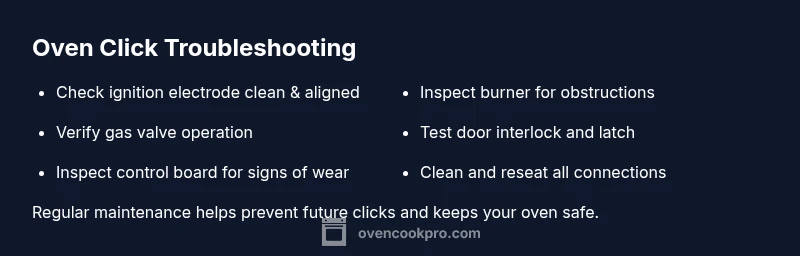
The most frequent culprits behind repeated oven clicking are ignition problems, gas valve issues, and relay or control board faults. A dirty or misaligned ignition electrode can fail to light, causing the control system to retry the ignition sequence repeatedly. In gas ovens, a faulty gas valve may click without delivering gas, or light intermittently. Electric ovens rely on relays to control power and may click when the control board signals a cycle, especially if the relay is sticking or failing. A faulty high-limit switch or temperature sensor can trigger safety shutoffs and repeated clicks. When diagnosing, listen for whether the click aligns with preheat cycles, flame ignition, or post-ignition sensor checks. If you hear multiple, rapid clicks with no flame or heat, prioritize inspecting ignition and sensing components, then the relays. If the problem involves gas odor, immediate professional help is essential.
Step-by-Step Fixes for the Most Common Cause (Ignition Clean or Realign)
Cleaning and realigning the ignition path is one of the most common, doable fixes for frequent clicking. Start with safety: unplug the unit, turn off the circuit, and, if gas, shut the gas supply. Remove the burner cover to access the igniter and electrode. Use a dry brush or compressed air to remove dust, grease, and soot. Check that the electrode is properly positioned near the burner ports and that the gap is within the manufacturer’s specification. After cleaning and realigning, reassemble, plug in, and perform a short preheat cycle to observe the ignition. If the click returns or a flame fails to light, you may have a worn igniter or a faulty connector that requires replacement. For many homeowners, this task is doable, but if you’re uncomfortable with gas components or ignition timing, call a professional.
Safety Precautions and Common Mistakes
- Do not operate the oven with exposed wiring or damaged cords.
- Never bypass safety interlocks or disable the interlock switch to reduce clicking.
- Avoid using liquids to clean ignition components; moisture can cause corrosion or short circuits.
- Always confirm the appliance is disconnected from power before handling electrical parts.
- If you smell gas, do not attempt DIY repairs—evacuate and contact emergency services immediately.
Steps
Estimated time: 30-60 minutes
- 1
Power down and ensure safety
Unplug the oven, switch off the circuit breaker, and for gas ovens, turn off the gas supply. Verify all power sources are removed before touching any components.
Tip: Wear insulated gloves and keep a fire extinguisher nearby as a precaution. - 2
Access ignition area
Remove the burner cap and inspect the ignition electrode and burner ports. Look for soot, corrosion, or a loose connection that could prevent ignition.
Tip: Use a dry brush or compressed air to clean dust without touching the hot surfaces. - 3
Clean and realign the igniter
Gently clean the electrode with a dry cloth, then recheck the gap to the burner. Reposition if the electrode is bent or misaligned.
Tip: Consult your model’s manual for the exact gap specification before reassembly. - 4
Inspect the door interlock
Check the door latch for sticking or misalignment. Make sure the strike plate engages cleanly and that the door closes fully.
Tip: Lubricate only with manufacturer-approved products; avoid over-lubricating. - 5
Test ignition and observe
Reconnect power, run a short preheat cycle, and listen for a normal ignition sequence. If the click persists without flame, advance to a professional inspection.
Tip: Record the sound pattern and any flame behavior to share with a technician.
Diagnosis: Oven emits a rapid clicking sound after preheat instead of igniting or staying lit
Possible Causes
- highDirty or misaligned ignition electrode
- mediumFaulty gas valve or burner assembly
- mediumStuck or failing relay / control board
- lowDoor latch interlock issue
Fixes
- easyClean and realign ignition electrode; verify gap according to manual
- mediumInspect gas valve and burner for obstructions; replace valve or burner if needed
- mediumTest and replace faulty relay or control board
- easyCheck door latch and interlock; lubricate or replace if sticking
Questions & Answers
Why does my oven click before it ignites?
The click usually signals the ignition system attempting to light the burner, or a safety relay preparing to operate. If the flame does not ignite, inspect the igniter, check connections, and verify gas flow. Persistent clicking without ignition often points to ignition or valve issues that may require service.
The click is usually the ignition trying to light. If there’s no flame after several attempts, inspect the igniter and gas flow, and consider professional help if the problem persists.
Is it safe to keep using the oven if it keeps clicking?
If you smell gas or hear a strong gas odor, stop and leave the area immediately. In general, repeated clicking without ignition should be treated as a potential fault and serviced. When in doubt, turn off power and gas and call a pro.
If there’s a gas smell, evacuate and call emergency services. Otherwise, stop using the oven and get it checked.
Can I fix the ignition system myself?
Some at-home maintenance, like cleaning or realigning the igniter, is possible if you’re comfortable with basic appliance repair. Avoid electrical or gas components if you’re not trained, and consult the manual or a professional for complex issues.
You can often clean or realign the igniter if you’re comfortable, but for wiring or gas components, call a professional.
What should I do if I smell gas?
If you smell gas, do not operate electrical switches or the oven. Leave the area immediately and call your gas company's emergency line or local emergency services. Do not re-enter until professionals declare it safe.
If you smell gas, leave the area and call emergency services right away.
Does preheating cause clicking?
Yes, it’s common for ignition components to cycle during preheat. However, if the pattern is abnormal, lasts too long, or occurs after ignition, there may be a fault.
Clicking during preheat can be normal, but persistent or post-ignite clicking needs inspection.
When should I replace the igniter or control board?
Replacement is warranted if the igniter shows wear, is cracked, or fails to glow, or if the control board repeatedly signals cycling despite cleaned components. A technician can confirm with tests.
Replace the igniter or control board if they’re worn or failing despite cleaning; a pro can test for you.
Watch Video
Main Points
- Identify the clicking source by listening to the pattern.
- Prioritize safety steps before inspection and repairs.
- Ignition, gas valve, and relays are the most common culprits.
- Call a professional for gas-related issues or if you’re unsure.
- Regular maintenance reduces future clicking and extends oven life.