Oven Glass Breakage Troubleshooting
Urgent guide to diagnosing oven glass breakage, with checks, safe handling tips, repair options, and prevention strategies for homeowners to prevent incidents.


Thermal shock from rapid heating or cooling is the most common reason oven glass breaks, followed by impact from loading heavy dishes or misaligned racks. If you hear cracking or see a crack, stop using the oven and inspect for damage. How can oven glass break? It’s often preventable with proper preheating, correct cookware, and careful door handling.
How can oven glass break: Key causes
If you're exploring the question, the phrase 'how can oven glass break' often points to thermal stress caused by rapid temperature changes. The most common scenario is a hot oven suddenly exposed to a cool dish or liquid, or vice versa. Other contributors include impacts from loading or removing heavy racks, misaligned door seals, and preexisting micro-cracks that propagate under heat. Understanding these factors helps you prevent future failures and bake more safely.
Safety first: immediate actions when you notice a crack
Your first move is safety. Power down the oven and unplug if accessible, keep children and pets away, and wear gloves before touching glass. Do not attempt to bake with a cracked pane or to handle hot glass with bare hands. If the crack is extensive, the door feels unstable, or you hear cracking during use, stop using the oven immediately and contact a qualified technician. According to Oven Cook Pro, prioritizing safety reduces injury risk and avoids worsening damage.
Quick checks you can perform before calling a pro
Begin with simple, non-invasive checks. Look for visible cracks or chips on the exterior glass and inspect the door seal for gaps or deformation. Ensure racks are properly positioned and not striking the glass when the door closes. Verify you are using heat-safe cookware rated for your oven and that you avoid pouring cold liquids into hot glass. If you discover any fracture, document its location and length for reference.
Interpreting cracks and what they mean for use
Cracks come in many patterns, and not all mean the pane must be replaced immediately. A hairline crack may be non-structural but can worsen with heat cycling; a spiderweb crack often indicates internal stress or impact damage. Note the direction, length, and whether cracks appear after preheating. This helps a technician determine if the glass can be safely repaired or if the entire door must be replaced.
When to repair vs replace and what to expect
Replacement typically requires an exact pane type designed for your model and proper installation. DIY glass replacement is risky because tempered glass can shatter unpredictably if not handled correctly. A professional repair usually involves removing the door, inspecting the frame, and installing a manufacturer-approved pane. In many cases, replacing the entire door is the safer long-term option.
Prevention strategies to reduce recurrence
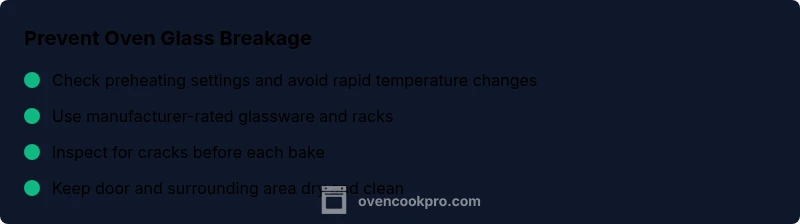
Adopt a few simple habits to minimize risk. Preheat gradually and avoid abrupt door openings during high heat. Use only oven-safe glassware and racks certified for your model, and never place heavy items against the door. Regularly inspect seals and the glass for hairline cracks, replacing parts as soon as damage is detected. Schedule periodic maintenance with a technician.
Quick safety habits for home cooks
Keep a spare oven glass pane and a small toolkit for minor door adjustments. Train household members on safe handling of hot dishes, and always power down the oven before loading or unloading. By building these habits, you protect your kitchen and reduce the chance of future breakage during routine cooking.
Steps
Estimated time: 60-90 minutes
- 1
Power down and cool safely
Turn off the oven, unplug if possible, and allow the glass to cool completely on a heat-resistant surface before handling. Wear heatproof gloves to protect hands from sharp edges.
Tip: Never rush a cooled pane; hot glass can shatter if moved too soon. - 2
Inspect exterior glass and door
Examine the visible glass for cracks and chips and assess door alignment and gasket wear. A misaligned door can cause uneven heating that stresses the glass.
Tip: If you see a crack, note its location and length for reference. - 3
Remove racks and contents carefully
Take out racks and any dishes, then set them aside to prevent accidental contact with the glass during handling.
Tip: Keep racks away from the door edge to avoid impact. - 4
Decide on next steps based on damage
If cracks are present or the door feels unstable, do not reuse the oven until evaluated by a pro.
Tip: Severe damage usually requires professional replacement. - 5
Prepare for replacement
Order an exact pane or door replacement according to the model number and manufacturer guidelines; ensure proper model compatibility.
Tip: Use manufacturer-recommended parts to maintain safety ratings. - 6
Test after replacement
Reassemble the door, perform a cautious bake test at a moderate temperature, and listen for unusual noises or leaks.
Tip: If anything seems off, stop and contact a technician immediately.
Diagnosis: Oven glass shows cracks or shatters during or after a bake
Possible Causes
- highThermal shock from rapid temperature changes (e.g., adding cold liquid or opening door during high heat)
- mediumImpact from moving or loading heavy racks or dishes against the door
- mediumPreexisting micro-cracks from previous chipping or manufacturing flaws
- lowDoor or frame misalignment causing uneven stress during operation
Fixes
- easyPower down and allow the oven to cool completely before inspection; do not touch hot glass
- mediumRemove racks and items, inspect for chips, and replace damaged glass or door with manufacturer-approved part
- easyUse heat-safe cookware and avoid thermal shocks; preheat gradually
- hardConsult a professional for glass replacement or door replacement, especially for sealed units
Questions & Answers
Why did my oven glass crack during preheating?
Cracks during preheating are usually caused by thermal stress from rapid temperature changes or preexisting defects. The glass expands as it heats, and any flaw can propagate into a crack. To prevent this, preheat slowly and avoid introducing cold cookware or liquids into the oven.
Thermal stress from rapid heating can crack glass; slow preheating helps prevent it.
Is it safe to continue using an oven with a crack?
No. A cracked pane can shard and fail without warning. Unplug the oven and stop using it until a professional inspects and replaces the glass or door.
No—cracks can worsen and cause shards; have a pro assess before next use.
What immediate safety steps should I take if I notice a crack?
Power down the oven, unplug if possible, and keep children away. Do not touch hot glass and avoid moving items near the crack until the area has cooled.
Turn off power and keep people away; wait until it’s safe to handle.
Can I replace the glass myself?
DIY replacement is risky and generally not recommended unless you have the exact model instructions and parts. Incorrect installation can cause more damage or injury.
It’s best to hire a technician unless you’re experienced with your model.
How much does replacement cost?
Costs vary by oven model and region. Professional replacement tends to be more predictable than DIY, due to part availability and safety requirements.
Prices vary; consult a pro for a precise quote.
How can I tell if the glass is tempered and safe to replace?
Check the model number and manufacturer guidelines; tempered glass is typically labeled. If unsure, don’t proceed with replacement until confirmed.
Look for labeling or documentation from the maker to confirm tempered glass.
Watch Video
Main Points
- Stop usage and inspect safely
- Identify your crack type to inform repair needs
- Consult a pro for glass replacement
- Use manufacturer-rated parts and cookware