General Electric Oven Repairs: Step-by-Step Guide
Learn safe, practical methods for diagnosing and repairing common GE oven issues. This Oven Cook Pro guide covers essential tools, step-by-step instructions, safety tips, and maintenance to keep your General Electric oven performing at its best in 2026.


According to Oven Cook Pro, general electric oven repairs require careful safety steps and methodical diagnostics. This quick answer outlines what you will accomplish: identify root causes like igniter faults, faulty temperature sensors, or damaged bake elements; gather essential tools; and follow a safe step-by-step approach to restore even heating and reliable control. By the end you’ll know when a DIY fix is viable and when to call a pro.
Why General Electric Oven Repairs Matter
General Electric ovens are a staple in many kitchens, offering reliable baking and roasting when they’re functioning correctly. However, even well-made appliances develop issues that can affect safety, energy efficiency, and cooking results. Safe general electric oven repairs help homeowners save on service calls, minimize downtime, and prevent small problems from becoming bigger hazards. According to Oven Cook Pro analyses, a systematic approach that combines inspection, testing, and measured part replacement yields the best outcomes. Keeping your GE oven in good working order also extends its lifespan and helps maintain even heat distribution across racks and cookware.
Beyond convenience, a well-maintained oven reduces the risk of electrical faults, gas leaks (for dual-fuel models), or fire hazards associated with damaged heating elements. Understanding common failure modes gives homeowners a practical framework for troubleshooting. This guide emphasizes safety, standardized testing, and documentation so you can make informed decisions about repairs and replacements. While some fixes are straightforward, others require professional expertise—know your limits and when to seek authorized service.
For GE owners, the goal of these repairs is not just to get the oven back to heat but to restore consistent temperatures, reliable timers, and safe operation. With the right approach, you can diagnose most problems in a methodical way and reassemble with confidence, all while protecting your home and family.
Common GE Oven Problems and Diagnoses
General Electric ovens can fail in several predictable ways. Typical issues include the oven not heating at all, uneven heating across racks, temperature fluctuations or failure to calibrate, and the oven light or control panel not responding. Faulty bake or broil elements can leave hot spots or no heat, while a defective thermostat or temperature sensor may cause incorrect temperatures. Control board faults or loose wiring can trigger error codes and intermittent performance. Understanding these patterns helps you determine whether the problem is electrical, mechanical, or control-related.
Other frequent symptoms include a door that won’t latch, slow or no ignition in electric ovens, or error codes on smart displays. While some problems present obvious symptoms, others are subtler and require diagnostic testing with a multimeter or a thermometer. Always confirm power status before handling any components, and keep a detailed log of observed symptoms to compare against repair steps. This helps you decide whether to repair in place, replace a failed part, or call a technician.
Tools and Materials for GE Oven Repairs
Before starting any repair, assemble the essential tools and compatible replacement parts. A multimeter is invaluable for testing continuity and resistance in elements and sensors, while a non-contact voltage tester helps verify power is off during disassembly. A basic screwdriver set (Phillips and flathead) and a nut driver or socket set are needed to remove panels and secure components. Have an infrared or oven-safe thermometer on hand to validate temperature accuracy during testing. Replacement parts should be sourced with your exact GE oven model in mind, as compatibility varies across series. Keep gloves and safety glasses nearby to protect your hands and eyes during disassembly and handling hot components. Finally, refer to your owner’s manual for model-specific instructions and torque specs.
Safety First: Preparation and Power Down
Safety is the foundation of any oven repair. Start by unplugging the appliance or switching off the dedicated circuit breaker to ensure there is no electrical current in the cabinet. Allow the interior to cool completely before touching any components. Use the voltage tester to confirm there is no voltage present on wires you’ll handle. Remove any racks and loose items from the oven cavity to prevent slipping or dropping parts during work. If you’re working on gas-powered features or dual-fuel configurations, consult the manual for gas-specific shutdown procedures and ventilation requirements. Never bypass safety features or jump around the harnesses; document each step and reassemble in the reverse order with care.
A Practical Diagnostic Path
A structured diagnostic approach reduces unnecessary part swaps. Start by visually inspecting heating elements for scorching, cracks, or discoloration. Check for loose or corroded connectors at the element terminals and control board. Use the multimeter to test element continuity. If an element shows open or infinite resistance, replace it. Next, verify the thermostat or temperature sensor by measuring resistance at room temperature and when the oven is heated. Compare readings to the manufacturer’s specifications for your model. If sensor readings are off, calibrate or replace as needed. For models with an electronic control board, inspect for burn marks, damaged traces, or loose wiring. If any wiring shows damage, repair or replace the harness. Finally, verify door latch operation, as a mis-sealed door can affect heat retention and calibration.
Testing and Verification After Repair
Once you’ve replaced any faulty components, reassemble the oven and restore power. Run a test bake at a moderate temperature (e.g., 350°F/175°C) for 15–20 minutes and monitor the oven temperature with a calibrated thermometer placed inside. Compare the actual temperature to the set temperature; a tolerance of ±25°F (±14°C) is typical for many ovens, but consult your manual for model-specific guidance. If temperatures remain off, recheck sensor connections and calibration adjustments. Listen for abnormal noises and observe any error codes on smart displays. Document results of each test and note any persistent discrepancies that warrant professional evaluation.
When to Call a Professional
Some GE oven repairs require specialized tools, factory code procedures, or knowledge of electrical systems that exceed DIY skills. Signs you should call a professional include persistent error codes after basic diagnostics, burnt connectors or signs of arcing, gas-related issues in dual-fuel models, or uncertainty about safe operation after a repair. A certified technician can verify wiring integrity, perform advanced diagnostics, and ensure the oven meets safety standards. If your oven is still under warranty, contact GE support to avoid voiding coverage. Having a technician inspect the installation ensures compliance and long-term reliability.
Maintenance to Prevent Future GE Oven Issues
Prevention is easier than repair. Regularly inspect door seals and hinges for wear, clean crisper elements gently to avoid residue buildup, and avoid placing oversized cookware that blocks heat distribution. Schedule periodic checks of wiring connections and replace aging power cords or control boards before they fail. Keep the oven cavity clean and free of grease and food debris that can ignite. For best results, calibrate the oven temperature annually or after any major component replacement. Document maintenance activities and dates to track the oven’s health over time.
Tools & Materials
- Multimeter(Test continuity and resistance in heating elements and sensors)
- Non-contact voltage tester(Verify power is off before touching wires)
- Screwdriver set (Phillips and flathead)(Remove panel screws and secure panels)
- Nut driver or socket set(Loosen and tighten fasteners on heating elements and brackets)
- Infrared thermometer / oven thermometer(Validate actual oven temperature during tests)
- Replacement parts (bake element, broil element, thermostat, or control board)(Only replace if tests indicate failure)
- Heat-resistant gloves and safety glasses(Protection during disassembly and handling hot components)
- Owner’s manual / model number lookup(Ensure compatibility before purchasing parts)
Steps
Estimated time: 2-4 hours
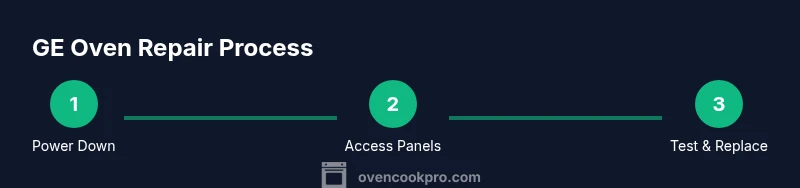
- 1
Power down safely
Unplug the oven or switch off its dedicated circuit. Confirm no voltage remains with the non-contact tester. This step prevents electric shock and protects you while inspecting interior components.
Tip: Always verify power is fully disconnected before touching any wiring. - 2
Access the control panel
Open any external panels following the user manual and loosen screws to expose the control board and wiring harness. Keep track of screws and clip locations for safe reassembly.
Tip: Take a photo of wiring layouts before disconnecting any connectors. - 3
Inspect heating elements for damage
Visually inspect bake and broil elements or radiant coils for cracks, burns, or blistering. Damaged elements should be replaced to restore heat generation and prevent arcing.
Tip: Look for unusual color changes or warping that indicate failure. - 4
Test heating element continuity
Set the multimeter to the resistance (ohms) setting and measure across element terminals. An open circuit indicates a faulty element needing replacement.
Tip: Record baseline readings for future comparison. - 5
Check the temperature sensor and thermostat
Measure the sensor resistance at room temperature and after a heated test. Compare with GE’s specifications for your model. Replace if readings are out of range.
Tip: Ensure the oven is powered but cool when handling the sensor leads. - 6
Test the bake/broil circuit or igniter (if applicable)
For electric ovens, observe the igniter or heating circuit during a bake cycle to see if heat is produced. A slow or non-igniting element indicates replacement is needed.
Tip: Handle high-temperature parts with insulated tools. - 7
Inspect wiring harness and control board
Look for burnt sections, loose connectors, or damaged insulation. Tighten connections and replace damaged wiring or boards as necessary.
Tip: Power down again if you uncover damaged wires you didn’t expect. - 8
Replace faulty components and reassemble
Install any replacement parts you identified as defective and secure all fasteners. Reconnect harnesses in the correct orientation and reinsert panels.
Tip: Consult the photo references you captured earlier to restore exact connections. - 9
Reconnect power and verify operation
Plug the oven back in or restore power, then run a test bake and verify temperature accuracy with a thermometer. Confirm no error codes appear and that heat is consistent.
Tip: Allow the oven to run through a complete cycle to confirm stability.
Questions & Answers
Is it safe to attempt GE oven repairs yourself?
DIY repairs can be safe if you strictly follow safety steps, disconnect power, and use proper testing methods. Do not work on live circuits or on gas-related components without professional guidance. If you’re unsure, hire a qualified technician.
DIY repairs can be safe with strict safety steps. If in doubt, contact a professional.
What are the most common GE oven problems?
Likely issues include no heat, uneven heating, faulty thermostat, bad bake/broil elements, or control panel faults. Diagnosing often starts with testing elements and sensors, then checking wiring and board connections.
Common problems are no heat, uneven heat, bad sensors, or control faults.
Do I need special tools for GE oven repairs?
A basic toolkit plus a multimeter, a non-contact volt tester, and replacement parts compatible with your model are usually enough for many repairs. Always refer to the manual for model-specific requirements.
A multimeter and basic tools plus model-specific parts usually cover common repairs.
When should I replace a bake element vs a thermostat?
Replace a bake or broil element if the element tests open or shows visible damage. Replace a thermostat if temperature readings are consistently off after calibration attempts.
Replace the faulty element if it tests bad, or the thermostat if temperatures stay off after calibration.
Can I recalibrate the oven temperature myself?
Many GE ovens offer an adjustable temperature calibration feature. Follow the manual’s procedure to adjust bake temperatures in small increments and retest with a thermometer.
Yes, many GE models let you calibrate; follow the manual and re-test with a thermometer.
What if my oven is under warranty near service coverage?
Check the warranty terms and contact GE support or an authorized technician. Do not attempt major repairs that could void the warranty.
Check warranty terms and contact GE support if applicable.
How do I prevent future GE oven issues?
Regular cleaning, inspection of door seals, and periodic calibration help prevent failures. Keep heat vents clear and avoid overloading racks to maintain even heating.
Regular cleaning and calibration help prevent issues.
When should I hire a professional over DIY?
If you encounter gas connections, complex wiring, unfamiliar error codes, or if the unit is under warranty, a professional technician is the safer choice.
Hire a pro for gas work, wiring, or warranty-covered units.
Watch Video
Main Points
- Power down before inspection.
- Test both resistance and continuity for components.
- Replace only faulty parts, not every component.
- Calibrate temperature after repair.
- Know when to call a professional.