Broken Oven Coil Troubleshooting: A Step-by-Step Guide
Urgent, practical troubleshooting for a broken oven coil. Learn safety checks, diagnostics, replacement steps, and when to call a pro. Based on Oven Cook Pro analysis, this guide helps homeowners restore oven heat quickly.


Most broken oven coils require replacement rather than repair. Quick fix: unplug the oven, switch off the circuit, and do not use the oven if you see a visibly cracked or melted coil. Then identify your oven model, order the correct coil assembly, and follow step-by-step instructions or call a licensed technician.
Understanding why a broken oven coil happens
Oven coils are built to withstand thousands of heating cycles, yet wear and thermal stress can cause insulation breakdown, enamel cracking, or coil separation. A broken oven coil is a common failure in electric ovens and is often the result of heavy use, improper cleaning, or accidental damage. In many models, a damaged coil will show visible signs such as scorch marks, cracking, or a melted connector sleeve. When the coil fails, your oven may heat unevenly or not heat at all, affecting everything from roasting vegetables to baking cookies. This guide breaks down symptoms, safe inspection steps, and what to expect if replacement is required. Safety comes first; a faulty coil can create shock or fire hazards, so stay cautious and avoid repairs beyond your comfort level. According to Oven Cook Pro analysis, coil wear is a leading reason homeowners need professional service, especially for wall ovens with integrated coil modules. By understanding the failure modes, you can plan the repair and minimize downtime, with a clear path from diagnosis to replacement.
Safety-first: unplug, clear area, and isolate power
Before touching anything, unplug the oven from the wall outlet and switch off the dedicated circuit breaker. Do not rely on the oven's controls to disconnect power; off on the display does not guarantee zero voltage behind the panel. Work on a cool, dry surface using insulated tools. Keep children and pets away. If you smell burning plastic or see melted insulation, evacuate and call for help. Once power is isolated, take stock of the coil's condition from the outside—note scorching marks or a visible gap between coil segments. Remember: a broken oven coil is a sign of potential electrical faults; never bypass safety features or attempt to power the oven while damage is visible. This approach aligns with the careful, stepwise guidance Oven Cook Pro provides to homeowners.
Quick checks you can do before replacing
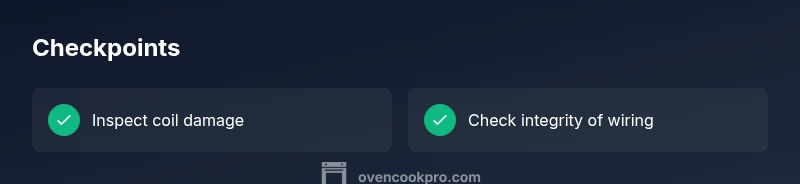
- Visually inspect the bake coil for cracks, burns, or discoloration; look for any gaps where coil strands separate.
- Check the coil's terminal connectors for melted insulation or loose wires; if connectors wobble, the harness may be damaged.
- If your oven has a clear coil sheath, look for exposed metal or signs of arcing. If you have a multimeter and know how to use it, perform a continuity check on the coil following the manufacturer’s diagram. An open circuit indicates a broken coil; a short may indicate insulation failure. If you don’t own a multimeter, proceed to part replacement or call a pro.
Safety note: never force wires or bypass damaged connectors; miswiring can worsen hazards.
Diagnostic signs indicating a faulty coil
A broken oven coil typically presents with no heat in bake mode, uneven heating, or variable temperatures across racks. You may notice tripped breakers, a burning odor, or scorch marks on the coil or surrounding insulation. If the oven loses power during a bake cycle or the front panel shows inconsistent indicators, the coil module could be failing. While some ovens use a single coil, others rely on multiple coils or a coil module; refer to your model’s wiring diagram to confirm which component is failing. If you observe any coil damage, treat the unit as unsafe until inspected further.
Replacing vs. repairing: options and expectations
In most cases, a broken oven coil cannot be repaired and must be replaced with a new coil or coil module compatible with your oven model. Replacement parts vary by brand and model, and some units require removal of a wiring harness or access panels to reach the coil. Expect some disassembly, careful handling of electrical connectors, and reattachment of grommets and protective sleeves. If your oven is under warranty, consult terms first; professional installation may be required for coverage. After replacement, verify that the coil is seated correctly, the terminal connectors are secure, and there are no arcing signs.
After replacement: testing and prevention tips
Power on the oven and run a bake cycle at a low temperature to confirm even heating before returning to normal use. Listen for unusual buzzing or crackling, and check for any lingering odor. Clean the interior after heat has cooled to avoid residue buildup near the coil. To prevent future coil failures, avoid aggressive cleaning with sharp tools, promptly address any moisture exposure near electrical components, and schedule periodic professional inspections if your oven is older or heavily used. Regular inspections can catch loose connections or insulation wear before a failure occurs.
Steps
Estimated time: 45-60 minutes
- 1
Power down safely
Unplug the oven from the wall outlet and switch off the circuit breaker dedicated to the appliance. Wait 5–10 minutes to dissipate residual power. This step protects you from shocks and reduces the risk of arcs when you handle components.
Tip: Use a non-contact voltage tester to confirm no voltage at the outlet before touching wiring. - 2
Access the coil area
Remove oven racks and the back access panel (or bottom cover, depending on model) to expose the coil and its connections. Keep track of screws and connectors so reassembly is straightforward.
Tip: Take photos during disassembly so you have a reference for wiring orientation. - 3
Inspect for visible damage
Look for cracks, scorching, melted insulation, or loose terminal connectors. If you see melted insulation or a visibly broken coil, do not power the oven again until the coil is replaced.
Tip: Do not tug on wires; use insulated tools to manipulate connectors gently. - 4
Test coil continuity (if qualified)
With the power still off, disconnect the coil harness and use a multimeter set to ohms to check continuity. An open circuit indicates a broken coil; a short or low resistance can indicate insulation problems.
Tip: Only perform this test if you’re comfortable with electrical work and follow the manufacturer’s diagram. - 5
Decide on replacement
If continuity test fails or damage is evident, order the exact coil or coil module specified for your oven model. Check warranty terms, as some models require professional installation for coverage.
Tip: Double-check model number and coil part compatibility before ordering. - 6
Install the replacement
Reconnect the coil and harness securely, reattach any grommets or protective sleeves, and replace the access panel. Ensure all fasteners are snug and wiring is clear of moving parts.
Tip: Follow the wiring diagram precisely; a misconnected coil can cause heat misfires or damage. - 7
Test heat and reassemble
Power the oven back on and run a low-temperature bake to confirm even heating. Observe for any abnormal heat, smells, or noises before using the oven normally.
Tip: If you notice anything off, power down and consult a professional.
Diagnosis: Oven won't heat or heats unevenly; visible coil damage
Possible Causes
- highBroken oven coil or damaged insulation
- mediumFaulty coil terminal connectors or wiring harness
- lowElectrical supply issue (outlet, circuit breaker)
Fixes
- easyPower off, unplug, and inspect coil for visible damage
- mediumTest coil continuity with a multimeter if qualified; replace coil if open circuit
- hardReplace coil assembly or consult a licensed technician for wiring tasks
Questions & Answers
Can a broken oven coil be repaired, or must it be replaced?
Coils generally can't be repaired once damaged; replacement is the standard path. Some ovens use coil modules, so verify compatibility with your model before purchasing. If in doubt, replacement is the safer route.
Coils aren’t typically repairable; replacement is the usual fix. Check compatibility with your model and replace rather than attempting a risky repair.
Is replacing the coil something a DIYer can do?
Only if you are comfortable with electrical work and have the right safety measures. If you’re unsure, hire a qualified professional to avoid shock or fire hazards.
If you’re comfortable with electrical work and know how to safely disable power, you can replace the coil. If not, hire a pro.
Will broken oven coil affect warranty?
Warranties vary; some require professional installation for coverage. Check your terms and confirm if replacement by a technician preserves warranty.
Warranty terms vary; some require professional service. Check your specific terms to know if replacement affects coverage.
How long does a coil replacement take?
Time varies by model and access, but plan for about one to two hours including testing and reassembly. Complex models may take longer.
It usually takes about one to two hours, depending on accessibility and model.
Can I still bake with a broken oven coil?
No. A broken coil prevents proper heating and can pose safety risks. Do not use the oven until the coil is fixed by replacement or professional service.
No—don’t bake with a broken coil. Have it replaced or serviced first.
Watch Video
Main Points
- Unplug the oven before any inspection or repair
- Inspect for visible coil damage and secure connections
- Replace with an exact coil module for your model
- Test heating after replacement and monitor for issues
- Call a professional if wiring, harness, or warranty questions arise