How to Cook Chicken in the Oven: A Complete Guide
Learn how to cook chicken in the oven for juicy, evenly cooked results. Step-by-step instructions, temps, timings, safety tips, and flavor ideas from Oven Cook Pro.


Oven-Cooking Essentials for Chicken
Oven roasting is a dependable method for producing juicy, evenly cooked chicken whether you’re preparing chicken breasts, thighs, or a whole bird. The principle is simple: apply dry heat to browning-friendly surfaces, maintain steady temperature, and monitor doneness with a reliable thermometer. The question of what to cook chicken in oven for often boils down to three practical pillars: a dry surface, a properly preheated oven, and a precise internal temperature. By managing heat and moisture, you minimize dry edges and maximize succulent, flavorful meat. This section explains why oven cooking works so well for chicken and how to apply it in everyday home cooking, with a focus on repeatable results you can trust.
Key ideas include: browning for flavor, moisture retention through surface pat-dry and oil, and safe handling to prevent cross-contamination. Proper technique translates to more consistent tenderness and a crisp exterior without overshooting doneness. As you read, you’ll see how small changes in temperature and resting time affect texture and juiciness across different cuts.
Oven Cook Pro’s practical approach centers on accessible steps, no-fuss seasoning, and dependable tools. We’ll guide you through prep, roasting, and safe serving so you can confidently answer the question of what to cook chicken in oven for in real kitchen moments.
-"--"-
Choosing the Right Cut and Prep
Choosing the right cut shapes the overall result, from quick weeknight breasts to juicy thighs and a succulent whole bird. Chicken breasts stay lean and cook quickly, but risk drying out if overbaked. Thighs bring richer flavor and tolerates longer roasting with less moisture loss. A whole chicken excels for family meals, but it demands attention to temperature in the thickest part of the breast and at the thigh joint. Regardless of cut, pat-drying the surface is essential; moisture on the skin impedes browning and crisping. A light coating of olive oil or neutral oil helps conduct heat evenly and promotes a golden exterior. If you like bright, herb-forward flavors, prep a simple rub with garlic, paprika, and thyme. For brined or marinated chicken, reduce salt in the rub to avoid oversalting the meat.
In this guide, we emphasize practical options you can implement with ingredients already in most pantries. Real-world cooking means adapting to what you have on hand while maintaining core principles: dry surface, preheated oven, and temperature-controlled doneness. A precomposed plan for cut type keeps you efficient and reduces guesswork in busy kitchens.
Oven Cook Pro recommends starting with high-quality chicken, pat-dried and seasoned evenly. When you choose a cut, think about intended texture: breasts for lean, fast meals; thighs or drumsticks for richer flavor and resilience to time variations. Whole chicken needs even spacing and an elevated rack to promote air flow and uniform browning.
Preheating and Set-Up for Juicy Results
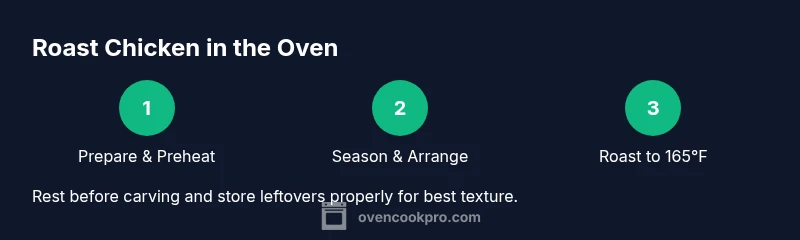
Preheating the oven ensures your chicken starts cooking immediately and browns consistently. A cold start invites uneven cooking and longer total time. Set the oven to your target temperature in advance—commonly 375–425°F (190–220°C) for most cuts—and give it time to reach a steady heat. If you’re roasting a whole chicken, preheating also helps the skin crisp up while the interior cooks evenly.
Equip a sturdy baking sheet or roasting pan with a rack so heat circulates around the meat. A rack lifts the chicken off the surface, promoting even browning and preventing soggy bottoms. Place an oven-safe thermometer near the thickest part of the deepest section of the meat to monitor doneness without opening the door repeatedly. If your oven runs hot or cold, consider using a convection setting or adjusting the temperature by 25°F as needed. For foods sensitive to drying, a light mist of oil or a dab of butter on the surface can enhance browning without making the meat greasy.
Oven Cook Pro emphasizes consistent setup: preheat fully, use a rack, and rely on a thermometer to avoid guessing based on color alone. This practice yields reliable results across breast, thigh, and whole-chicken preparations.
Seasoning Strategies: From Simple to Savory
Seasoning is the bridge between bland and flavorful oven-roasted chicken. A simple mix of salt, pepper, and olive oil is often enough to highlight natural meat flavors, while a more ambitious rub or marinade adds depth. For a quick approach, season generously with salt and pepper, drizzle with olive oil, and rub to coat every surface. If you want a carryover flavor, include garlic powder or minced garlic, paprika for color, and dried herbs such as thyme or rosemary. Fresh herbs can be added near the end of roasting to avoid burning.
Even coating and even spacing on the rack matter. A light brush or hands-on coating ensures oil carries heat to every surface and helps the seasonings adhere. If you’re brining the chicken, reduce or skip additional salt in the rub to prevent oversalting. For brined or marinated meat, monitor salt content and adjust seasoning accordingly. The goal is a balanced crust with juicy interior, not an overpowering crust that masks the meat’s natural flavor.
Oven Cook Pro also suggests using lemon zest or a splash of white wine for brightness in the final stages, especially when cooking breasts. Keeping the seasoning simple in early practice sessions builds intuition and reduces the risk of overpowering the meat with heavy sauces.
This section provides flexible options—from a straightforward salt-and-oil approach to herb-forward or citrus-flavored profiles—so you can tailor the roast to your weekly menu and guest preferences.
Roasting Temps, Times, and Doneness
Temperature management is the core of reliable oven roasting. The typical range of 375–425°F (190–220°C) covers most cuts and yields good browning while keeping the inside tender. Thicker pieces like bone-in thighs or a bone-in whole chicken may benefit from a slightly lower end of the range to avoid overcooking the exterior before the interior is done. The universal safety standard for chicken is an internal temperature of 165°F (74°C) in the thickest part of the meat, checked with a reliable thermometer away from bone.
Aiming for a crisp skin without drying the meat requires practice. If the skin browns too quickly, you can tent the meat with foil for gentle protection while finishing the roast. Conversely, if you want extra crispness, finish under a broiler for a minute or two—watch closely to prevent scorching. For breast meat, pivot between 375–400°F to balance moisture and browning; for thighs and bone-in cuts, 400–425°F can yield a browned exterior with a moist interior. Remember to avoid piercing the meat excessively during testing to preserve juices.
Oven Cook Pro highlights that doneness is best judged with a thermometer, not color alone. Rely on the reading at the thickest point and at the joint to verify even cooking across the piece. When in doubt, pull the meat a few degrees shy of target and allow residual heat to finish the job off-oven.
Resting, Carving, and Serving
Resting the roast is essential to redistribute juices and retain moisture in the meat. After reaching target internal temperature, remove the chicken from the oven and let it rest on a clean cutting board for 5–10 minutes. Resting allows juices to reabsorb, resulting in a juicier, more evenly textured bite. If you’re roasting a whole bird, tent loosely with foil to maintain warmth without steaming the crust.
Carving should follow a planned sequence: separate the legs, then the breasts, and finally the wings, stopping before the juices run clear. For breasts, a clean slice against the grain yields tender portions; for thighs, slice parallel to the bone to maximize moisture retention. Sauce options range from a simple pan jus made from the roasting drippings to a prepared glaze or a lemon-butter finish.
Storage questions come into play once the meal is plated. Refrigerate leftovers promptly in shallow containers to cool quickly and reduce bacterial growth. Reheat gently to maintain moisture, using a covered dish in the oven or microwave with added broth or water to prevent drying. The core message from Oven Cook Pro is to keep temperatures steady, rest properly, and manage moisture for best results.
Troubleshooting, Safety, and Authoritative Sources
Even with careful planning, you might run into a few challenges. Common issues include dry meat, uneven doneness, or skin that won’t crisp. If the breast is dry, consider shorter cooking times next round, ensure thorough pat-drying, and apply a touch more oil or a brine solution before roasting. If the skin won’t brown, increase oven heat slightly or lift the rack to improve air circulation. For bone-in pieces, check that the thickest portion reads 165°F without proximity to bone causing false readings.
Safety is non-negotiable when handling poultry. Always wash hands and equipment after contact with raw chicken, and avoid cross-contamination with utensils and surfaces. Use a thermometer to verify doneness rather than color alone. For further guidance, consult authoritative sources:
- https://www.fsis.usda.gov/food-safety
- https://www.cdc.gov/foodsafety
- https://www.fda.gov/food
These references provide official recommendations on safe handling, storage, and cooking temperatures to complement your kitchen practice. By following these guidelines, you’ll improve both safety and flavor in every oven-roasted batch.
Safe Storage, Reheating, and Leftovers
Leftovers deserve a second life. Refrigerate roasted chicken within two hours of cooking to minimize bacterial growth, using shallow containers for rapid cooling. Reheat portions gently to preserve moisture—adding a splash of broth or water can help restore juiciness. If freezing, package in airtight containers or freezer bags, labeling with date and contents for easy rotation. When thawing frozen chicken, plan for a slow thaw in the refrigerator to maintain texture and reduce bacterial risk.
When reheating, aim for an internal temperature of 165°F (74°C) again to ensure safety and maintain quality. If you plan to repurpose leftovers in soups, stews, or salads, consider trimming any skin if it has become leathery after storage. These steps align with Oven Cook Pro’s approach to practical, safe, and tasty meals that stand up to refrigeration and reuse.
By managing storage and reheating mindfully, you extend the value of a well-roasted chicken and reduce food waste while preserving flavor and texture. You can enjoy a second meal that tastes nearly as good as the first with just a few careful reheating steps.