How to Bake in Oven Chicken Breast: A Step-by-Step Guide
Master juicy, evenly cooked chicken breast baked in the oven with our step-by-step guide. Learn prep, temps, timing, and tips for reliable results from Oven Cook Pro.


Learn how to bake chicken breast in the oven for juicy, evenly cooked results. This Oven Cook Pro guide walks you through prep, seasoning, optimal temperatures, and resting to maximize moisture. With simple steps and pro tips, you can turn raw chicken into flavorful, safe-to-eat poultry in under 40 minutes.
Why bake chicken breast in the oven?
Baking chicken breast in the oven is a reliable method for producing evenly cooked, moist meat with minimal hands-on time. The dry heat of the oven allows surfaces to brown slightly while the interior stays tender when you manage thickness and temperature. According to Oven Cook Pro, using a consistent heat environment helps minimize the risk of overcooking and dryness, a common complaint with pan-seared or boiled chicken. This makes oven baking an excellent choice for weeknight meals, meal-prep batches, and family dinners. Understanding the science—heat transfer, moisture retention, and safe internal temperatures—gives you the confidence to scale recipes up or down and still achieve predictable results.
Juiciness, browning, and even thickness
Juiciness hinges on moisture retention and avoiding sudden temperature shocks. Browning adds flavor through the Maillard reaction, which occurs best when the surface is evenly exposed to heat. For best results, start with uniformly thick chicken breasts or gently pound to even thickness. While you can bake at a range of temperatures, starting with a moderate heat (around 375°F / 190°C) helps you balance color, texture, and moisture. Oven Cook Pro analysis shows that consistent thickness and a precise internal temperature are more impactful than minutes alone, so focus on preparation and monitoring rather than chasing a single magic time.
Prep work: choosing breasts, patting dry, and seasoning
Select breasts that are similar in size for even cooking. Pat the surface dry with paper towels to promote browning, then rub with a light coating of oil. Season generously with salt, pepper, and a simple blend of garlic powder and paprika, or customize with dried herbs. If you prefer, a quick marinade or a brush of olive oil with lemon zest can elevate flavor without adding substantial prep time. Keeping the seasoning balanced ensures the chicken tastes consistent across servings.
Preheating, sheet prep, and arrangement
Preheat the oven to 375°F (190°C) and line a baking sheet with parchment or a silicone mat for easy cleanup. Arrange breasts in a single layer with at least 1/2 inch of space between pieces to allow hot air to circulate. Avoid overcrowding, which can trap steam and prevent browning. For extra protection from sticking, a light spray of oil on the parchment can help. This setup minimizes sticking and promotes even texture across the surface.
Cooking time, internal temperature, and doneness
Bake breasts for 20-25 minutes, depending on thickness. The safest way to confirm doneness is a meat thermometer inserted into the thickest part, aiming for 165°F (74°C). Resist the urge to rely solely on time; temps can vary with breast size and oven calibration. If your breasts are thinner, start checking sooner. After removing from the oven, let them rest 5 minutes to redistribute juices and finish cooking through residual heat.
Resting, slicing, and serving ideas
Resting is essential for juicy slices; slice against the grain to maximize tenderness. Serve with a simple pan sauce, a squeeze of fresh lemon, or a quick herb butter to add richness without overpowering the chicken’s natural flavor. Leftovers store well in the fridge for up to 3-4 days and reheating gently helps preserve moisture. This approach makes baked chicken breast a versatile base for salads, wraps, or grain bowls.
Troubleshooting common issues
If the chicken seems dry, it may have been overcooked or lacked moisture at the outset. Ensure breasts are not over 1 inch thick unless pounded smooth. If browning happens too quickly, tent with a sheet of foil to prevent scorching while finishing cooking. For extra moisture, consider brining for 15-30 minutes before baking, especially for thicker cuts.
Tools & Materials
- Oven(Preheat to 375°F (190°C))
- Baking sheet or shallow pan(Line with parchment or silicone mat for easy cleanup)
- Parchment paper or silicone mat(Prevents sticking and promotes even browning)
- Meat thermometer (instant-read)(Insert into the thickest part, avoid the bone if present)
- Oil (olive oil or other neutral oil)(A light coating helps browning and flavor)
- Garlic powder, paprika, salt, pepper(Basic seasoning; customize with herbs or lemon zest)
Steps
Estimated time: 30-40 minutes total
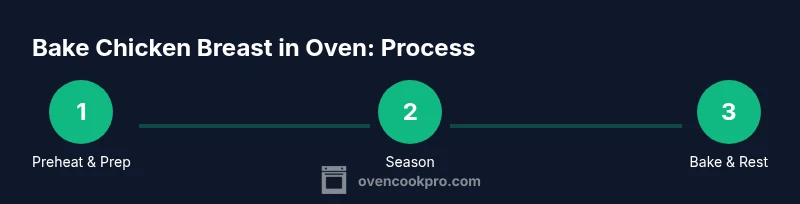
- 1
Preheat and prep
Preheat the oven to 375°F (190°C). While it heats, pat the chicken breasts dry with paper towels to remove surface moisture, which helps browning. Lightly oil the breasts and prepare your seasonings.
Tip: Starting with a dry surface yields better browning and surface texture. - 2
Season and oil
Brush a thin layer of olive oil on both sides, then season with salt, pepper, garlic powder, and paprika. Even coating ensures consistent flavor and color across each piece.
Tip: Even distribution prevents uneven doneness and flavor hotspots. - 3
Prepare the baking surface
Line your baking sheet with parchment paper or a silicone mat to prevent sticking. Place each breast in a single layer with space between pieces for hot air circulation.
Tip: Crowded pans trap steam and can lead to soggy surfaces. - 4
Bake and monitor
Bake for 20-25 minutes, depending on thickness. Use an instant-read thermometer to check for 165°F (74°C) in the thickest part.
Tip: Don’t rely on time alone—temperatures guide doneness more reliably. - 5
Rest and confirm doneness
Remove from the oven and rest the breasts for 5 minutes. Juices redistribute, improving slice-ability and moisture.
Tip: Resting is essential for juicy slices; cut too soon and juices run out. - 6
Slice and serve
Slice against the grain for tenderness and serve with a simple pan sauce or fresh herbs. Store leftovers in an airtight container for up to 3-4 days.
Tip: Slicing against the grain maximizes tenderness.
Questions & Answers
What is the best temperature for baking chicken breast?
A moderate temperature around 375°F (190°C) balances browning and moisture. Some cooks prefer 350–400°F (175–205°C) depending on thickness. Always verify doneness with a thermometer.
The best temperature is about 375 degrees, then check that the inside reaches 165 degrees.
How can I prevent dry chicken breast?
Pat dry, use a light oil coating, season evenly, and don’t overcook. Resting for 5 minutes after baking helps retain moisture across slices.
Dry chicken can be prevented by patting dry, oiling lightly, and not overcooking.
Should I cover the chicken while baking?
Uncovered baking allows browning and moisture loss to escape gradually, which helps create a flavorful exterior. Covering can trap steam and reduce browning.
No cover is usually best; uncovered helps browning and flavor.
Can I bake from frozen?
Baking from frozen is possible but takes longer and may end unevenly cooked. Thaw overnight for best results, then bake as usual.
You can bake from frozen, but it’s better to thaw first for even cooking.
How thick should chicken breasts be for even cooking?
Aim for uniform thickness, ideally around 1 inch (2.5 cm). If thicker, pound to even thickness or slice into evenly sized cutlets.
Even thickness helps the chicken cook evenly and stay juicy.
Watch Video
Main Points
- Bake at moderate heat for even browning and moisture
- Always check internal temperature, not just time
- Rest before slicing to preserve juiciness
- Uniform thickness yields the best, predictable results