What Temperature Bacon in the Oven Should Be
Discover the ideal oven temperature for bacon, how to prep, bake times by thickness, doneness tests, and practical tips for consistently crispy, evenly cooked bacon.


The recommended oven temperature for bacon is 400°F (200°C). Bake on a rimmed sheet with parchment until crisp, typically 12–15 minutes for standard slices, longer for thick-cut bacon. For chewy results, pull earlier; for crisp, finish under a broiler if needed.
What temperature bacon oven should be used for reliable results
If you’re asking what temperature bacon oven should use for reliable, evenly rendered bacon, 400°F (200°C) is the standard starting point. According to Oven Cook Pro, this setting balances fat rendering with crisp texture without excessive smoke. Some cooks prefer 375°F (190°C) for a milder finish or 425°F (220°C) for extra crispness, but those temperatures require closer attention to time. Preheat the oven and place a rimmed baking sheet lined with parchment to prevent sticking and make cleanup easy. For best results, bake in a single layer with space between slices to promote air circulation. Thick-cut bacon will render more slowly; you may need a minute or two longer than standard slices. For lean or very thick cuts, adjust accordingly. This article chapter lays out preparation, timing, and finish techniques to help you hit your preferred texture every time.
Preparing bacon for oven-baking
Begin by patting bacon dry to remove surface moisture; this helps render fat rather than steam. Separate slices so they aren’t overlapping, which ensures even crisping. Line a rimmed sheet with parchment paper or a silicone mat to prevent sticking. If you have a rack, you can place the bacon on the rack for extra drainage, but this is optional. Place slices in a single layer and give them a bit of air between them. Pre-cut thick-cut slices or bacon bits? Not necessary. The goal is an even, flat layer. If you thaw frozen bacon, do so fully so the slices separate easily. By starting with dry, well-spaced bacon on a prepared sheet, you set up a consistent bake and minimize cleanup after.
Timing and texture: crispy vs chewy outcomes
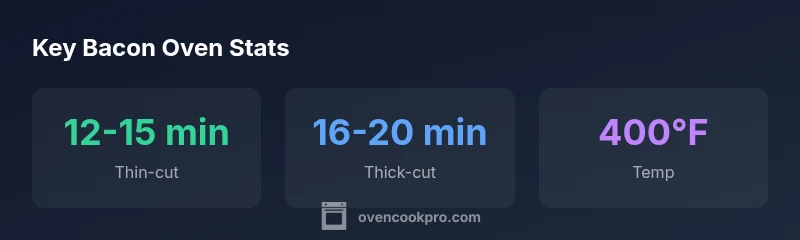
Time depends on thickness and oven accuracy; at 400°F, thin-cut bacon typically takes 12-15 minutes, thick-cut 16-20 minutes. The result ranges from chewy near the edges to deeply crisp in the center. If you prefer chewy bacon, pull at the 12-13 minute mark; for extra crispness, extend toward 15-20 minutes and monitor closely to prevent burning. Use an instant-read thermometer? Not necessary; visual cues and texture are best. The fat will render and the edges will be golden. Let the bacon rest on the sheet for 1-2 minutes after removal to finish crisping through carryover heat.
Preheating, sheet setup, and air circulation tips
Preheating helps achieve even browning and renders fat uniformly. Place parchment on a rimmed sheet or use a silicone baking mat. Avoid overcrowding; a single layer with space between slices ensures hot air can circulate around each piece. If you want the leanest results, you can tilt the sheet slightly to let fat run off, but you’ll still want space between slices. For extra drainage, use a rack set over the sheet so fat isn’t reabsorbed. If your oven runs hot or cool, adjust by a few minutes and check early.
Common mistakes and quick fixes
Common mistakes include crowding slices, skipping preheating, and using nonstick foil that sticks. Crowded bacon steams rather than crisps; fix by removing slices and cooking in smaller batches. If the oven isn’t preheated, the baking period drags. Start by preheating to 400°F for a full 15 minutes, then bake. If slices curl, flip halfway through; if you don’t have a rack, ensure to rotate the sheet halfway to even browning. Always line the sheet to reduce cleanup. A rimmed baking sheet is essential to catch the fat.
Finishing touches: rack, broil, and flavor twists
For the crispest finish, you can broil for 1-2 minutes at the end, watching closely to prevent burning. Some people prefer starting on a rack to allow fat to drain away, yielding crisper edges. If you want flavor twists, try dry rubs (pepper, smoked paprika, a light sprinkle of brown sugar) before baking, or brush with maple syrup during the last minute. Remember to monitor sugar surfaces to avoid burning. After removing, pat away excess grease with paper towels and rest briefly to set the crisp texture.
Testing doneness and serving ideas
Doneness is best judged by color and texture rather than a strict time. Look for deep golden-brown edges and a firm, crisp bite. If you like extra crispness, a quick broil can help, but watch carefully to prevent smoke. Serve immediately for maximum crunch, or use as a topping on salads, baked eggs, or breakfast sandwiches. Save the rendered fat for flavoring potatoes or vegetables if you like.
Safety, cleanup, and potential energy savings
Always handle hot sheets with oven mitts and keep children away from the oven. The fat can splatter; use a sturdy pan and consider venting or turning on the range hood. After cooling, scrape fat into a container for disposal and wash parchment or mats; a warm soak speeds cleanup. Oven-cooked bacon generates grease; if you’re mindful, you can reuse renderings in other dishes, but discard any burnt portions. Turning off the oven after finishing saves energy and reduces heat buildup in the kitchen.
Bacon oven timing by cut
| Bacon Type | Recommended Temp | Approx Time | Finish |
|---|---|---|---|
| thin-cut | 400°F | 12-15 minutes | Crisp |
| thick-cut | 400-425°F | 16-20 minutes | Crisp/Chewy |
Questions & Answers
What temperature should bacon be baked at for the best results?
Typically 400°F (200°C) is the starting point. It balances render and crispness, but you can adjust to 375°F for softer texture or 425°F for extra crispness.
Typically 400°F is the starting point for best results. Adjust to 375 or 425 for texture you prefer.
Should I preheat the oven before baking bacon?
Yes. Preheating ensures even rendering and consistent texture across slices. Preheat to 400°F, then add the bacon.
Yes, preheat to 400°F for even rendering.
Is it better to bake bacon on a rack or directly on parchment?
A rack helps fat drain away and can yield crisper results, but a parchment-lined sheet on a rimmed pan is perfectly fine for simple cooking.
Using a rack helps fat drain and crispness. If you don’t have one, parchment on a rimmed sheet works well.
How long does thick-cut bacon take to bake?
Thick-cut bacon usually takes about 16-20 minutes at 400°F, sometimes longer depending on thickness and oven variance.
Thick-cut typically takes 16-20 minutes at 400°F.
Can I bake bacon from frozen?
It’s best to thaw for even rendering, but you can bake frozen bacon starting at a lower temperature and adding a few minutes; monitor closely.
Thaw if possible; if baking from frozen, expect longer time and watch closely.
Is parchment paper safe for high-heat baking?
Yes, parchment is safe up to a point (typically up to 450°F). For higher heat, use a silicone mat or line with foil.
Parchment is generally safe up to 450°F; use silicone mat or foil for higher temps.
“Getting the temperature right is the single most reliable way to render bacon evenly and achieve consistent crispness.”
Main Points
- Bake at 400°F (200°C) for most bacon.
- Preheat the oven and use parchment.
- Space slices evenly; avoid overcrowding.
- Adjust time for thickness and desired doneness.
- Finish with a brief broil if extra crispness is needed.