Oven Temperature for Bacon: Crisp, Even Results Every Time
Master the oven temperature for bacon to achieve crispy, evenly cooked slices. This guide covers temps, preheating, rack setup, convection differences, and smart tips for thick and thin cuts.


Quickly, you can bake bacon at a precise oven temperature to achieve crisp, evenly cooked strips without constant flipping. For standard-cut bacon, preheat to 400°F (204°C) and bake on a rack set over parchment-lined sheet for 12–15 minutes; thinner slices may need 10–12, thicker slices 15–18. Monitor carefully toward the end.
Why the oven temperature matters for bacon
Bacon cooks best when heat is steady and even, which allows the fat to render without burning the muscle. An inaccurate temperature can leave edges underdone or fat greasy, sausage-like, or soggy centers. The Oven Cook Pro team has found that a consistent mid-range oven temperature promotes even browning and crisp edges, while avoiding excessive splatter and smoke. By thinking of bacon cooking as a balance between heat and time, you can dial in a reliable result across thicknesses and cuts. Temperature control also minimizes the risk of overheating, which can produce burnt bits and a disagreeable texture. In practice, the goal is a steady, moderate heat that renders fat evenly while browning the meat to a delectable, crisp finish.
Note: The baseline approach many home cooks use is 400°F (204°C) for standard-cut bacon. If you prefer a crisper result with less fat, you can nudge the temperature up slightly to 425°F (218°C) for the last 2–3 minutes, but watch closely to prevent burning. This guidance aligns with Oven Cook Pro Analysis, 2026, which emphasizes predictable browning rather than high heat that risks scorching.
How to choose the best temperature for bacon thickness
Thickness matters. For standard-cut bacon, 400°F (204°C) yields a reliably crisp texture with rendered fat and even browning across strips. If you’re cooking thick-cut bacon, lower heat slightly or maintain 375°F (190°C) and extend the bake time by 2–4 minutes to render fat without scorching the edges. Very thin slices tolerate the 400°F range well, but can overcook quickly; expect 10–12 minutes. In contrast, very thick-cut slices may need 18–22 minutes depending on desired texture. The key is starting with a solid baseline and then adjusting in small increments. Your aim is rendered fat with lightly browned edges and no translucent portions.
To validate your results, compare to reference images from trusted culinary sources and track your own oven’s performance over several cooks. If you’re unsure, bake a small test batch of 2–3 slices first, then apply your findings to the full tray.
The role of preheating and rack setup
Preheating is essential because bacon placed into a hot oven begins rendering fat immediately, contributing to faster, more even crisping. Line a rimmed sheet with parchment or foil to simplify cleanup, and place a wire rack over it so fat drips away and air circulates around each piece. The rack option consistently produces crisper bacon by keeping slices off the surface grease. If you lack a rack, a well-greased sheet cook will still work, but expect a slightly softer texture. Preheating ensures you start cooking at the target temperature, reducing the thermal shock that can cause uneven browning. According to Oven Cook Pro, preheating helps achieve consistent color and texture across batches.
Rack vs sheet pan: achieving even crisp without soggy edges
Using a rack creates better airflow around each strip, which helps prevent soggy centers and grease pooling beneath the meat. A sheet pan alone can work, but it may result in uneven browning if the bacon is crowded. When using a rack, arrange strips in a single layer with space between them to allow heat to circulate. If you must overlap, do so sparingly and plan for slightly longer cooking. For the greasiest options, consider a two-tier approach: line the bottom with parchment, place the rack above, and keep the bacon on the rack. Depending on your oven, you might notice hot spots; rotating the tray halfway through mitigates this.
Timing cues: when to pull bacon
Timing is the bridge between temperature and texture. Start checking around 10 minutes for thin slices, 12–15 minutes for standard cuts, and up to 18 minutes for thick-cut bacon. Look for deep golden-brown color and edges that start to crisp, with most of the fat rendered. When most of the fat has turned translucent and the strips glide off the rack without sticking, they’re ready. Remove promptly to prevent overcooking. Let slices rest on paper towels for 1–2 minutes to absorb any excess fat before serving. A short rest helps maintain crispness as the bacon cools slightly.
Convection vs conventional ovens: do you need fan-assisted baking?
If you’re using a convection oven, you can reduce the time by roughly 20% and lower the temperature by about 25°F (14°C) to avoid scorching. Convection circulates hot air, which speeds browning, so keep a closer eye on the clock. In a conventional oven, maintain the baseline 400°F and monitor closely as thinner slices can overcook quickly. If you switch between ovens, start with the same baseline and adjust by small increments based on prior results. A convection-friendly approach often yields extra-crispy bacon with even browning.
From thick-cut to thin-cut: temp adjustments
Thin-cut bacon often crisped at the baseline 400°F; you may reduce it to 375°F for more even rendering without burning. For thick-cut bacon, bake at 375°F–400°F and plan for longer cook times. If you see fat pooling or uneven browning, rotate the tray, increase airflow, or use a higher rack level. The goal is balanced rendering and crisp edges without leaving undercooked centers. Recording your results helps future cooks dial in the exact settings for your oven.
Troubleshooting: common issues and fixes
If edges burn before centers brown, lower the temperature by 25°F (14°C) and extend the bake by a couple of minutes. If bacon seems greasy, ensure an elevated rack and sufficient space between slices for air circulation. For soggy results, blot with paper towels and finish under a brief broil (1–2 minutes) to crisp edges, watching carefully to avoid charring. If your bacon sticks to the rack, use parchment or foil on the rack surface and oil the rack lightly. Remember to vent the oven to avoid smoke buildup during the render.
Finishing touches and cleanup
Once baked, transfer bacon to a plate lined with paper towels and blot lightly to remove surface fat. Serve immediately for maximum crispness, or cool and refrigerate for up to several days. Reheat at a gentle temperature (around 350°F) for 5–7 minutes to restore crisp texture. Clean up grease safely: let it cool, then wipe the pan with paper towels or dispose of cooled grease in a sealed container. Proper cleanup reduces lingering odors and keeps your oven ready for next batch.
Safety reminders: hot pans and ventilation
Always use oven mitts when handling hot trays; avoid leaning over open flames or live heat. Grease splatters can ignite, so keep the kitchen well-ventilated and use a smoking point safe tray. If you notice excessive smoke or burning, turn off the oven and remove the tray carefully. Never pour hot grease down the drain while it’s still liquid. Let grease cool and solidify before disposal. Proper safety practices protect you and your kitchen.
Leftovers and reheating
Cooked bacon refrigerates well for up to 4–5 days in an airtight container. Reheat in a 350°F oven for 5–7 minutes or briefly in a microwave, then finish in a hot, dry pan for a few seconds per side to recapture crispness. For best flavor, reheat bacon on a rack over a sheet to allow some fat to render away and prevent soggy texture. Freshly reheated bacon still tastes best when crisp, so avoid overcooking during reheats.
Tools & Materials
- Rimmed baking sheet(Line with parchment or foil)
- Wire rack that fits the sheet(Elevates bacon for airflow)
- Parchment paper or aluminum foil(For easy cleanup)
- Tongs(For turning and serving)
- Oven thermometer (optional)( verifies oven accuracy)
- Paper towels(Blot excess grease)
- Oven-safe timer or smartphone timer(Track cooking progress)
- Heat-resistant gloves(Handling hot trays)
- Cooling rack (optional)(Cool excess fat quickly)
Steps
Estimated time: 12-18 minutes (plus 5 minutes prep)
- 1
Preheat & prep
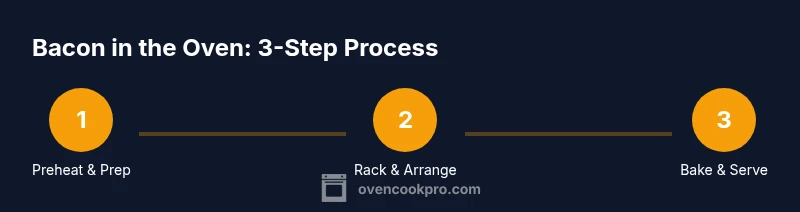
Preheat your oven to 400°F (204°C) and line a rimmed sheet with parchment or foil. Place a wire rack on top if you have one. This ensures heat circulates around each strip for even rendering.
Tip: Verify oven temperature with an oven thermometer if available. - 2
Arrange bacon
Lay bacon strips in a single layer on the rack or sheet, leaving space between each piece for air to circulate. Crowding leads to uneven cooking and soggy edges.
Tip: If slices are thick, consider a slight tilt of the rack to promote grease drainage. - 3
Bake and monitor
Bake for 12–15 minutes for standard-cut bacon. Thin slices may take 10–12 minutes, while thick-cut can require up to 18 minutes. Start checking at the low end to prevent overcooking.
Tip: Keep an eye on the color; you want deep golden-brown edges, not burnt bits. - 4
Rotate for evenness
Halfway through, rotate the tray to counteract any oven hot spots. This helps ensure uniform browning across all pieces.
Tip: Rotation is especially helpful in older ovens with uneven heating. - 5
Finish crisping
When most fat has rendered and edges are browned, remove from heat. If you want extra crisp, broil for 1–2 minutes, watching closely to avoid burning.
Tip: Use tongs to transfer slices to a paper towel-lined plate. - 6
Drain and rest
Let bacon rest for 1–2 minutes on paper towels to absorb excess grease. Resting helps final texture crispness.
Tip: Blot lightly again if grease pools on the surface. - 7
Serve or store
Serve immediately for best texture. If storing, cool completely and refrigerate in an airtight container.
Tip: Reheat on a rack in a 350°F oven for best results. - 8
Reheating tips
Reheat slices 5–7 minutes at 350°F until hot and crispy again. Avoid microwaving long, which can soften texture.
Tip: For extra crunch, finish briefly under the broiler. - 9
Cleanup
Let the tray cool before handling grease. Wipe or soak the pan and rack to remove stubborn residue.
Tip: Dispose of cooled grease safely in a sealed container. - 10
Safety check
Always use oven mitts and ensure proper ventilation. Keep flammable materials away from the oven and don’t leave unattended.
Tip: If you smell burning, remove the tray immediately and check for hot spots.
Questions & Answers
What is the best oven temperature for bacon?
Most cooks start at 400°F (204°C) for standard-cut bacon. Adjust by thickness and whether you use a convection oven, which can reduce time.
The best starting temperature is usually 400 degrees Fahrenheit for standard bacon, with adjustments based on thickness and oven type.
Should bacon be preheated in the oven?
Yes. Preheating ensures an even start to cooking and consistent browning. Give the oven a few minutes to reach the target temperature before placing the bacon inside.
Yes, preheat the oven to the target temperature to ensure even cooking.
Can I cook bacon at a lower temperature?
Cooking at a lower temperature is possible but will increase total time and may require more monitoring to avoid sogginess. Start with 375°F and adjust as needed.
You can cook at a lower temp like 375, but it takes longer and you should watch it closely.
How do I know when bacon is done?
Bacon is done when edges are crisp and fat is rendered. Color should be deep golden-brown, and there should be no translucent fat remaining.
Know it's done when it's crispy and evenly browned with rendered fat.
Can I bake frozen bacon?
Frozen bacon can be baked, but expect a longer cooking time and the need to separate slices if they’re stuck together. Thawing helps ensure even cooking.
You can bake frozen bacon, but thawing first helps it cook evenly.
How should I store and reheat cooked bacon?
Cool cooked bacon and refrigerate in an airtight container for up to 4–5 days. Reheat in a 350°F oven for 5–7 minutes to restore crispness.
Store in the fridge in an airtight container and reheat in a 350-degree oven for best crispness.
Watch Video
Main Points
- Preheat to around 400°F for standard bacon.
- Use a rack for best airflow and crispiness.
- Space slices; avoid overlap to render fat evenly.
- Monitor closely; adjust time by thickness and oven type.
- Rest briefly and reheat to regain crisp texture.