What Size Oven for a 20 lb Turkey: A Practical Guide
Discover the right oven size for a 20 lb turkey with practical tips on fit, airflow, pan size, and timing to achieve juicy, evenly roasted results.


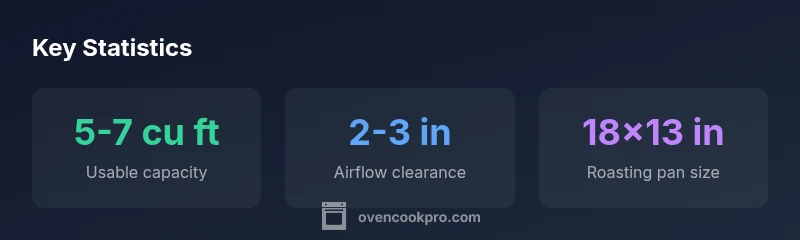
To roast a 20 lb turkey, you need enough oven space for the bird plus airflow for even cooking. In practice, most home ovens with a usable capacity of 5–7 cubic feet can accommodate a 20 lb turkey, unstuffed, with a standard roasting pan. For extra headroom, aim for 6–7 cu ft. Always measure and test-fit before starting.
Why oven size matters for a 20 lb turkey
Choosing the right oven size isn’t just about fitting a bird on a rack; it’s about ensuring airflow around the pan, even heat distribution, and safe handling of the roasting setup. A 20 lb turkey needs adequate space for the pan, a rack, and a little air gap on all sides. When the turkey sits too close to the oven walls or a crowded rack, you risk uneven browning and longer cooking times. For unstuffed birds, the margins are more forgiving, but stuffing adds density and can reduce effective space. In practice, most households find that a typical 5–7 cubic-foot oven can accommodate a 20 lb turkey if you choose the right pan and arrange the racks thoughtfully. If you’re planning a stuffing-filled roast, you may want to consider a larger oven or a two-pan setup to maintain airflow. This is especially important to prevent hot spots and ensure the entire bird reaches a safe internal temperature.
- Plan for airflow: leave space around the pan for hot air to circulate.
- Use a sturdy roasting rack to lift the bird for even heat exposure.
- Don’t cramp the oven with multiple dishes; prioritize the turkey’s position for consistent cooking.
How to measure your oven's usable space
Accurately assessing oven space before you buy or rearrange is crucial. Start by calculating the interior width, height, and depth, then convert to cubic feet if you want a precise comparison. Practically, you can estimate usable space by removing racks and placing a mock pan that represents your turkey setup on the rack. If the pan fits with at least 2–3 inches of clearance on all sides, you’re likely in a good range for a 20 lb bird. Remember to consider door clearance when the oven is open, and ensure you have room to insert and remove the pan without bumping the turkey. If you’re unsure, err on the side of more space rather than less—the extra room helps with even browning and easier handling.
- Measure width x depth x height of the cavity.
- Subtract rack thickness and space for handles or knobs.
- Try a test-fit with a representative pan before Thanksgiving.
- Factor in a thermometer and baste pan without crowding.
Planning your roasting setup for a 20 lb turkey
Roasting a large bird requires a careful setup. A heavy-duty roasting pan with a rack is a must; this lifts the turkey so heat reaches the bottom, and gravity helps air circulate around the meat. An 18x13 inch pan is a common size that fits in many ovens, but you should confirm fit in your particular cavity. Place the pan on a rack that can be adjusted to the height that yields the best browning on the breast while allowing the legs to cook through. If your oven has a convection setting, a shallow pan and a little extra space can yield more even crusting. Always preheat so you’re roasting into a steady dry heat rather than a cold start, which can slow down the browning process.
- Use a rack for air circulation.
- Confirm that the pan can slide in and out without obstruction.
- Ensure you have room to insert a meat thermometer without hitting the rack or walls.
Stuffed vs unstuffed: impact on fit and heat distribution
A stuffed turkey is denser and releases moisture differently than an unstuffed one. Stuffing can slow down heat penetration to the center, so you might require more time and slightly more space to achieve safe temperatures. If you’re working with a standard oven, a well-fitted unstuffed 20 lb turkey is generally easier to manage in terms of space and heat distribution. If you must stuff, consider using a larger cavity or cooking the stuffing separately if your priority is achieving a crispy skin and even browning. Always use a food thermometer to verify the internal temperature of both the turkey and the stuffing.
- Stuffing increases mass and moisture, affecting heat transfer.
- Allow extra time and ensure air can reach the interior.
- Use separate thermometers for turkey and stuffing when feasible.
Convection vs conventional ovens for large birds
Convection ovens promote faster cooking through circulating hot air, which can help browning and evenness when space is adequate. If you’re using convection for a 20 lb turkey, you may be able to lower the temperature by about 25°F and monitor more closely for doneness. The key is not to crowd the oven and to ensure there’s adequate clearance around the bird for air to move. If you’re cooking in a conventional oven, rely on steady heat and a thermometer to guide your roasting timeline, since heat distribution can be more variable without forced air.
- Convection improves browning and cook times when space allows.
- Adjust temperatures modestly to avoid over-browning.
- Use a reliable thermometer to avoid under- or overcooking.
Alternatives if your oven is too small
If your kitchen oven isn’t generous enough for a 20 lb turkey, consider cooking in two stages: roast a portion, then finish in a countertop roaster or another cooking surface. A countertop roaster can be a useful backup for large birds, offering a compact heat source with a separate cavity. Spatchcocking the turkey (butterflying) reduces the overall height and can help with even cooking in smaller ovens. You can also pre-roast the legs or thighs separately and combine with breast slices. Each option requires careful planning and a separate thermometer for safety.
- Two-stage roasting with a countertop roaster.
- Countertop roaster as a backup.
- Spatchcocking for smaller cavities.
- Monitor with thermometers for safety.
Practical timing, temperatures, and safety tips
A reliable roasting plan blends oven size with heat management. Preheat to a steady temperature around 325–350°F, depending on your recipe. Use a high-quality meat thermometer and check the internal temperature in the thickest part of the thigh and the breast. Plan for rest time after roasting to redistribute juices. If your oven is 5–7 cu ft and you’re close to the edges, you might need to insert the turkey carefully to avoid crowding, which can affect browning and doneness. Always follow food-safety guidelines and avoid letting the internal temperature drop below safe thresholds for too long.
- Preheat to a stable roasting temperature.
- Insert thermometer into the thigh without touching bone.
- Rest the meat before carving to maintain juiciness.
- Do not crowd the cavity or you’ll hinder airflow.
Quick-start checklist for preparing a 20 lb turkey in your oven
Before you preheat, assemble your roasting setup and verify fit. Confirm you can slide the pan in and out with a clear space of at least 2–3 inches around. Have your thermometer ready, and prepare basting tools and a pan with a rack. Check that your oven has adequate ventilation and that you won’t need additional cookware taking up extra space. A little planning goes a long way toward juicy, evenly browned results.
- Check interior space and pan fit.
- Prepare thermometer, rack, and pan.
- Preheat to a steady temperature and test airflow.
- Allow the turkey to rest after cooking for maximum juiciness.
Overview table: oven size considerations for a 20 lb turkey
| Attribute | Guidance | Notes |
|---|---|---|
| Usable capacity | 5-7 cu ft | Oven Cook Pro Analysis, 2026 |
| Pan size compatibility | 18x13 inches | Fits in most standard ovens |
| Airflow clearance | 2-3 inches | All sides around the pan |
Questions & Answers
Can a 20 lb turkey fit in a standard oven?
Yes, in most standard home ovens with 5–7 cu ft capacity, you can fit a 20 lb turkey if you choose a suitable roasting pan and ensure adequate airflow. Don’t cram the cavity—keep space for heat to circulate.
Yes, most standard ovens can fit a 20 lb turkey if you leave room for airflow.
Does stuffing affect oven size requirements?
Stuffed birds are denser and require more space around the turkey than unstuffed birds. If you stuff, consider a larger oven or a two-pan approach to maintain air circulation and safe doneness.
Stuffing adds density; you may need more space or a second pan.
What can I do if my oven is small?
If your oven is small, roast in batches using a countertop roaster as a backup, or consider spatchcocking the turkey to reduce height and improve even cooking. Preplanning is essential.
If your oven is small, try roasting in batches or use a countertop roaster.
Is convection better for a large turkey?
Convection can improve heat circulation and browning, but you may need to adjust temperature and monitor closely to avoid over-browning. Space around the bird remains crucial regardless of the setting.
Convection helps with browning, but keep space around the turkey.
How can I test-fit the turkey before Thanksgiving?
Use a dummy pan in the oven with racks adjusted to mimic your setup. Ensure there’s enough clearance to slide the pan in and out safely. This prevents surprises on roast day.
Test-fit with a dummy pan to confirm clearance.
“A properly sized oven isn't just about capacity; it's about airflow and even heat distribution to ensure juicy meat. Plan for space around the turkey and test-fit your roasting setup before cooking.”
Main Points
- Measure oven space before planning the roast
- Aim for 5–7 cu ft usable capacity for a 20 lb turkey
- Use an 18x13 inch roasting pan with 2–3 inches clearance
- Test-fit your setup before Thanksgiving