What Oven Mode for Lasagna: An Expert Guide
Discover the best oven mode for lasagna, with practical guidance on bake vs convection, moisture control, and timing. Learn how Oven Cook Pro recommends handling layers, browning, and rest to achieve creamy, perfectly set lasagna.


In this guide you’ll learn exactly which oven mode to use for lasagna and why. The guide covers bake vs convection, timing, moisture management, and how to avoid soggy edges, with practical tips from Oven Cook Pro. By the end, you’ll know when to use conventional bake and when convection helps to finish evenly.
Why the oven mode matters for lasagna
According to Oven Cook Pro, understanding what oven mode for lasagna is the single most impactful choice you make when baking this dish. The mode you select determines how heat circulates, how moisture is retained, and how quickly the cheese browns on top. Getting this right helps you achieve creamy, tender noodles with a richly flavored sauce and a stable, cohesive slice rather than a greasy, uneven mess. In this section, we’ll explain the core differences between conventional bake and convection, why they matter for layered casseroles, and how smart mode selection reduces guesswork. You’ll also find practical takeaways you can apply in your kitchen tonight, regardless of your oven’s age or model. Throughout, we’ll tie guidance back to common lasagna textures: moist sauce that clings to noodles, lightly browned edges, and a unified center that holds its shape when plated.
Understanding Common Oven Modes
Most home ovens offer several mainstream modes, with conventional bake and convection bake being the most relevant to lasagna. Conventional bake relies on radiant heat from elements at the top and bottom, delivering steady heat with less air movement. Convection bake uses a fan to circulate hot air, which speeds cooking and often promotes browning on surfaces. Some ovens offer specialized modes like broil, which blasts intense heat from above, or hybrid modes that mix elements and fans. For lasagna, the goal is even cooking from edge to center, with a sauce that doesn’t slide off the noodles and a top layer that browns to a quilted, cheesy finish. We’ll focus on conventional bake as the default and discuss when convection can be advantageous without sacrificing texture.
Bake vs Convection for Lasagna: Pros and Cons
Pros of Conventional Bake: predictable moisture, gentler on delicate fillings, consistent interior heat. Cons: slower browning and longer overall bake. Pros of Convection Bake: faster cooking, more even browning, potential energy savings if timed well. Cons: can dry edges or overcook thin edges if you don’t monitor closely. In practice, most lasagna recipes perform best in conventional bake, especially when layering and sauce thickness vary. If you do choose convection, prepare to reduce the oven temperature slightly and watch the lasagna during the final minutes to avoid overly dark edges. The idea is to balance texture, moisture, and appearance to deliver a slice that holds its shape and tastes rich.
How Temperature and Time Interact With Mode
Mode choice affects both how quickly heat is transferred and how moisture behaves inside the dish. When baking lasagna in conventional mode, you typically aim for a steady, moderate heat that finishes through the center without drying the top. Convection accelerates heat transfer, so many home cooks reduce the temperature and may shorten the total bake time. Timing is also influenced by whether you cover the dish with foil or leave it uncovered for the final browning stage. The moisture content of your sauce, whether you use no-boil noodles, and the size of your baking dish all influence outcomes. By understanding these interactions, you can adjust mid-bake if you notice the edges browning too fast or the center remaining underdone. The result is a lasagna with uniform texture and a glossy, cheesy top.
Preparing the Pan, Noodles, and Filling for Even Cooking
Proper preparation sets the stage for even heat distribution and consistent layers. Choose a dish size that allows for uniform thickness; a 9x13 inch pan is the standard, but you can use similar volumes in larger or smaller dishes with adjusted noodle counts. Sauce should be thick enough to cling to noodles without pooling excessively; too watery sauce invites sogginess and longer bake times. No-boil noodles save prep steps but demand adequate moisture; if using regular noodles, parcook them just enough to bend without tearing. Layer noodles, sauce, and cheese in even, parallel bands, avoiding air pockets. Finally, let ingredients rest briefly after assembling to minimize shifting during the bake and to help flavors meld before the heat hits them.
Step-by-Step: From Preheat to Rest
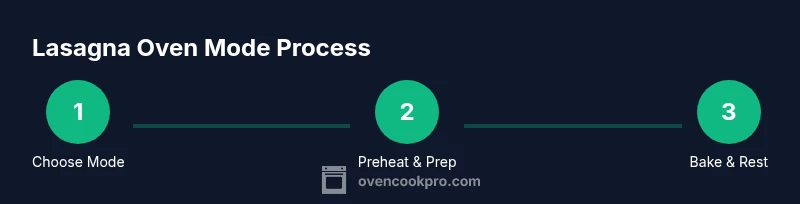
Starting with a clear plan helps you execute consistently. Preheat the oven to your chosen bake setting and prepare your pan with a light coating of oil or nonstick spray. Assemble the lasagna with even layers of noodles, sauce, and cheese; aim for uniform thickness across the pan. Decide on your primary oven mode: conventional bake as default, or convection if your oven supports it and you monitor browning. Bake covered with foil for most of the time to trap moisture, then uncover to finish browning. Check for doneness by testing the center with a knife or thermometer and ensure the internal temperature reaches a safe level throughout. Allow the lasagna to rest for at least 15 minutes before slicing to help it set and slice cleanly.
Troubleshooting Common Lasagna Issues
Common issues include soggy edges, undercooked centers, and watery sauce pooling on top. If edges brown too quickly, tent with foil or reduce the oven temperature slightly and continue baking. If the center remains wet, consider covering longer or allowing more resting time after removing from the oven. A sauce that's too thin can cause a watery texture; thicken sauce with simmer time or a cornstarch slurry if needed. For uneven cooking, rotate the pan halfway through bake or switch to convection only if you’re confident in its timing. Finally, ensure your pan is the right size so layers aren’t too tall or too thin, which can disrupt even heat distribution.
Variations: Gluten-Free or No-Boil Noodles
Lasagna can be adapted for dietary needs without sacrificing oven mode quality. Gluten-free noodles often absorb moisture differently, so sauce thickness and bake time may require small adjustments. No-boil noodles are convenient but rely on sauce to hydrate adequately; you may need to extend bake time slightly or ensure the sauce is generously seasoned. In all cases, the same principle applies: cover early to hold steam if you want a tender interior, then finish uncovered for a golden top. Convection can help with browning in these variations, but monitor closely to prevent tops from overcooking.
Serving Tips and Make-Ahead Options
Let lasagna rest after baking to allow layers to set and flavors to meld; this makes slicing neater and helps the sauce reabsorb. You can refrigerate assembled lasagna for later baking; if reheating, bake covered until heated through, then uncover to re-brown the top. For make-ahead meals, assemble a day ahead and refrigerate, or freeze individual portions for quick future meals. When serving, cut cleanly with a sharp knife and wipe the blade between slices to maintain neat portions. The right oven mode can also influence reheating quality, but the key is even heat and moisture retention to preserve texture.
Quick Reference: Quick Mode Checklist
Keep conventional bake as default for a reliable result. Use convection only if you’re comfortable with tighter browning and shorter bake windows. Preheat fully, cover early, and uncover for the final browning. Check center doneness and allow resting time before slicing. Select a dish size that yields even noodles, balanced sauce, and a stable center. If you’re short on time, limit the layers to avoid overcrowding and ensure heat reaches the middle.
Tools & Materials
- Oven with multi-mode capability(Must support convection and bake modes)
- Oven thermometer(To verify oven accuracy)
- 9x13 inch baking dish(Glass or metal; ensure it fits center rack)
- Aluminum foil(To tent lasagna if needed)
- Parchment paper(Optional for easier cleanup)
Steps
Estimated time: 60-75 minutes
- 1
Preheat and prep
Preheat the oven to your chosen bake setting. Lightly oil the baking dish and assemble ingredients so everything is within reach when you start layering.
Tip: Preheating ensures the oven reaches a stable temperature before the first layer hits heat. - 2
Assemble lasagna in even layers
Spread a thin layer of sauce on the bottom, then layer noodles, sauce, and cheese in even bands. Aim for consistent thickness across the pan to promote uniform cooking.
Tip: Avoid air gaps; they can cause uneven heating and weak slices. - 3
Set your primary oven mode
Default to conventional bake for predictable results. If you opt for convection, be prepared to monitor browning and reduce time slightly.
Tip: Center the rack to maximize even heat distribution. - 4
Bake covered to trap moisture
Cover with foil to retain moisture during the initial bake. This helps the noodles hydrate and the sauce meld with the fillings.
Tip: If edges brown too fast, tent with foil to protect them. - 5
Finish browning and check doneness
Remove foil in the final phase to brown the top. Check the center with a knife or thermometer to ensure it’s hot throughout.
Tip: The center should feel firm, not jiggly, when sliced. - 6
Rest before serving
Let the lasagna rest at least 15 minutes after baking to set the slices and improve texture.
Tip: Resting makes cutting neater and helps flavors settle.
Questions & Answers
What oven mode is best for lasagna?
For most lasagna recipes, conventional bake yields the most reliable, even doneness. Convection can be used for browning, but monitor closely and consider reducing the temperature or bake time.
For most lasagnas, use conventional bake. If you want extra browning, you can use convection with careful monitoring.
Should I preheat the oven for lasagna?
Yes, preheating ensures a steady heat from the first layer. It helps the noodles hydrate properly and reduces inconsistent texture.
Yes—preheating helps everything cook evenly from the start.
Foil on or off during baking?
Cover lasagna with foil during the initial bake to trap moisture, then uncover for the final browning stage to develop a golden top.
Cover it early to trap moisture, uncover later to brown.
How do I know lasagna is done?
The center should be hot and steaming throughout. A knife or thermometer can help confirm the center isn’t cold; edges should be set but not burnt.
Check that the center is hot all the way through and the edges are set.
Can I use no-boil noodles?
Yes, no-boil noodles are common. They require adequate moisture in the sauce and may need a bit longer bake time to hydrate fully.
No-boil noodles work fine with enough sauce moisture and a little extra bake time.
How long should lasagna rest after baking?
Rest the lasagna for 15-20 minutes before slicing. Resting helps the layers set and makes slicing neater.
Let it rest about 15 to 20 minutes before slicing.
Watch Video
Main Points
- Choose conventional bake as default.
- Convection needs monitoring and temperature adjustment.
- Cover early to trap moisture and uncover to brown.
- Rest slices before serving for clean cuts.
- Layer evenly to promote uniform doneness.