What Oven for Lasagna: The Complete How-To Guide
Find the best oven and settings for lasagna, with practical bake temps, rack position tips, and foil methods for consistent layering and browning and texture.


You’ll learn how to pick the right oven and settings for lasagna, including baking temperatures, rack positioning, and if convection helps. Before you start, gather the basics: a reliable oven, a heat-safe dish, and parchment or foil for layering. We'll compare conventional vs convection and outline practical steps.
What oven for lasagna: key choices
According to Oven Cook Pro, the choice of oven type and how you heat it matters as much as the recipe itself when baking lasagna. The heat distribution inside a conventional oven differs from a convection oven, affecting how evenly the sauce simmers, noodles hydrate, and cheese browns. For a standard lasagna, many home cooks start with a reliable conventional oven and moderate bake temperatures, then decide whether to switch to convection for more even browning. In this guide we’ll break down how to choose an oven, what settings to use, and how to position pans for best results. If you’re upgrading appliances or just rethinking your bake strategy, this section will help you map out the ideal oven setup for lasagna and similar baked pastas.
Conventional vs convection: which is better for lasagna?
Conventional ovens use radiant heat from the top and bottom elements, which can create a nice crust but sometimes uneven browning. Convection ovens add a fan and exhaust system that circulate hot air, promoting faster, more even heat transfer. For lasagna, convection can shorten bake times and reduce hot spots, but it can also dry out edges if the dish isn’t covered or protected. Oven Cook Pro notes that starting with a conventional bake at 375–390°F (190–199°C) on the middle rack gives reliable results for a classic noodle-to-sauce ratio. Use convection only if you’re watching for especially even top browning and you reduce the temperature by about 25°F (14°C).
Temperature basics: recommended range and why
A typical lasagna bake sits in the 375–390°F (190–199°C) range. This temperature allows the noodles to hydrate without becoming mushy and gives cheese enough time to melt into sauces without scorching. If you’re using a no-boil noodle variant, you may want to lean toward the lower end of this range to prevent drying. For thicker layers or larger pans, a slight increase toward 400°F (204°C) can help center layers cook through, but you’ll need to monitor to avoid an over-browned top. If you’re using convection, lower the temperature by about 25°F (14°C) and check for doneness earlier.
Rack placement and layering technique
Position the lasagna on the middle rack for even heat distribution. If you’re baking a tall pan, use a second rack above it with cautious spacing to ensure both pans receive heat without crowding. Layer thickness influences bake time: thicker stacks require longer cooking, especially in the center. For best results, spread a consistent sauce-to-ricotta-to-noodle ratio, keep cheese from scorching by tucking it toward the center, and avoid over-dipping noodles in liquid. A snug cover with foil can prevent dry edges while the center finishes cooking.
Bakeware choices and avoiding soggy edges
Glass and ceramic dishes heat more slowly but retain heat evenly, which can help prevent soggy edges by avoiding sudden temperature surges. Metal pans heat quickly, encouraging browning, but edges may brown faster. If you’re using no-boil noodles, consider a glass dish so you can observe moisture levels more clearly. Lids aren’t common for lasagna, but using foil to cover the top during the initial bake stage prevents moisture loss. For crispy edges without dryness, add a light spray of oil on the dish and monitor the top crust closely.
Preheating, cooking times, and how to test doneness
Preheat the oven fully to your chosen temperature before sliding in the lasagna. Typical bake times range from 45–60 minutes for standard layers, with a final 10–15 minute uncovered browning phase. The center should reach a safe internal temperature around 190–205°F (88–96°C). Use a thermometer inserted into the center to confirm. If your sauce separates or the edges burn before the center is done, cover with foil and continue baking, then uncover to finish browning.
Using foil and lids and how to prevent drying
Foil is a lasagna’s ally: it traps moisture and keeps noodles soft while the center cooks. Start baking covered for the majority of the time, then remove foil for the last 10–15 minutes to develop a golden top. If you see steam building and lifting sauce from cheese, reduce the heat slightly or shorten bake time to keep moisture balanced. For extra protection against drying, place a small amount of sauce on top to keep the surface from absorbing too much heat.
Special cases: large pans, multiple racks, high-sugar sauces
For large pans or multi-rack setups, ensure there’s at least 1–2 inches of clearance between pans so air can circulate. When using high-sugar sauces, watch color changes carefully; sugar-rich sauces brown quickly and can burn. If you bake with a water bath or a pan of hot water on the lower rack, this creates a gentler, more uniform heat environment that helps avoid intense center cracking or cracking at the edges. Keep an eye on bake times and adjust as needed.
Getting a practical plan for lasagna baking with your oven
Every oven behaves a little differently, so testing a small test pan can save you from overcooking a full pan. Start with a conventional approach using middle-rack heat, then adjust for convection if you experience uneven browning or undercooked centers. Keep notes on temperature, rack position, and bake time for future lasagna batches. With practice, you’ll know how your oven responds and how to tailor the technique for your favorite lasagna recipe.
Tools & Materials
- Oven with reliable thermostat(Ensure calibration accuracy; consider an oven thermometer for verification.)
- Heat-safe baking dish (9x13 inch or similar)(Prefer glass or ceramic for even heating; ensure lid/foil capacity.)
- Aluminum foil(Heavy-duty if possible to prevent tearing during removal.)
- Parchment paper (optional)(For easy release if you’re layering noodles directly in tray.)
- Oven-safe spatula or spoon(For layering and serving without damaging the dish.)
- Oven thermometer or probe thermometer(To verify center temperature is 190–205°F (88–96°C).)
- Kitchen timer or smartphone timer(Keeps bake time precise and prevents overcooking.)
- Meat or instant-read thermometer (optional)(Useful for checking the filling’s temperature.)
- Mixing bowls and spoons(For mixing ricotta, eggs, and cheeses if making from scratch.)
- Non-stick spray or light oil(Helps prevent sticking on metal pans.)
Steps
Estimated time: 1 hour 40 minutes
- 1
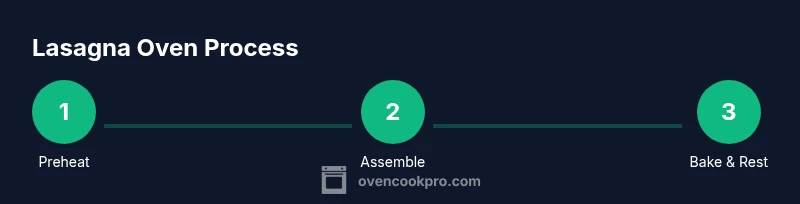
Preheat the oven
Set your oven to 375–390°F (190–199°C) and allow it to fully preheat. This ensures even heat distribution from the start and helps prevent a cold center. If using convection, plan to reduce by 25°F (14°C) and monitor the bake more closely.
Tip: Use an oven thermometer to confirm the actual temperature matches the dial. - 2
Prepare the baking dish and fillings
Thoroughly oil or spray your dish to prevent sticking. Mix ricotta with egg and seasonings, grate cheeses, and have sauce ready. For no-boil noodles, ensure moisture is sufficient to hydrate during baking.
Tip: If you’re using no-boil noodles, add a little extra sauce to keep noodles moist. - 3
Assemble lasagna layers
Layer sauce, noodles, ricotta mixture, and cheese in even, consistent quantities. Aim for uniform thickness to avoid dry edges or undercooked centers. End with a final layer of sauce and cheese.
Tip: Avoid thick clumps of ricotta at the edges to prevent uneven browning. - 4
Cover and bake on middle rack
Cover the dish tightly with foil to trap moisture and prevent drying. Bake for about 30–40 minutes, depending on pan size and noodle type.
Tip: If using convection, reduce time slightly and check earlier to avoid over-browning. - 5
Uncover and finish browning
Remove foil and bake 10–15 more minutes to develop a golden top and bubbly edges. If edges start to brown too quickly, shield with foil and reduce heat slightly.
Tip: Watch the top closely during the final minutes to prevent scorching. - 6
Check doneness and rest
Center should reach about 190–205°F (88–96°C). Let the lasagna rest 10–15 minutes before slicing to set the layers for clean servings.
Tip: Resting helps cheese rebind layers and makes slicing easier. - 7
Serve and store leftovers
Slice and serve while warm. Refrigerate leftovers within two hours and reheat gently to preserve moisture and texture.
Tip: Cut servings with a warm knife for neat portions.
Questions & Answers
What oven type is best for lasagna?
A conventional oven is reliable for classic lasagna, but a convection oven can improve browning and evenness if monitored carefully. Start with conventional heat and only switch to convection if you need more even top browning.
A conventional oven works well for lasagna, with convection as an optional upgrade for even browning.
Should I preheat and how long does lasagna take to bake?
Yes, preheat fully to 375–390°F (190–199°C). Typical bake time is 45–60 minutes, plus 10–15 minutes uncovered for browning. Check the center temperature near 190–205°F (88–96°C).
Preheat well, bake about 50–60 minutes, then finish browning for 10–15 minutes and check the center temperature.
Can no-boil noodles be used without extra moisture?
Yes, but you may need a bit more sauce to keep noodles hydrated. No-boil noodles absorb liquid more slowly, so balance sauce and cheese to prevent dryness.
No-boil noodles need extra sauce to stay moist; balance your layering accordingly.
Is foil or a lid better for lasagna?
Foil is commonly used to trap moisture during the initial bake. Remove foil toward the end to brown the top. Lids are less typical for lasagna but can be used on some cookware.
Foil helps keep moisture in early; uncover to browning at the end.
How can I prevent soggy edges?
Use a middle rack, bake with ample sauce on the edges, and consider a slightly higher dish height so edges aren’t touching hot air directly. A foil shield on the edges can help during the final stage.
Bake on the middle rack and protect edges with foil if needed.
Watch Video
Main Points
- Choose conventional or convection based on browning preference.
- Maintain consistent layer thickness for even cooking.
- Cover early, uncover late to balance moisture and color.
- Preheat fully and verify center temperature for doneness.
- Rest before slicing for clean, stable portions.