Roast a Chicken in the Oven: A Complete How-To
Master the oven-roasted chicken with expert guidance on prep, seasoning, roasting temps, and resting for juicy, browned results. Includes safety tips, tools, step-by-step process, and troubleshooting.


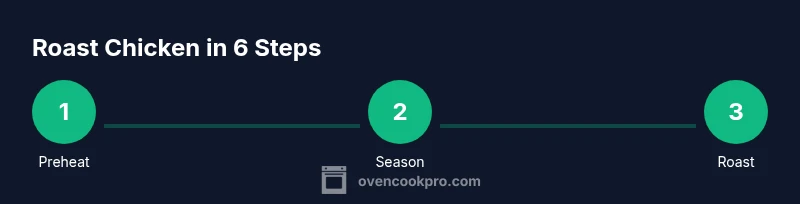
You will learn how to roast a whole chicken in the oven to juicy, evenly browned perfection. Key steps include patting dry, seasoning, proper preheating, trussing, roasting at a high start temperature then finishing at a moderate heat, and resting before carving. A reliable result depends on using a thermometer to hit 165°F in the thickest part.
Overview and Food Safety Considerations
Roasting a whole chicken in the oven is a reliable, crowd-pleasing technique that yields crisp skin and juicy meat when done with care. Before you begin, practice strict food safety: thaw thoroughly in the refrigerator, wash hands and surfaces after handling raw poultry, and keep raw juices away from ready-to-eat foods. According to Oven Cook Pro, success starts with clean prep, drying the skin, and heating the oven to the right temperature for even browning. A correctly roasted chicken should reach an internal temperature of 165°F (74°C) in the thickest part of the thigh or the breast. Use a reliable meat thermometer and avoid opening the oven door frequently, which lowers the oven temperature and prolongs cook time. If you’re unsure about timing, start checking around the 60–75 minute mark; temps and chicken size vary, but the thermometer is the best guide. By keeping the process steady, you minimize uneven cooking and ensure safe, delicious results. This foundation sets the stage for texture, flavor, and color that makes home cooking feel professional.
Selecting and Preparing the Chicken
Choosing a quality whole chicken is the first step toward even, juicy meat. Look for a bird in the 3–4 pound range for a standard dinner; larger birds need more time, smaller birds less. Inspect the skin for a plump, uniform appearance and avoid any birds with off odors or slimy textures. If possible, buy air-chilled or organic chickens for more consistent texture and skin. Before roasting, bring the chicken to room temperature for 20–30 minutes to promote even cooking. Remove giblets and neck from the cavity, then pat the inside and outside dry with paper towels. Dry skin roasts better and browns more evenly, so thorough drying is worth the extra minutes. Truss the legs with kitchen twine and tuck the wings behind the back to maintain a compact shape and prevent wing tip charring. Generous seasoning on all surfaces helps flavor penetrate the meat; a simple rub of kosher salt and black pepper plus a touch of olive oil yields a flavorful crust. If you plan to stuff aromatics, do so lightly to avoid crowding the cavity. The goal is even exposure to heat and moisture without interfering with airflow around the bird. Oven Cook Pro emphasizes dry prep and consistent heat as the cornerstone of a successful roast.
Brining, Dry Brining, and Seasoning
For maximum juiciness and depth of flavor, you have several options: a light brine, a dry brine, or a simple seasoned rub. A wet brine (about 1 hour per pound) softens the meat and can improve juiciness, but it requires extra handling and time. Dry brining, using a generous coating of kosher salt on all surfaces (and in the cavity if desired), rests on the skin for 8–24 hours in the refrigerator and yields crispier skin with less water loss during roasting. If you’re short on time, a quick dry-brine of 1–2 hours is still effective. After the brine, rinse is optional for wet brining but not for dry brine; the key is to pat dry again. Season beyond salt with freshly ground pepper, and consider a herb-forward rub: minced garlic, thyme, lemon zest, and a pat of butter or olive oil. Aromatics under the skin—garlic, lemon slices, and herbs—will flavor the meat without overpowering it. The goal is to season deeply while preserving the natural chicken juices. If you’re using aromatics in the cavity, don’t overstuff; you want room for the heat to circulate. For a richer finish, create a compound butter with herbs to smear under the skin before roasting. Even if you choose not to brine, the salt improves texture by restructuring proteins and shaping the final bite.
The Oven Setup: Temperature, Rack Position, and Timing
Preheat your oven to a high starting temperature to promote crisp skin, then adjust to a lower temperature to finish cooking evenly. A common approach is a 425°F (220°C) start for the first 20–25 minutes, then reduce to 375°F (190°C) for the remainder. Place the chicken on a rack set inside a rimmed baking sheet or roasting pan to improve air circulation and browning. If you have a convection setting, you can use it at the 375°F stage for more even browning, but monitor closely to avoid over-browning. Center it in the oven to balance heat from top and bottom elements. Use an instant-read thermometer to guide you—for safety, aim for 165°F (74°C) in the thickest part of the thigh (the breast can reach 160–162°F). A mid-roasting flip or gentle rotation of the pan halfway through helps ensure even browning. You may baste once or twice with pan juices or a light brush of clarified butter for extra shine, but excessive basting can cool the surface and slow browning. If you’re cooking a very large chicken, plan for a longer total time and check the internal temperature in multiple locations to avoid undercooked spots. Rotation and vigilance are the roaster’s best friends; a calm, methodical approach yields consistent results.
The Roasting Process: Step-By-Step Notes
During roasting, establish a rhythm that keeps the heat moving around the bird. Start with a hot blast to set the skin, then step down to a steady roast that finishes the interior without drying the surface. Check the internal temperature at the thickest part of the thigh and breast; once the thigh reads 165°F (74°C) and the breast is near 160–162°F, you’re close to done. If the juices run clear with a slight pink tint near the bone, that’s another sign of doneness. Let the chicken rest on a clean cutting board for 10–15 minutes before carving to allow juices to redistribute. Resting properly is essential for tenderness and flavor; cutting too soon will force juices onto the cutting board rather than into the meat. If you want extra crispy skin, you can broil for 1–2 minutes at the end, but watch closely to prevent burning. Remember that altitude and oven accuracy can affect timing, so use the thermometer as your final judge rather than the clock alone. For a complete meal, roast vegetables on the same pan under the rack; their juices can mingle with the pan drippings for a simple pan gravy. Finally, carving should be done with a sharp, long knife to minimize shredding and keep slices neat. The key is steady heat, patient timing, and accurate temperature checks.
Finishing, Resting, and Serving
Resting is the final, critical step that preserves moisture and enhances flavor. After removing the chicken from the oven, tent it loosely with foil and let it rest for 10–15 minutes; this allows the juices to redistribute and makes carving easier. Carving should be done with a sharp chef’s knife; start by removing the legs, then the breast meat in slices. If you used aromatics in the cavity, add a few lemon slices or herb sprigs to the plate for color and aroma. A simple pan gravy can be made from the roasting juices: skim excess fat, deglaze with a splash of white wine or stock, and reduce until lightly thickened. Serve the carved chicken with vegetables, mashed potatoes, or a fresh salad to balance the rich meat. Leftover chicken keeps well in the refrigerator for 3–4 days or can be frozen for longer storage. The keys to success are preparing the bird thoroughly, controlling heat, and giving ample time to rest before carving. For weeknight dinners, plan ahead by brining or dry-brining the day before and letting the flavors meld overnight. The Oven Cook Pro team emphasizes patience and precise temperature control as the foundation of great results.
Authority Sources and Troubleshooting
For trusted guidance on poultry safety and roasting best practices, consult these sources: • https://www.fsis.usda.gov/food-safety/safe-food-handling-and-cooking-meat-and-poultry • https://www.cdc.gov/foodsafety/ • https://extension.illinois.edu/food-safety. These sources provide verified recommendations on safe cooking temperatures, handling raw poultry, and avoiding cross-contamination. If you experience skin not browning despite high heat, ensure the skin is dry and you are not crowding the pan; increasing air circulation helps browning. If there are uneven doneness issues, rotate the pan halfway through roasting and confirm even internal temperatures with a thermometer. If you notice a strong poultry odor, reduce the heat slightly and ensure the chicken is not near the maximum pan capacity during roasting.
Tools & Materials
- Whole chicken (3–4 pounds)(Patted dry, Giblets removed)
- Kosher salt(For dry brine and seasoning)
- Freshly ground black pepper(To taste, enhances crust)
- Olive oil or melted butter(For skin moisture and browning)
- Fresh aromatics (garlic, thyme, lemon)(Optional flavor boosters)
- Kitchen twine(For trussing legs)
- Roasting rack (optional)(Elevates chicken for even airflow)
- Meat thermometer(Probe into thigh/breast, avoid bone)
- Basting brush(Optional for added shine)
- Carving knife and cutting board(For clean slices)
Steps
Estimated time: 1 hour 45 minutes
- 1
Preheat the oven and prepare pan
Heat the oven to 425°F (220°C). Place a rack in the center and line a rimmed sheet pan or roasting pan. This ensures heat circulates and adds browning to the skin.
Tip: A hot start helps crust the skin quickly. - 2
Pat dry and season
Pat the chicken dry inside and out. Rub with olive oil or melted butter, then season generously with salt and pepper, including under the skin if possible.
Tip: Dry skin is key for a crisp finish. - 3
Truss the legs and tuck the wings
Tie the legs together with kitchen twine and tuck the wings under the body. This keeps the bird compact and ensures even cooking.
Tip: Trussing helps prevent the legs from spreading and overcooking. - 4
Roast on a rack
Place the bird breast-side up on the rack. If you don’t have a rack, place the bird directly on the pan but rotate halfway through.
Tip: Elevating the bird improves air circulation. - 5
High-heat start, then reduce
Roast at 425°F for 20–25 minutes to set the skin, then reduce to 375°F for the remainder of cooking.
Tip: Don’t skip the final rest; it keeps juices in the meat. - 6
Check temperature and finish
Probe the thickest part of the thigh and breast; aim for 165°F in the thigh and close to 160–162°F in the breast. Remove when near target and rest.
Tip: Use thermometer as the primary guide, not time alone. - 7
Rest, carve, and serve
Let the chicken rest 10–15 minutes before carving to redistribute juices. Carve along the natural lines for neat slices.
Tip: Juices settle during rest; this improves tenderness. - 8
Optional pan gravy
Skim fat, deglaze with stock or wine, and reduce to a glossy sauce. Pour alongside carved meat for extra flavor.
Tip: A quick splash of lemon juice brightens a heavy gravy.
Questions & Answers
What temperature should I roast a chicken at?
A common method is 425°F for the initial hot phase, then 375°F for the remainder. The final internal temperature should reach 165°F in the thickest part.
Roast at a hot start—425 degrees—then lower the heat. Check the internal temperature to reach 165 degrees for doneness.
How long does it take to roast a 4-pound chicken?
Typically about 1.5 to 2 hours total, depending on the oven and whether the chicken is stuffed. Always rely on a thermometer for doneness.
Around one and a half to two hours, but use a thermometer to be sure it's done.
Should I rinse the chicken before roasting?
Rinsing is not recommended; it can spread bacteria. Instead, pat dry thoroughly and season well for better skin.
No need to rinse. Pat dry and season for better browning.
Can I use convection when roasting chicken?
Yes, convection can speed browning and reduce overall time. If using convection, reduce the temperature by about 25°F and monitor doneness closely.
Convection is fine—use a lower temperature and watch doneness carefully.
How do I tell if the chicken is done without a thermometer?
Check that the juices run clear when you pierce the thigh and that the meat near the bone is white all the way through. This method is less reliable than a thermometer.
Look for clear juices and pale meat near the bone, but a thermometer is best.
What can I roast alongside the chicken?
Root vegetables like potatoes, carrots, and onions roast well on the same pan. Keep pieces uniform in size for even cooking.
Roast root vegetables with the chicken for a complete meal.
Watch Video
Main Points
- Start with a hot oven for crispy skin.
- Dry, season, and truss for even cooking.
- Use a thermometer to hit 165°F in the thigh.
- Rest before carving to retain juices.
- Plan for 1.5–2 hours total depending on size.