Oven Temp for Turkey: A Complete Roasting Guide
Master the oven temp for turkey with practical temperature guidelines, timing, and a step-by-step roasting plan to ensure juicy, evenly cooked poultry.— plus safe resting, thermometer checks, and troubleshooting.


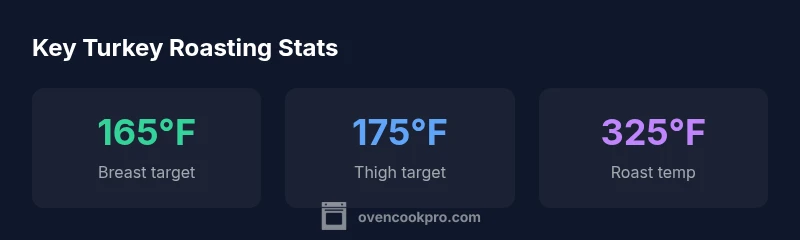
To roast a turkey successfully, start with the right oven temp for turkey. For most unstuffed birds, maintain a steady 325°F (165°C) and finish hotter if needed to boost browning. According to Oven Cook Pro, a precise oven temp for turkey is the foundation of moist meat and even color throughout the breast and thighs. Use a thermometer to guide when the bird reaches safe internal temps, then rest before carving.
Why the oven temperature matters for turkey
The oven temp for turkey is not a minor detail—it's the driving factor behind juiciness, browning, and even doneness from breast to thigh. A steady, known temperature helps gelatinize collagen gradually, which preserves moisture. If the oven runs hot, the exterior may burn before the interior reaches a safe 165°F in the breast, leading to a dry texture. If it stays cool, you risk undercooking the center and a pale, soggy finish. For most home cooks, starting with a reliable oven temp for turkey around 325°F (165°C) provides a predictable path to a golden-brown crust and tender meat. The key is consistency: avoid big temperature swings and keep the oven closed as much as possible to maintain an even cooking environment. In practice, the oven temp for turkey should be chosen with your bird’s size, whether it’s stuffed, your roasting vessel, and whether you are using convection, all of which influence heat transfer and final texture.
In addition to the oven temp for turkey, proper prep matters. Pat the turkey dry, season generously, and consider a light oil or butter coating to promote even browning. If you’re unsure about the exact number, use a reliable thermometer and perform staged checks as the roast progresses. A steady temperature is more forgiving than chasing a perfect minute-by-minute time.
Understanding turkey size and resting impact on temperature
Turkey size directly affects how heat penetrates and how long it stays in the danger zone. A larger bird retains heat longer, which means carryover cooking after you remove it from the oven. Resting becomes a critical step, allowing the juices to redistribute and the residual heat to carry the breast to a safe internal temperature without overcooking the outer layers. The oven temp for turkey may stay constant, but the internal dynamics shift with weight: a 12–14 lb bird will respond differently than a 20 lb bird. For best results, plan for a longer resting period if your turkey is on the heavier side, and be prepared to adjust the final internal temperature targets slightly if the bird finishes early. Always verify uniform doneness by checking the thickest part of the breast and thigh with a digital thermometer, then let it rest a minimum of 15 minutes before carving.
When considering the oven temp for turkey, remember that resting is not optional—it’s a critical step that finishes the cooking process gently. The carryover heat continues to raise internal temps by a few degrees, which helps achieve the target 165°F breast and 175°F thigh without risking dryness.
Low-and-slow vs high-heat roasting approaches
Two common strategies exist for the oven temp for turkey: low-and-slow and high-heat finishing. Low-and-slow roasting at 325°F yields very even browning and generous moisture retention, particularly in larger birds. This method minimizes the risk of over-browning before the core reaches a safe internal temperature. In contrast, some cooks opt for a higher initial temperature to jump-start browning and crust formation, then reduce the heat to finish cooking. If you choose a higher initial oven temp for turkey, be mindful of potential unevenness in the breast versus the thigh and plan to monitor with a thermometer. Regardless of method, the final goal is the same: reach 165°F in the breast and 175°F in the thigh while keeping the meat juicy. The oven temp for turkey should align with your chosen approach and equipment.
Conduction and convection influence the browning process as well. If using convection, remember to reduce the oven temp for turkey by about 25°F to prevent overcooking the exterior before the interior is done.
Step-by-step roasting protocol: prep, preheating, and cooking
A reliable roasting protocol starts with the oven temp for turkey set to a tested baseline—325°F (165°C) for most unstuffed birds. Preheat your oven fully before the turkey goes in. Prepare the bird with a pat-dry, rub of salt and any preferred herbs, and place it on a rack in a roasting pan for even air circulation. If you use stuffing, note that it can affect cooking times and surface texture; the safe internal temperature remains the same, but you may need to extend the cooking window. Insert a digital thermometer into the thickest part of the breast and monitor until it reads 160–162°F, then finish in the range of 165°F breast / 175°F thigh as carryover heat completes. Let the turkey rest for at least 15 minutes after removing from the oven to ensure juices redistribute and the final temperature reaches the target.
If you prefer convection, adjust the oven temp for turkey downward by 25°F and monitor doneness with a thermometer. While convection can speed up cooking, the core principle remains unchanged: hit the target internal temperatures safely without risking dry meat. The rest period is essential to finishing the process gracefully.
Common mistakes that affect oven temp outcomes
Mistakes around oven temperature for turkey often involve inconsistent heat, overcrowding, or peeking too frequently. Opening the oven door during the roast reduces oven temperature dramatically and disrupts heat transfer, leading to uneven cooking. Using an oven thermometer is a simple, reliable way to verify that your oven is actually at the temperature you set, rather than relying on the oven’s display alone. Another frequent error is underestimating resting time; carryover cooking will push the breast above 165°F, so plan to rest and check with a thermometer before carving. Finally, ensure your roasting rack and pan allow for proper air circulation—pricey or fancy equipment won’t help if heat can’t reach all sides of the turkey. Keeping all these factors in mind helps you preserve moisture while achieving the desired color and texture for the oven temp for turkey.
An ideal workflow keeps the oven temperature stable, uses a reliable thermometer, and honors resting time as part of the roast.
Equipment and oven considerations: racks, convection, and preheating times
Your choice of equipment can influence the effectiveness of the oven temp for turkey. A sturdy rack elevates the turkey so air can circulate around the entire surface, promoting even browning. If you use a convection oven, anticipate faster cooking and adjust the temperature accordingly by lowering 25°F. Preheating time matters—don’t rush the turkey in before the oven is fully heated; a cold start can lead to uneven doneness. Roasting pans with dark finishes often brown more quickly; if your pan browns too fast, consider tenting with foil to prevent scorching while the interior catches up. When selecting your vessel, ensure it allows air to reach the bird all around, which makes the oven temp for turkey more effective and predictable.
Keep in mind that different roasters, racks, and pans will influence heat distribution. It’s wise to calibrate your setup with a test roast or a shorter turkey until you’re confident in your chosen configuration. These practical steps help you maximize the impact of the oven temp for turkey and produce a consistently juicy result.
Food safety, resting, and carrying over heat
Food safety is the backbone of any roasting plan. The target is to achieve 165°F in the breast and 175°F in the thigh, using the oven temp for turkey as your guide, followed by a proper resting period to manage carryover heat. Resting for 15–20 minutes after removal is typically enough to let juices redistribute without turning the meat cold. During rest, the residual heat continues to cook the turkey, so resist the urge to carve immediately. Using a clean thermometer for checks on both breast and thigh helps ensure you don’t undercook or overcook the meat. A calm, controlled approach to the oven temp for turkey reduces risk and yields a tender, flavorful bird that’s ready to serve.
Roasting temp options and time estimates
| Temp range (°F) | Use-case | Estimated time (unstuffed) |
|---|---|---|
| 325-350 | Standard roast | 2.75-3.5 hours |
| 325-350 convection | Faster convection roast | 2.5-3.25 hours |
| 350-375 | High-heat sear finish | 2.5-3 hours |
Questions & Answers
What is the best oven temperature for turkey?
Most cooks aim for about 325°F for a standard unstuffed turkey to balance browning and doneness. Always verify with a thermometer for safe internal temps: 165°F in the breast, 175°F in the thigh. If your turkey browns too quickly, ease off the heat slightly and rely on carryover cooking.
Aim for around 325°F and check with a thermometer to reach 165°F in the breast and 175°F in the thigh. If it browns too fast, reduce the heat a touch.
Do I need to preheat the oven for turkey?
Yes. Preheating ensures even heat distribution from the start, helping the turkey cook uniformly. Place the bird in once the oven has stabilized at the target temperature.
Yes. Preheat the oven to the target temperature before placing the turkey inside for even cooking.
Can I use convection to cook turkey?
Convection can speed up cooking and improve browning. When using convection, reduce the oven temp for turkey by about 25°F and monitor with a thermometer to avoid overcooking.
Convection helps with faster, even browning; lower the temp by about 25°F and watch the thermometer.
What internal temperature should I aim for?
Check the breast for 165°F and the thigh for 175°F. Use an instant-read thermometer toward the thickest portions to ensure accurate readings.
Aim for 165°F in the breast and 175°F in the thigh with a quick thermometer check.
Should I cover the turkey during roasting?
Uncovered roasting yields browning; if the skin browns too fast, loosely tent with foil and continue cooking until done.
Uncovered helps browning, cover lightly if the skin browns too fast.
How long should I rest the turkey after cooking?
Rest the turkey for 15–20 minutes after removing from the oven. Resting lets juices redistribute and finishes carryover cooking safely.
Rest for 15 to 20 minutes before carving to keep the meat juicy.
“A precise, consistent oven temperature is the foundation of a juicy, evenly cooked turkey. Trust your thermometer and don’t rush the resting phase.”
Main Points
- Choose a steady oven temp for turkey as the baseline.
- Hit 165°F breast and 175°F thigh with thermometer checks.
- Rest 15-20 minutes before carving for juiciness.
- Convection requires temp adjustment to avoid over-browning.
- Preheat fully and use proper racks for even cooking.