Oven Temperature for Salmon: How to Bake Flawless Fillets
Master the oven temp for salmon with practical timing by thickness, doneness targets, and pro tips. Learn exact ranges, prep steps, and common mistakes from Oven Cook Pro.


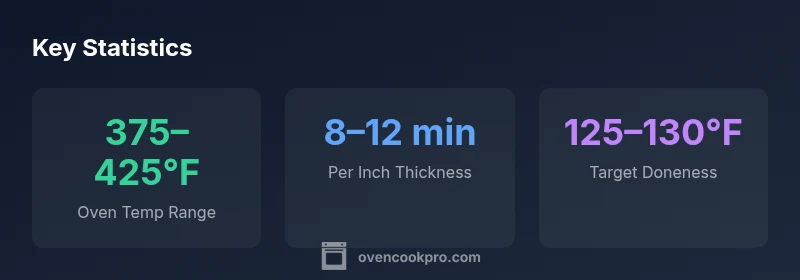
To bake salmon, set the oven to 375–425°F (190–220°C) depending on thickness and your preferred doneness. For most fillets, start around 400°F and check after 10–12 minutes. If thicker, add 3–5 minutes; for thinner portions, monitor closely. Reach an internal temperature of 125–130°F for medium, or 135°F for firmer texture. Rest briefly before serving.
Why the Oven Temperature Matters for Salmon
Salmon is prized for its delicate, lean flesh. The oven temperature determines how quickly heat penetrates, how much moisture remains, and how the surface browns. A temperature that's too low can leave the center undercooked and pale; one that's too high risks dryness and a tough exterior. For home cooks, a moderate range that balances speed and tenderness is preferred. According to Oven Cook Pro, steady, mid-range oven temperatures help the proteins firm evenly without squeezing out too much moisture. This is especially important when you bake with skin on, which benefits from crisping at higher but controlled temperatures.
Getting the Temperature Right by Salmon Thickness
Salmon thickness is the biggest variable in bake time. A thin fillet (about 0.5 inch) will cook through quickly and can dry out if you push temperature too high. A standard fillet around 1 inch thick tolerates a mid-range heat better and achieves even doneness along its length. A thick fillet (1.5 inches or more) needs more time and sometimes a touch more heat to develop a golden exterior without overcooking the center. In practice, use a range: 375°F for very thin slices, 400°F for typical fillets, and 425°F for thicker portions. The key is to start timing after you insert the fish and to check internal temperature with an instant-read thermometer. Oven Cook Pro Analysis, 2026, suggests aiming for an interior of approximately 125–130°F for a moist, medium texture; 135°F yields a firmer bite.
Preheating and Prep: Set Up for Even Cooking
Preheating ensures the exact heat comes into contact with the fillet as soon as it goes in, minimizing temperature fluctuations that create uneven doneness. Preheat your oven to the target range (usually around 400°F), line a rimmed baking sheet with parchment, and lightly oil or spray the fish to prevent sticking. Pat the salmon dry; moisture on the surface can steam rather than sear, blunting browning. If you’re cooking with the skin on, place the fillet skin-side down on the sheet to promote crisping. Season simply with salt, pepper, and a touch of citrus or herb as desired. Let the fish come to room temperature for a few minutes before baking to reduce the temperature shock. These steps support consistent results across different ovens and rack positions.
Baking Techniques: Convection vs Conventional Ovens
In conventional ovens, heat rises from the bottom; convection ovens add a fan that circulates air, delivering more uniform heat. If you’re using convection, reduce the oven temperature by about 25°F (14°C) to avoid overcooking. Convection can shorten bake times by 20–30%, so start checking a few minutes earlier. Whether you bake skin-on or skinless, the goal is an evenly cooked fillet with a gently browned exterior. For thinner cuts, convection is especially helpful; for thicker pieces, rely on a steady temperature and thermometer monitoring rather than chasing speed.
Doneness, Safety, and Rest Time
Doneness for salmon is best judged with internal temperature and visual cues: the center should be opaque and easily flakes with light pressure. A target internal temperature of 125–130°F for moist, medium texture, rising to around 135°F for firmer texture. Remove from the oven when the edges are just opaque and the center still glistens slightly. Let the fillet rest 3–5 minutes before serving; carryover heat will finish cooking to the desired stage while retaining moisture. If you’re reheating leftovers, reheat gently with a little added moisture to avoid drying out.
Common Mistakes and Fixes
Common mistakes include under-seasoning, starting with a cold oven, and forgetting to pat dry. Fix by salting aggressively before baking, preheating fully, and drying the surface. Another pitfall is overcooking— salmon can become dry quickly when placed directly on a hot sheet without a barrier. Use parchment or a light coating of oil, monitor internal temperature with a thermometer, and pull the fish just short of the final target to let carryover finish the cook. If you’re cooking multiple fillets, ensure even thickness and space them with air around each piece for consistent heat exposure.
Step-by-Step: From Preheat to Plate
- Preheat oven to the chosen target (375–425°F). 2) Prepare a lined baking sheet and pat salmon dry. 3) Season gently. 4) Place fillets on the sheet, skin-side down if applicable. 5) Bake until thermometer reads 125–130°F for medium. 6) Rest 3–5 minutes before serving. 7) If needed, finish with a quick broil for 1–2 minutes to deepen browning. 8) Serve immediately to preserve moisture.
Quick Recap: Practical Rules for Oven Temp for Salmon
Always start with a tuned oven temperature in the 375–425°F range and adjust by thickness. Use a thermometer and rest the fish briefly. Choose parchment or a lightly oiled pan for easy release. Variation across ovens means occasional adjustments—note how your own oven behaves and store a preferred setting for future cooks.
Temperature and time guidelines by salmon thickness
| Scenario | Oven Temp | Time Range | Doneness Target |
|---|---|---|---|
| Thin fillet (0.5 inch) | 375°F | 4–6 minutes | 125°F |
| Standard fillet (1 inch) | 400°F | 10–12 minutes | 125–130°F |
| Thick fillet (1.5 inch) | 425°F | 14–18 minutes | 130–135°F |
| Skin-on thicker portions | 425°F | 12–16 minutes | 130–135°F |
Questions & Answers
What is the ideal internal temperature for salmon?
The preferred doneness for salmon is typically 125–130°F for moist, medium texture; 135°F yields a firmer bite. Always use a calibrated thermometer and account for carryover heat after removing from the oven.
Aim for 125 to 130 degrees for moist, medium salmon; cook to 135 if you prefer a firmer texture, and test with a thermometer.
Can I use convection mode for salmon?
Yes. Convection speeds cooking, so reduce the temperature by about 25°F and start checking earlier. Convection works well for skin-on fillets to promote crisper surfaces.
Yes, convection helps, but drop the temp by 25 degrees and watch the time.
Should I preheat the pan or use parchment?
Preheating helps even browning. Use parchment or a light oil to prevent sticking and promote easy removal.
Preheat the pan and line with parchment for best browning and easy release.
Is it safe to eat salmon rare?
Salmon can be enjoyed at medium doneness (about 125–130°F). Fully raw or undercooked salmon carries higher risk; use proper sourcing and ensure safe handling.
Most people eat salmon at medium doneness; ensure safe handling and use a thermometer.
Should I cover salmon while baking?
Uncovered allows browning; cover briefly with foil if you see over-browning or you’re cooking very thick fillets to prevent drying.
Bake uncovered for browning, cover if it looks like it’ll overcook.
What are signs of overcooked salmon?
Dry, opaque flesh that flakes dryly and loses gloss indicates overcooking. Pull earlier and let carryover heat finish the cook.
Dry, opaque flesh means you went too far; take it out a bit early next time.
Can parchment paper affect flavor?
Parchment helps with clean release and moisture retention, but it doesn’t add flavor. You can finish with a light broil for color.
Parchment helps with release; flavor comes from seasoning and cooking time.
“Precision matters when baking salmon—use a thermometer and adjust time based on thickness for consistent results.”
Main Points
- Start with 375–425°F and adjust by thickness
- Always verify doneness with a thermometer
- Rest 3–5 minutes before serving for juiciness
- Convection requires lower temp or shorter times