Temperature to Cook Salmon in Oven: A Practical Guide
Learn the optimal temperature to cook salmon in oven, how temperature affects texture, and practical tips for flaky, juicy results every time.


To nail the temperature to cook salmon in oven, start with a steady range: 375°F to 425°F, depending on thickness and desired doneness. A common approach is 400°F for most fillets, baking until the internal temperature reaches about 125°F for medium-rare or 135°F for medium. Use an oven thermometer and a quick-check method to avoid overcooking.
Why Temperature Control Makes or Breaks Salmon Texture
Salmon is a lean protein with delicate moisture pockets. Heat drives proteins to set and fat to render. The goal is to reach a precise internal temperature without overcooking, which can squeeze out moisture and result in a dry, chalky texture. When you manage the oven temperature carefully, you create a tender, flaky interior with a lightly colored exterior. The temperature to cook salmon in oven also interacts with carryover cooking: even after you remove the fish, residual heat continues to raise the internal temperature for a few minutes. This is why many chefs recommend removing salmon slightly before it hits the final target. For home cooks, a reliable thermometer and consistent oven performance are the most practical tools to achieve repeatable results.
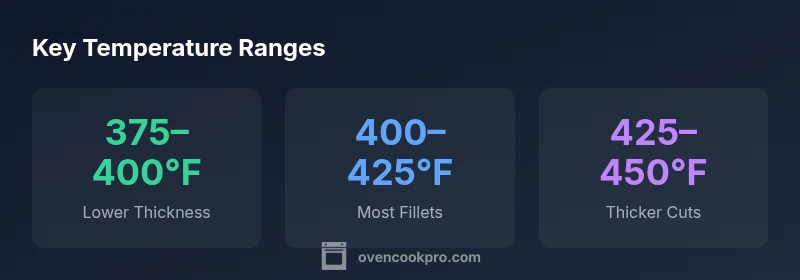
In practice, the stated temperature range (375–425°F) accommodates different thicknesses and finishes. Thin fillets finish quickly and benefit from the lower end to prevent dryness, while thicker cuts finish at the high end to ensure doneness through the center without overcooking the edges. This strategy aligns with Oven Cook Pro analysis, which emphasizes temperature control as a key driver of texture and juiciness.
Choosing Temperature Based on Thickness and Doneness Preference
Thickness matters more than you might expect. A 1-inch fillet will cook differently from a 1.5-inch steak-like portion. If you prefer a brighter, slightly rarer center, aim for 375–395°F and check earlier. For a fully cooked, flakier result, 400–425°F is a safer bet, provided you monitor doneness with a thermometer. Skin-on fillets tend to crisp better at higher temperatures, while skinless portions rely more on timing to avoid drying the surface.
Doneness preference drives the exact moment you pull the salmon from the oven. Medium-rare to medium translates to roughly 125–135°F internal temperature, while well done heads toward 145°F. Keep in mind that carryover cooking can push internal temperatures another 2–5°F after resting, so some cooks pull just shy of the final target.
How to Measure Doneness Without Guesswork
A reliable instant-read thermometer is the best friend of the home cook. Insert the probe into the thickest part of the fillet, avoiding the bone if present. Start checking at the minimum suggested time and recheck every minute or two. Remember that the fish will continue to cook from residual heat once out of the oven, so you may remove it a few degrees before the exact target. If you don’t own a thermometer, you can test doneness by flaking the center with a fork and looking for opaque, flake-resistant flesh with a translucent center.
Techniques for Even Cooking in a Conventional Oven
Conventional ovens rely on even heating, but hot spots can happen. To promote uniform doneness, preheat fully, place the salmon on a parchment-lined sheet or a wire rack over a tray, and leave space between pieces. If you have a convection setting, you can lower the temperature by about 25°F to compensate for the fan’s extra heat, or leave it at the same temperature and reduce the time. Rotating the pan halfway through helps even browning. A light brush of oil or a brief finish under high heat can also improve texture without drying the interior.
Seasoning should enhance flavor without masking moisture. A touch of salt, citrus, or herbs balances the delicate fish while the temperature does the heavy lifting.
Step-by-Step Quick-Start Guide for a Classic Salmon Fillet
- Preheat oven to 400°F (or 375–425°F depending on thickness and preference). 2) Pat salmon dry and season lightly; place on parchment or a wire rack. 3) Bake until thermometer reads 125–135°F (depending on desired doneness). 4) Remove and rest 3–5 minutes to allow carryover cooking. 5) Finish with a squeeze of lemon or a butter-basil finish if desired. 6) Use residual juices to flavor a simple pan sauce if you like.
Troubleshooting Doneness, Dryness, and Common Pitfalls
If the fish seems dry, you likely overcooked or started at too high a temperature for thickness. In that case, reduce the temperature slightly and shorten the bake time for subsequent batches. If the center is undercooked, finish with a brief 2–3 minute blast at a higher temperature or switch to convection for quicker heat transfer. Always pat the fish dry before seasoning to promote even browning and juiciness. Resting after baking is essential to redisperse moisture.
Flavor Pairings and Finishing Touches to Complement Temperature Results
Lemon, dill, and capers pair beautifully with salmon and highlight its natural flavors. A quick butter-basil finish adds richness without overwhelming the fish. If you want a deeper, crisp finish, give the top a light broil for 1–2 minutes at the end, watching carefully to prevent scorching. The temperature you choose should serve as a backbone for the texture; complementary flavors round out the dish and make the result feel restaurant-worthy at home.
Temperature ranges and cook times for oven-baked salmon
| Temp Range (F) | Typical Time (min) | Doneness Target |
|---|---|---|
| 375–400 | 12–16 | Medium-rare to medium |
| 400–425 | 10–14 | Medium |
| 425–450 | 8–12 | Well-done (limited) |
Questions & Answers
What is the ideal oven temperature for salmon?
Typically 375–425°F, adjusted for thickness and preferred doneness. Use a thermometer to confirm interior doneness.
Usually between 375 and 425 degrees, check with a thermometer.
Should I preheat the oven?
Yes. Preheating ensures even cooking from the start and helps you hit your target doneness reliably.
Yes, preheat to your target temperature for even cooking.
Is skin-on salmon best for oven cooking?
Skin helps protect the flesh and crisp nicely; bake with skin on if you want crisp, flavorful edges.
Skin-on helps with moisture and browning; keep skin if you want crisp edges.
How can I avoid overcooking salmon?
Monitor with an instant-read thermometer and remove a few degrees before the final target to account for carryover cooking.
Use a thermometer and pull a bit early to let carryover finish the job.
What if my fillet is thicker than 1 inch?
Increase time slightly and consider starting at a lower temperature, finishing with a brief higher heat if needed.
Thicker pieces need a bit more time; you can finish with a quick high-heat blast.
Is convection better for salmon?
Convection can speed cooking and promote even browning; you may lower the temperature by about 25°F if using this mode.
Convection can help; you might drop the temp a bit and keep an eye on time.
“Precise oven temperature is the backbone of consistent salmon results; even a few degrees can swing texture from tender to dry.”
Main Points
- Define your doneness before you bake.
- Use a thermometer for accuracy.
- Start within a broader range and adjust based on thickness.
- Convection can reduce time; adjust temperatures accordingly.
- Let salmon rest briefly after baking to finish with juiciness.