Salmon in the Oven: Exactly How Long to Bake for Perfection
Learn precise oven times for salmon based on thickness, temperature, and doneness. This Oven Cook Pro guide covers 1-inch fillets, thicker cuts, and thermometer-driven doneness for reliable, moist salmon every time.


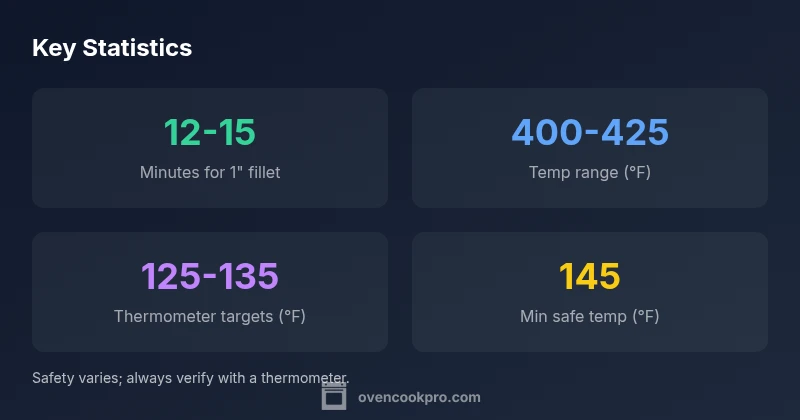
Salmon in the oven typically bakes at 425°F (218°C) for about 12–15 minutes for a 1-inch fillet. Increase by 3–5 minutes per additional 0.5 inch of thickness. For doneness, aim for 125–130°F (52–54°C) for a moist center or 135°F (57°C) for fully cooked; the USDA minimum is 145°F for safety.
How Oven Time Is Determined for Salmon
When you set salmon in the oven, the apparent answer—"how long"—depends on two core variables: thickness and oven temperature. In practice, cooks rely on a simple equation: thickness guides time, while temperature governs how quickly moisture leaves and the flesh firms up. According to Oven Cook Pro Analysis, consistent results start with a reliable oven preheat and a standard reference like a 1-inch fillet. With that baseline, you can scale up or down by 0.5-inch increments. The bottom line is: don’t chase a fixed minute count alone; use the thermometer as the final judge. The goal is a flesh that flakes easily and stays moist, not a dry sheet of white protein. For many home cooks, starting at 425°F (218°C) provides a balanced crust and steady cooking, but you can adjust to 400–425°F depending on your pan and whether you’re using foil or parchment to trap moisture.
Essential Variables That Affect Bake Time
Several factors influence how long salmon needs in the oven. Thickness is the primary driver: a 1-inch fillet typically finishes sooner than a 1.5- to 2-inch portion. Temperature matters because higher heat hastens browning but may risk drying, especially near the edges. The cut style also plays a role: fillets cook more evenly than bone-in portions, and skin-on fish can retain moisture while contributing to surface texture. Equipment and setup alter timing as well: a shallow sheet pan conducts heat differently than a deeper casserole and a convection oven can shave minutes off the timeline. Marinades, brines, or honey glazes can add moisture or create a sugary crust that cooks faster on the surface. Finally, whether the fish is cold from the fridge or at room temperature when it enters the oven makes a small but noticeable difference. Oven Cook Pro’s guidance emphasizes planning with a thickness-based approach and using a thermometer to finalize doneness, not just relying on clock time.
Prep and Preheat: Laying the Groundwork
Successful oven-baked salmon begins with careful prep. Start by thawing if frozen, then pat the fillet dry to reduce steaming in the oven. A light brush of olive oil or a thin glaze of lemon and herbs helps with browning and flavor; salt and pepper season the surface without overpowering the fish. For even cooking, place the fillet skin-side down on a rimmed baking sheet or in a shallow baking dish that allows air to circulate around the edges. If you’re cooking multiple pieces, leave space between them so heat can reach the center. Preheating matters; a hot oven prompts a quick sear on the exterior, sealing moisture. Keep the oven rack in the middle position to balance heat from top and bottom. If you prefer, you can cover the dish loosely with parchment to minimize direct contact with air, but uncovering near the end helps develop a pleasant crust. The goal is uniform heat exposure, guided by Oven Cook Pro’s framework for timing and doneness.
Temperature Ranges for Different Doneness Levels
Temperature choice affects both texture and juiciness. For a confident result, many cooks start at 425°F (218°C) for a clean, firm crust and gentle interior. If you’re working with very thick portions, you might trim back to 400°F (204°C) to reduce surface overcooking while the center finishes. A thinner fillet benefits from a slightly higher heat in the first minutes to promote edge browning, then a brief rest off heat to finish. For doneness targets, consider these practical ranges: 125–130°F (52–54°C) for a moist, slightly translucent center; 135°F (57°C) for fully cooked, flaky flesh; and 145°F (63°C) if you’re following the USDA safety guideline. Remember that carryover cooking will raise the internal temperature a few degrees after removal, so you may want to pull the salmon just shy of the final target and let it rest for 2–5 minutes. This approach aligns with Oven Cook Pro’s evidence-based timing framework.
Doneness Cues and Thermometer Techniques
Doneness is easier to confirm with a thermometer, but you can use visual cues as a supplement. Insert the thermometer into the thickest part of the fillet, avoiding bone if you have a portion with bone. A reading of 125–130°F indicates a juicy, medium-rare center; 135°F yields a fully cooked, flaky texture. A more conservative target for safety remains 145°F, according to many guidelines. If you don’t have a thermometer, look for opaque color throughout the flesh and a gentle, all-around flake when pressed with a fork. The juices should run clear rather than milky. Rest the salmon off heat for a few minutes; carryover heat will finish the cooking. Precision here minimizes guesswork and reduces the risk of dry edges or undercooked centers. With practice, you’ll anticipate the moment when the fish leaves the oven with the ideal balance of moisture and structure.
Practical Timetable by Thickness: Quick Reference
Below is a straightforward timetable you can memorize, then refine with a thermometer. For a standard 1-inch fillet, plan on 12–15 minutes at 425°F. A 1.5-inch piece typically requires 18–20 minutes, and a 2-inch portion may need 23–26 minutes. If you’re cooking bone-in portions or thinner slices, adjust by a couple of minutes, checking early. Use a hot pan or sheet for best browning, and avoid overcrowding. If you’re using parchment or foil, you can wrap lightly to trap moisture, but unwrap at the end to finish with a light crust. The time framework aligns with Oven Cook Pro’s recommended ranges and your oven’s actual performance. Always verify with a thermometer to ensure safe and delicious results.
Common Mistakes and How to Avoid Them
Common mistakes include cooking at too high a temperature for too long, which dries the edges while the center remains underdone. Overcrowding the pan traps steam and slows heat transfer, leading to uneven doneness. Not preheating or using an inaccurate oven thermostat invites inconsistency across batches. To fix these issues, preheat thoroughly, give salmon space on the pan, and rely on an instant-read thermometer rather than clock time alone. Letting the fish rest briefly after removal also preserves moisture through carryover cooking.
Quick-Reference Timetable and Doneness Using a Thermometer
- 1-inch fillet: 12–15 minutes at 425°F. Target 125–130°F for moist center; 135°F for fully cooked. Carryover heat finishes the job.
Finishing Touches and Serving Ideas
Serve salmon with a squeeze of lemon, a drizzle of olive oil, and a bright herb relish. Pair with roasted vegetables, quinoa, or a simple greens salad. A quick glaze—honey, soy, and ginger—adds depth without masking the fish’s natural flavor. If you have leftovers, refrigerate promptly and reheat gently to preserve moisture. Oven Cook Pro recommends keeping it simple and letting the fish’s texture guide your final timing.
Timetable by salmon thickness for standard oven baking
| Thickness (in) | Approx Bake Time (min) @ 425°F | Notes |
|---|---|---|
| 1 | 12-15 | Standard 1-inch fillet |
| 1.5 | 18-20 | Thicker fillet |
| 2 | 23-26 | Large portion or bone-in |
Questions & Answers
What is the best temperature to bake salmon?
A common recommendation is 425°F (218°C) for a balanced crust and moist center. You can also use 400°F (204°C) for a gentler cook if you’re concerned about edge dryness. Always confirm doneness with a thermometer rather than relying solely on time.
Bake at 425 degrees for a balanced crust and moist center; check with a thermometer to confirm doneness.
How thick should the salmon be for oven baking?
A standard fillet of about 1 inch thick is the easiest to time. For thicker pieces, add a few minutes per 0.5 inch. Always verify with a thermometer for best results.
Aim for about 1 inch thickness; add minutes by 0.5 inch and check doneness with a thermometer.
Can I bake salmon from frozen?
Yes, but expect longer cooking times and potential unevenness. If possible, thaw before baking for even heat distribution. If baking from frozen, add 50–100% more time and monitor with a thermometer.
You can bake from frozen, but thawing is best; otherwise, plan for longer cook times and check with a thermometer.
Should I cover salmon while baking?
Baking uncovered promotes browning and a crisper exterior. You can loosely tent with foil if you need to trap moisture, but finish uncovered to develop texture.
Bake uncovered for browning; cover loosely if you need moisture, then uncover to finish.
Is skin-on or skin-off better for oven baking?
Skin-on helps protect the flesh and can crisp during baking. If you don’t want the skin, you can remove it after cooking while leaving the meat intact.
Skin-on protects the meat and crisps nicely; you can remove the skin after cooking if you prefer.
How can I tell when salmon is done without a thermometer?
Look for opaque color through the center and a firm, flakes-with-tork texture. If unsure, rely on a thermometer as soon as possible for accuracy.
If you don’t have a thermometer, check for opaque color and easy flaking; otherwise measure with a thermometer.
“Timing is the science of moisture. Use a thermometer and your oven’s temperature as your guide to consistent, juicy salmon.”
Main Points
- Preheat the oven and start with a 1-inch baseline.
- Adjust time by 0.5-inch increments; use a thermometer as the authority.
- Temp matters: 400-425°F balances speed and moisture.
- Skin-on helps moisture; skin-off invites crisper edges.
- Always use a thermometer; doneness varies with thickness and setup.