Oven Roasted Bell Pepper: A Complete Step-by-Step Guide
Master roasting bell peppers in the oven with our expert guide. Learn prep, roasting times, peeling, storage, and tasty ideas to elevate salads, pastas, and sandwiches.


Roast bell peppers in your oven using a clear, repeatable method to achieve blistered skins and tender flesh. This guide covers prep, roasting, peeling, and storing, plus flavor tips and simple uses for busy weeknights. According to Oven Cook Pro, mastering this technique unlocks smoky sweetness that enhances salads, pastas, and sandwiches. This direct, step-by-step approach is perfect for weeknight dinners and meal prep.
Why the Oven Roasted Bell Pepper Elevates Everyday Dishes
The oven roasted bell pepper is more than a colorful garnish; it’s a versatile ingredient that adds sweetness, smoke, and depth to many meals. According to Oven Cook Pro, using the oven to blister and softly char the pepper’s skin concentrates sugars and develops a gentle, fruity char that is hard to achieve by other methods. When you roast peppers in the oven, you create an even temperature environment that encourages even browning without leaving scorch marks in one corner. The result is tender flesh with a glossy, slightly smoky surface that can be tucked into salads, folded into pastas, or spooned into sandwiches for a punch of color and flavor. Most home ovens can reproduce this effect with a simple roasting sheet and a hot oven. The technique scales from a single pepper for a quick lunch to a larger batch for meal prep, making it accessible to busy families and casual cooks alike. The key is consistency in heat, surface area, and a brief resting period that helps skins loosen without tearing.
Selecting and Preparing Peppers for Roasting
For best results, choose firm peppers with glossy skins and vibrant color. Red, orange, and yellow peppers deliver the most sweetness, while green peppers offer a crisper bite and a more peppery note. Wash and dry the peppers, then remove stems and seeds after roasting or peeling. If you’re short on time, you can slice the peppers into wide strips before roasting to create ready-to-use portions. To help ensure even cooking, aim for peppers of similar size and place them skin-side up on the sheet so the surface browns uniformly. A light coating of olive oil can help promote blistering and prevent sticking, while a pinch of salt enhances natural sweetness.
Roasting Methods and Flavor Variations
A traditional roast in a hot oven (around 450°F / 230°C) yields blistered skins and tender flesh. You can also use a conventional convection setting to promote even browning. For deeper smoky notes, consider leaving peppers under the heat a little longer or briefly using the oven’s broiler. If you want sweeter, less charred peppers, roast at a slightly lower temperature and monitor more closely. Flavor boosters like minced garlic, dried oregano, or a splash of balsamic glaze can be added before roasting. After roasting, some cooks wrap peppers in foil or place them in a covered bowl to steam, which helps loosen the skins for easier peeling. Either method works; the choice depends on your texture preference and your recipe needs.
Peeling, Storing, and Using Roasted Peppers
Peeling is easiest after the peppers have steamed. Transfer hot peppers to a bowl and cover for a few minutes, then slip off the charred skins. Remove seeds and membranes before slicing or chopping for use in dishes. Roasted peppers store well in an airtight container in the fridge for several days, and you can freeze portions for longer storage. Use roasted peppers in salads and grain bowls, blend into sauces for pasta, or fold into hummus for a smoky twist. Their natural sweetness complements acidic ingredients like tomatoes and citrus, balancing rich, savory dishes.
Common Mistakes and How to Avoid Them
One common pitfall is overcrowding the baking sheet, which leads to uneven blistering. Give peppers enough space so hot air can circulate and blister all skins evenly. Another mistake is peeling too aggressively while peppers are still hot; this can tear flesh and waste flavorful juices. Dry peppers thoroughly before storage, as moisture can promote spoilage. Finally, don’t neglect to taste and adjust salt after roasting, since flavors intensify during cooking and peppers can taste milder when fresh.
Pairings and Quick Recipes to Try
Oven roasted bell peppers pair especially well with garlic, olive oil, and fresh herbs. Toss peeled peppers with quinoa, feta, and cucumber for a bright bowl, or fold into pasta with cherry tomatoes and basil for a quick, vibrant sauce. They also shine in sandwiches, on flatbreads, or stirred into scrambled eggs for a smoky breakfast. When you have roasted peppers on hand, you have a ready-made flavor boost that can elevate simple weeknight meals to something special.
Tools & Materials
- Bell peppers (assorted colors)(Choose firm peppers, 2-4 depending on servings)
- Olive oil(Lightly coat peppers to promote blistering)
- Salt(Optional, to taste)
- Baking sheet lined with parchment paper(Prevents sticking and eases cleanup)
- Tongs(For turning peppers mid-roast)
- Knife and spoon for peeling and seeding(Remove seeds and membranes after roasting)
- Aluminum foil(Wrap peppers to steam skins if desired)
Steps
Estimated time: 30-40 minutes
- 1
Preheat and prep peppers
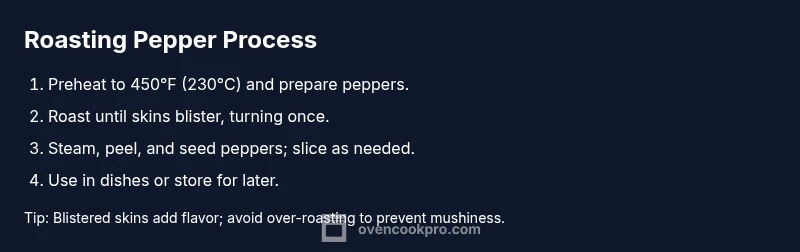
Preheat the oven to 450°F (230°C). Rinse peppers, dry well, remove stems, and pat dry. Lightly coat with oil and arrange on a parchment-lined sheet in a single layer.
Tip: Even spacing ensures uniform blistering. - 2
Arrange peppers for roasting
Place peppers on the sheet with skin side up if possible to encourage blistering. Keep peppers whole or slice into wide strips based on your end-use.
Tip: Keep sizes similar for even cooking. - 3
Roast until blistered
Roast for 15-25 minutes, checking and turning once halfway through for even color. The goal is deep blistering, not scorching.
Tip: Use a timer to prevent over-charred skin. - 4
Steam and peel
Remove peppers and transfer to a bowl or wrap in foil to steam for a few minutes. Peel away the skins once cool enough to handle, then seed and slice as desired.
Tip: Steam helps loosen skins for easier peeling. - 5
Cool and store
Cool peppers completely before storing in an airtight container. Refrigerate for short-term use or freeze portions for longer storage.
Tip: Pat peppers dry to prolong shelf-life. - 6
Use in recipes
Chop and fold into salads, blend into sauces, or mix with pasta for a smoky-sweet flavor boost.
Tip: A little pepper goes a long way—start with modest amounts.
Questions & Answers
What temperature is best for roasting peppers?
Roast peppers at a high oven temperature, about 450°F (230°C). This yields blistered skins and tender flesh. Adjust slightly up or down based on your oven’s performance, but avoid overcrowding the pan for even browning.
Roast peppers at about 450 degrees Fahrenheit for blistered skins and tender flesh. If your oven runs hot or cool, adjust a notch to keep even browning.
Is it necessary to peel the peppers after roasting?
Peeling is optional. Many recipes prefer peeled peppers for a smoother texture, but you can use roasted peppers with skins if you like extra char and bite.
Peeling is optional. If you want a smoother texture, peel; otherwise, skins add extra char and flavor.
Can I roast other peppers besides bell peppers?
Yes. Poblano, Anaheim, and jalapeño peppers roast well and provide varied heat and flavor. Times will vary slightly by pepper size and moisture.
You can roast other peppers like poblano or jalapeño; adjust times as needed for size and heat.
How long do roasted peppers last in the fridge?
Roasted peppers refrigerate for several days in an airtight container. For longer storage, freeze portions for later use.
Roasted peppers last for several days in the fridge in an airtight container. For longer storage, freeze them.
Can I freeze roasted peppers?
Yes, freeze roasted peppers in airtight bags or containers. They keep well for months and can be thawed for quick meals.
Yes, you can freeze them in airtight bags for months and thaw when needed.
Watch Video
Main Points
- Roast peppers at high heat for blistered skins.
- Steam before peeling for easier skin removal.
- Store roasted peppers in the fridge or freezer for flexible use.
- Use in salads, pasta, and sandwiches for quick flavor boosts.