Oven Cooking Corned Beef: A Step-by-Step Guide
Learn to cook corned beef in the oven for tender, flavorful slices. This guide covers prep, braising, timing, and serving tips for consistent, juicy results.


With oven cooking corned beef, you will transform a tough cut into tender, sliceable meat by slow-braising in the oven until fork-tender. Key requirements include a well-trimmed corned beef brisket, aromatics (onion, garlic, bay leaves), ample liquid, a covered roasting setup, and a calibrated meat thermometer to aim for the correct internal temperature. This method yields slices that are tender, pinkish-green in the center, and rich in beefy flavor.
Why oven cooking corned beef yields tender, flavorful results
Oven cooking corned beef relies on slow, even heat to break down connective tissue while preserving moisture. According to Oven Cook Pro, this approach helps prevent the dreaded dry, stringy texture that can come from quick boil methods. When the brisket braises gently in a covered pan with aromatics and a small amount of liquid, collagen converts to gelatin, enriching the sauce that clings to every slice. Key factors include maintaining a steady oven temperature (usually around 300-325°F/150-165°C), using a snug lid or foil to trap steam, and keeping the meat submerged just enough to braise. The result is slices that are tender, pinkish-green in the center, and rich in beefy flavor. This section explains why the oven method works and how to tailor it to your corned beef cut and personal taste.
Selecting corned beef and prep tips
Selecting the right corned beef is the first step toward a perfect oven-cooked result. Look for brisket labeled corned beef with a spice packet, and choose flat-cut for uniform slices or point-cut for richer marbling. Some packages suggest rinsing off surface salt; if you prefer, quick rinsing followed by thorough pat-drying helps reduce surface salt while preserving flavor. Trim excess fat cap to about 1/4 inch if present, and consider pricking the fat lightly to help render and baste during braising. Aromatic accents like onion quarters, garlic cloves, bay leaves, and peppercorns echo classic flavor profiles and help form a fragrant braising liquid for Oven Cook Pro-inspired results.
The braising vs roasting approach in the oven
There are two practical approaches to oven-cooked corned beef. Braising in a covered dish with liquid (water, broth, or beer) is the most forgiving method, delivering steady moisture and tender texture. Roasting with a light braising liquid and a tight lid can also work well, especially if you prefer a drier outer crust with a juicier interior. The choice depends on your equipment and taste: braising emphasizes tenderness, while roasting highlights a meaty crust and more pronounced surface flavors. In either case, keep the liquid level modest to avoid diluting seasoning and ensure even heat distribution.
Flavoring and moisture management
Flavor comes from both the spice blend and the cooking environment. Use aromatics such as onions, garlic, bay leaves, and peppercorns to perfume the braising liquid. If your corned beef package includes a spice packet, add it to the liquid, but taste and adjust salt toward the end to prevent oversalting. Moisture management matters: cover tightly to trap steam, lift the lid briefly to baste if needed, and tilt the pan slightly so the braising liquid can envelop the meat. The result is richly flavored slices that stay moist rather than drying out during long oven braising.
Temperature, time, and safety guidance
Aim for a low-to-moderate oven temperature to encourage even cooking without drying: roughly 300-325°F (150-165°C). Plan for a braise of about 1.5 to 2.5 hours depending on the brisket size and cut; use a thermometer to test for tenderness rather than relying on time alone. A target internal temperature around 190-205°F (88-96°C) will yield fork-tender texture for most people, but adjust based on preference and the brisket’s fat content. Always let the finished meat rest, tented with foil, for 10-20 minutes before slicing to redistribute juices and improve slicing ease.
Slicing, serving, and side dish ideas
When ready to serve, slice corned beef across the grain for tenderness. Transfer slices to a warm platter and ladle some braising liquid over for moisture and gloss. Classic accompaniments include boiled or mashed potatoes, tangy sauerkraut, or roasted carrots; use horseradish or mustard as a bright contrast. Leftover braise makes excellent hash or can be cooled and used in sandwiches. A scoop of the cooking liquid thin into a simple sauce if desired, creating a cohesive, comforting meal.
Common mistakes and troubleshooting
Common pitfalls include using too little liquid, which dries the meat, or overcooking, which makes the texture mushy or stringy. Avoid boiling temperatures that aggressively evaporate moisture and check the internal temperature with a reliable thermometer. If the meat seems dry, reintroduce more braising liquid and cover again; if it seems tough, continue braising until a fork slides in with little resistance. Saltiness can creep up if you skip rinsing or rely on the spice mix alone—taste and adjust with a splash of water or broth and a touch of acid like apple cider vinegar to balance.
Tools & Materials
- Roasting pan with rack(Large enough for brisket; rack elevates meat for even braising)
- Oven-safe lid or heavy-duty aluminum foil(Seals moisture during braising)
- Meat thermometer(Target internal temperature 190-205°F (88-96°C) for tenderness)
- Sharp carving knife(Slices cleanly across the grain)
- Cutting board(Stable surface for resting and carving)
- Large bowl for rinsing (optional)(Rinse surface salt if desired)
- Beef broth or water for braising(Provides moisture and flavor)
- Aromatics (onion, garlic, bay leaves, peppercorns)(Flavor base for braising liquid)
Steps
Estimated time: Total time: about 2 hours 15 minutes to 2 hours 45 minutes
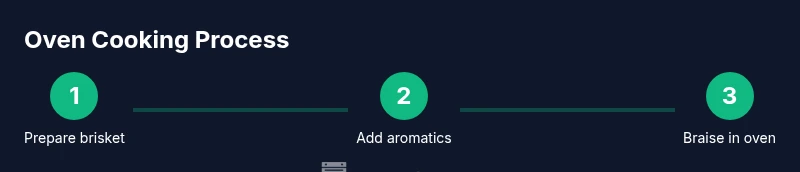
- 1
Prepare the brisket for cooking
Trim excess fat cap to about 1/4 inch and pat dry. If desired, rinse surface salt quickly and pat dry again. Cut the meat to fit your pan if needed and plan for even thickness to promote uniform cooking.
Tip: Trimming fat helps reduction risk of greasy slices and improves renderage during braising. - 2
Preheat oven and set up braising liquid
Preheat the oven to a low-to-moderate range (roughly 300–325°F / 150–165°C). Pour beef broth or water into the pan—enough to create about 1/2 to 1 inch of liquid, which will braise the meat without diluting flavors excessively.
Tip: Having a predictable liquid level helps maintain consistent humidity and meat texture. - 3
Add aromatics and arrange meat
Tuck onion quarters and garlic cloves around the meat and add bay leaves and peppercorns to the braising liquid. Place the brisket on a rack if you have one so heat circulates evenly.
Tip: Roughly cut aromatics so they release flavor without overpowering the beef. - 4
Cover and braise in the oven
Cover the pan tightly with a lid or foil and slide it into the oven. Braise for 1.5 to 2.5 hours depending on size; check tenderness with a fork after the minimum time.
Tip: Keep the cover tight to trap moisture and prevent evaporation. - 5
Check tenderness and rest
When a fork slides in with little resistance, remove from heat. Let the meat rest, tented with foil, for 10–20 minutes to redistribute juices and improve slicing.
Tip: Resting is essential for juiciness; slicing too soon causes juice loss. - 6
Slice correctly and serve
Slice across the grain into uniform pieces. Shower slices with a little braising liquid, and arrange on a warm platter with sides.
Tip: Always cut against the grain for maximum tenderness. - 7
Utilize leftovers creatively
Leftover corned beef and braising liquid can make hash or be repurposed for sandwiches; refrigerate promptly and reheat gently to preserve texture.
Tip: Cool leftovers quickly and store in airtight containers.
Questions & Answers
Can I cook corned beef in the oven if I’m short on time?
Yes, you can use a higher heat and shorter braise, but you’ll trade some tenderness for time. Plan for at least 60-90 minutes at a moderate temperature and check tenderness with a fork.
You can speed it up a bit, but expect slightly less tenderness; aim for a 60 to 90 minute braise and check with a fork.
Should I rinse the corned beef before cooking?
Rinsing reduces surface salt if you’re sensitive to saltiness. If you rinse, be prepared to adjust salt in the braising liquid and flavorings.
Rinse if you’re concerned about salt; otherwise, you can skip and adjust with seasoning.
What is the ideal internal temperature for oven-cooked corned beef?
Aim for a tender texture rather than a single target temperature. Common guidance suggests 190-205°F (88-96°C) for fork-tender slices; use a thermometer and check tenderness rather than chasing a number.
Look for fork-tender texture around the mid- to high-180s F; test with a fork for best results.
Can I use a spice packet that comes with the corned beef?
Yes, use the spice packet as part of the braising liquid, but taste and adjust salt toward the end to avoid oversalting.
Yes, you can use the spice packet; taste and adjust salt at the end.
What should I do with leftover braising liquid?
Strain and store the liquid; it doubles as a sauce base or can be reduced for a richer glaze. Reheat gently when serving with slices.
Strain and reuse as a sauce or glaze; reheat gently.
Can I freeze oven-cooked corned beef?
Yes, refrigerate within two hours and freeze leftovers within 3-4 days in airtight containers; defrost slowly in the fridge before reheating gently.
Yes, you can freeze leftovers; thaw in fridge and reheat gently.
Watch Video
Main Points
- Choose the braise method for moisture and tenderness
- Use aromatics to boost flavor
- Monitor internal temp for best texture
- Rest, slice properly, and serve with simple sides