How to Get Oven Wings Crispy: A Step-by-Step Guide
Master crispy oven wings with dry air, baking powder coating, high-heat roasting, and a quick broil. This guide covers prep, technique, tips, and troubleshooting for perfectly crunchy wings.


You’ll learn how to get oven wings crispy by drying the wings thoroughly, applying a light coating of baking powder and salt, and roasting on a wire rack at 425–450°F. Use convection if available, space wings apart, and finish with a brief broil to lock in crispiness. Plus troubleshooting tips.
The science behind crispy wings
Crispiness comes from moisture management and heat. When wings heat, surface moisture evaporates. If moisture sits on the skin, steam softens it instead of browning. By thoroughly drying the wings and using a light coating of baking powder with salt, you create a drier micro-environment on the surface. The baking powder raises the skin’s pH just enough to promote browning and crisp edges. According to Oven Cook Pro, using a wire rack raises airflow around all surfaces, which helps render fat and dry the skin rather than steaming it. For best results, ensure wings are fully thawed (if frozen) and not crowded on the tray so air can circulate freely.
Prep for maximum crispiness
Crisp results start with prep. Pat the wings completely dry with paper towels and, if possible, let them air-dry uncovered in the fridge for 30–120 minutes after pat-drying. This extra step reduces surface moisture that can hinder browning. Line a rimmed baking sheet with parchment and place a wire rack on top to keep the wings elevated. Arrange wings in a single layer with space between each piece to promote even drying and airflow. Optional: to speed up texture, you can sprinkle a light dusting of cornstarch along with baking powder for an extra dry surface, but avoid over-coating, which can taste soapy.
Coating and seasoning for maximum browning
The key coating is a light layer of baking powder plus salt, plus your favorite seasonings. A common guideline is roughly 1 teaspoon baking powder per pound of wings, distributed evenly. Toss the wings with the baking powder, salt, and spices (such as paprika, garlic powder, black pepper, and optional chili powder) until evenly coated. The aim is a dry, sandy surface that will crisp as the fat renders. Avoid heavy marinades or oil-heavy coatings, which can make wings soggy rather than crisp. If you prefer dairy-free options, stick to dry seasonings and the baking powder mix.
Oven setup: rack, temperature, and airflow
Preheat to a high heat—425–450°F (220–230°C). Use a wire rack set over a rimmed baking sheet to allow air to circulate around every wing. If your oven has a convection setting, enable it to boost browning and reduce overall bake time; reduce the temperature by about 25°F if using convection, depending on your oven’s performance. Space wings apart; overcrowding traps steam and softens skin. Place the sheet on a middle rack for even heat exposure. Start checking around the 20–25 minute mark to avoid overbrowning.
Practical workflow: from prep to crunch
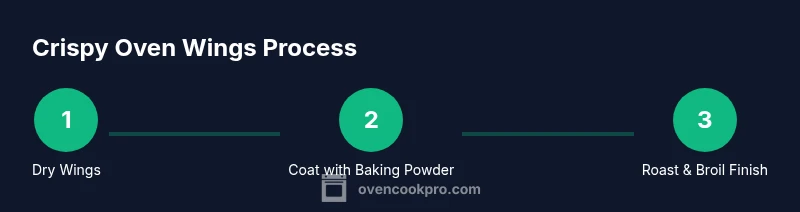
- Pat wings dry and, if possible, air-dry for 30–60 minutes. 2) Mix a light baking powder-salt coating with optional spices. 3) Arrange wings on the rack in a single layer. 4) Roast at 425–450°F for 25–35 minutes, flipping once halfway. 5) Finish under the broiler or with a quick convection boost for 2–4 minutes to emphasize browning. 6) Rest briefly before serving to let juices redistribute. 7) Serve hot for maximum crunch.
Troubleshooting crispy wings
If wings are soggy, check for moisture buildup—pat dry again and extend drying time in the fridge, then recoat and re-roast. Crowding is a common culprit; ensure space between pieces on the rack. If browning is uneven, rotate the pan halfway through and consider switching to convection. If you’re not seeing browning, raise the oven temperature by 25°F for the last 5–8 minutes, watching closely to prevent charring.
Serving, storage, and reheating for crispiness
Serve wings immediately after they come out of the oven for peak crispiness. If you must store, refrigerate within two hours and reheat in a hot oven (400–450°F) for 5–8 minutes, or until hot and crisp again. Avoid microwaving, which can soften the skin. For repeat crunch, a brief pass under the broiler post-reheat can restore surface texture."
Tools & Materials
- Chicken wings (drumettes and flats)(Thawed if previously frozen; pat dry before prep.)
- Paper towels(For thorough drying of wings.)
- Wire rack(Elevates wings for even air exposure.)
- Rimmed baking sheet(Catches drips and keeps wings steady.)
- Parchment paper (optional)(Easier cleanup.)
- Baking powder(Use baking powder, not baking soda, for crispiness.)
- Salt(Seasoning base to enhance browning.)
- Measuring spoons(Accurate coating ratios.)
- Tongs(Safe handling and turning.)
- Oven mitts(Heat protection.)
Steps
Estimated time: Total time: 35-45 minutes
- 1
Pat dry and thaw wings
If using frozen wings, thaw completely. Pat dry with paper towels until no surface moisture remains. This step reduces moisture that would otherwise steam the skin during roasting.
Tip: Moisture on the skin is the enemy of browning; dry thoroughly for best results. - 2
Prepare coating mix
Whisk baking powder and salt with optional spices in a large bowl. The baking powder coating creates a rough surface that dries out the skin as it bakes, promoting crispiness.
Tip: Keep coating light; too much can create a powdery texture. - 3
Evenly coat wings
Toss wings in the coating until all surfaces are lightly coated. Shake off excess to prevent a gummy finish.
Tip: Use a light hand—overcoating reduces browning and can taste soapy. - 4
Rack the wings
Place wings on a wire rack set over a rimmed sheet in a single layer. Leave space between pieces for air to circulate.
Tip: Spacing is crucial; crowded wings steam instead of crisping. - 5
Roast at high heat
Roast on the middle rack at 425–450°F (220–230°C) for 25–35 minutes, flipping halfway through to promote even browning.
Tip: Convection helps browning; if not available, rely on upper heat finish. - 6
Finish with a browning boost
For extra crunch, switch to broil for 2–4 minutes or continue convection for a final browning pass. Watch closely to prevent burning.
Tip: Stay near the oven during this step; it happens fast. - 7
Rest and serve
Let wings rest for 3–5 minutes after removing from oven to redistribute juices. Serve hot for maximum crispness.
Tip: Resting helps retain crisp texture when biting.
Questions & Answers
What makes oven wings crispy?
Crispiness comes from removing surface moisture, using a light baking powder coating, and roasting at high heat with good air circulation. A brief broil at the end boosts browning.
Crispiness comes from drying the wings, a baking powder coating, and hot air. Finish with a quick broil.
Is baking powder necessary?
Baking powder helps create a rough surface and promotes browning, which contributes to crisp skin. A small amount is typically sufficient.
Baking powder helps browning and crispiness; you can use a light amount for best results.
Can I use frozen wings?
Frozen wings can be used, but thaw completely and pat dry before coating to ensure the coating adheres and the skin dries properly.
If you use frozen wings, thaw them and dry well before coating.
What temperature is best for crispy wings?
Roast at about 425–450°F (220–230°C) to promote browning and crisp skin. If your oven runs hot or cold, adjust slightly and monitor browning.
Roast at high heat like 425 to 450 degrees to get crispy skin.
Is convection better than conventional?
Convection helps with even browning and faster crisping by circulating hot air. If you don’t have convection, use the upper heat finish for a similar effect.
Convection helps browning; if unavailable, finish with broil for crispiness.
How do I reheat wings and keep them crispy?
Reheat in a hot oven (400–450°F) for 5–8 minutes until hot and crispy again. Avoid microwaving, which softens the skin.
Reheat in a hot oven to recapture crispiness; skip the microwave.
Watch Video
Main Points
- Dry thoroughly for browning
- Use baking powder for crisp skin
- Roast hot on a rack with space between wings
- Finish with a brief broil or convection boost
- Serve hot for best texture