How to Bake with Potato: A Step-by-Step Oven Guide
Master oven-baked potatoes with fluffy interiors and crispy skins. This educational, step-by-step guide covers selecting potatoes, prepping, timing, toppings, and troubleshooting for perfect results every time.


Ready to bake potatoes with confidence? This guide shows you how to bake potatoes evenly with crispy skins using a simple setup and a few pantry ingredients. You’ll learn timing, temperature, prep variations, and how to avoid undercooked centers. According to Oven Cook Pro, starting with hot potatoes and spreading them single-layer yields the best results.
Understanding the science of baked potatoes
Baking potatoes transforms starches into a light, fluffy interior while the skin becomes a crisp, flavorful wrapper. The key is moisture management and heat transfer. Potatoes with high starch content (like Russet Burbank) yield a lighter interior, while waxy varieties stay denser. For best results, choose potatoes of uniform size so they cook evenly. When baked, a potato's structure depends on the starch granules absorbing water; heat causes steam inside the potato, which expands and puffs the flesh. If the surface is too moist, the skin cannot crisp; if it dries out too much, the interior becomes dry. Proper prep starts with a thorough wash to remove soil that can burn on the hot surface. Then dry completely; moisture on the skin inhibits browning. The goal is a dry surface that can crisp under high heat, not a soggy skin. According to Oven Cook Pro analysis, even spacing on the rack allows hot air to circulate, improving browning. Finally, a simple test for doneness is to pierce the potato with a fork—there should be little resistance, and the skin should feel taut and crisp to the touch.
Tools & Materials
- Oven(Preheat to 425°F (220°C) for optimal crispness.)
- Baking sheet or oven-safe rack(Direct heat improves crisping; avoid crowding.)
- Cooking oil (e.g., olive oil)(Lightly coat potatoes for crisp, bronzed skin.)
- Kosher salt or sea salt(Season generously for flavor and texture.)
- Fork or sharp skewer(Pierce holes to vent steam and prevent bursting.)
- Kitchen towel or clean cloth(Dry potatoes thoroughly after washing to maximize browning.)
- Parchment paper(Optional, for easier cleanup.)
Steps
Estimated time: 50-70 minutes
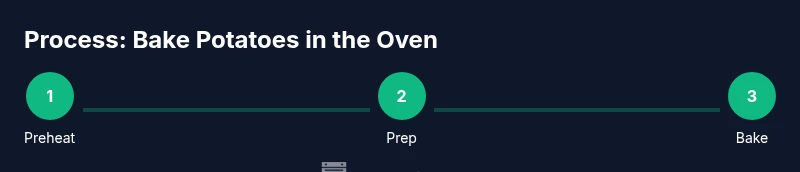
- 1
Preheat oven and prepare rack
Set your oven to 425°F (220°C) and position the middle rack. Allow the oven to come fully to temperature before placing potatoes inside; this jump-starts browning and helps create a crisp skin.
Tip: Use a thermometer or oven light to confirm the target temperature before baking. - 2
Wash and dry potatoes
Scrub potatoes under cold running water until any soil is removed. Dry them completely with a towel to ensure the skin can crisp rather than steam.
Tip: Damp skins steam instead of browning, so thorough drying is essential. - 3
Pierce and oil potatoes
Prick each potato several times with a fork. Toss or rub each potato with a light coating of oil and a pinch of salt.
Tip: Oil helps conduct heat to the skin and salt aids browning and flavor. - 4
Arrange in a single layer
Place potatoes directly on the oven rack or on a parchment-lined baking sheet in a single layer with space around each potato for air circulation.
Tip: Crowding slows cooking and soggy skins result. - 5
Bake until tender
Bake for 45–60 minutes, depending on potato size. Test doneness with a fork—it should slide in with little resistance.
Tip: Larger potatoes may need extra minutes; rotate halfway if baking multiple batches. - 6
Optional finish for crisper skins
For extra crispiness, broil for 2–3 minutes after the bake is complete, watching closely to prevent burning.
Tip: Monitor closely; skin can go from perfect to burnt quickly. - 7
Rest and serve
Let the potatoes rest for 5 minutes, then slice open and fluff the interior with a fork. Add toppings as desired.
Tip: Resting helps redistribute internal moisture for a fluffier center. - 8
Serve hot with toppings
Offer butter, sour cream, chives, cheese, or your favorite toppings to suit the meal.
Tip: Toppings are best added after baking to preserve crisp skins.
Questions & Answers
What potato varieties are best for baking?
Russet potatoes are typically best for baking due to their high starch content, which yields a fluffy interior when cooked. They also brown nicely, giving a crisp skin.
Russet potatoes are usually the top choice for baked potatoes because they get fluffy on the inside and crisp on the outside.
Should I wrap potatoes in foil when baking?
Wrapping potatoes in foil traps moisture and softens the skin. For crispiest skins, bake unwrapped on a rack or sheet.
If you want crisp skin, bake without foil; foil makes the skin soft and steamy.
How can I tell when a baked potato is done?
Insert a fork or skewer; it should slide in easily with tender flesh. The skin should feel crisp and the potato steaming hot.
A fork should slip in without resistance, and the interior should be fluffy.
Can I bake multiple potatoes at once?
Yes, arrange them in a single layer with space around each potato; they may take slightly longer to cook, but air will circulate.
Yes—just give each potato space so they cook evenly.
How do I reheat baked potatoes safely?
Store leftovers in the fridge and reheat in the oven or microwave until steaming hot. Consume within 3–4 days.
Reheat until hot all the way through, then enjoy.
Can I add toppings before baking?
Some toppings can be added before baking, but many textures (like cheese or sour cream) are best added after. Pre-baking toppings can affect texture and moisture.
Toppings are usually added after baking for best texture.
Watch Video
Main Points
- Bake potatoes in a single layer with space for air flow
- Use Russet potatoes for the best texture
- Preheat and dry skins for crispness
- Test doneness with a fork and finish with optional broil
- Top after baking for best texture and flavor