How to Make Eggs in the Oven: A Step-by-Step Guide
Learn how to bake eggs in the oven with reliable steps, variations, and serving ideas. Oven Cook Pro walks you through equipment, timing, and technique for perfect oven-baked eggs every time.


You can make eggs in the oven for hands-off, evenly cooked breakfasts or simple dinners. This method works with whole eggs baked in a ramekin, mini frittatas, or sheet-pan eggs. Key requirements: a reliable oven, a heat-safe dish, a little fat (butter or oil), and eggs. Typical bake at about 350°F (175°C) for 12–15 minutes, plus optional cheese or veggies.
Why oven-baked eggs are a convenient choice
Oven-baked eggs offer a reliable alternative to stovetop frying, delivering a uniform texture with minimal babysitting. They’re ideal for busy mornings, weekend brunches, or meal-prep batches that need portioned servings. The oven’s even heat helps set the yolk and white gently, reducing the risk of overcooked edges or undercooked centers. This method also scales easily—from a few ramekins for individual servings to a large sheet pan for family-style meals. When you bake eggs, you gain flexibility: you can add vegetables, cheese, or herbs before baking, or keep the mix simple for a quick weekday breakfast. According to Oven Cook Pro, oven-baked eggs deliver consistent results and reduce hands-on time, making them a trusted technique for home cooks who want dependable, flavorful eggs with less cleanup.
What you need: equipment and ingredients
Before you start, assemble a few essentials. You’ll need a heat-safe dish or ramekins, a greased baking surface, eggs, and a fat to prevent sticking. Salt and pepper brighten the flavor, while dairy like milk or cream can add richness. Optional additions include cheese, chopped vegetables, herbs, or cooked meats. The exact gear depends on your preferred method: ramekins for individual portions or a rimmed sheet pan for a family-style bake. Having a timer and oven mitts on hand helps you manage timing precisely, so your eggs come out perfectly set with a creamy, custard-like center when desired.
Sheet-pan method: the basics for clear, even cooking
The sheet-pan method spreads eggs in a single, even layer, making it ideal for quick breakfasts or brunch buffets. Preheat the oven, oil a large rimmed sheet pan, and whisk eggs with a splash of milk if you like. Pour the mixture evenly across the pan; the thinner the layer, the quicker it will cook. Add salt, pepper, and any mix-ins (spinach, tomatoes, cheese) before baking. Bake until the edges are set and the center still gives a gentle wobble. This method yields a light, airy texture and is easy to portion into bowls or to reheat later.
Individual ramekins: portion control and texture
Ramekins offer neat, evenly cooked portions and a custard-like texture when baked gently. Lightly grease each ramekin and fill with the egg mixture, adding fillings as desired. The smaller vessel concentrates flavors and makes countertop brunches visually appealing. Bake until the tops are just set and a slight jiggle remains in the center. Ramekins also make it easy to tailor seasonings or fillings per person, which is perfect for picky eaters or dietary restrictions.
Egg variations you can try: from simple to show-stopping
Basic baked eggs are versatile. Try adding shredded cheese, chopped herbs, or sautéed vegetables for extra flavor. Spinach, mushrooms, onions, or bell peppers complement eggs beautifully, while a drizzle of cream or a dollop of crème fraîche enhances richness. For a brunchy twist, top with crumbled bacon or sliced tomatoes. If you want a frittata texture, whisk eggs with dairy and bake in a wider pan for a thicker, sliceable result. Remember to adjust fillings so they’re evenly distributed for uniform cooking.
Doneness and testing: knowing when they’re done
Baked eggs should set around the edges while the center remains slightly soft if you want a creamy finish. For a firmer texture, bake a bit longer, but watch closely to avoid overcooking. A texture test—gently jiggling the pan—helps you determine doneness. When using ramekins, you’ll often see a slight puff as they cook; this settles as they cool. Keep in mind that residual heat will continue to cook eggs after you remove them from the oven, so you may prefer them just shy of your target doneness.
Flavor boosters and serving ideas for any meal
Serve baked eggs with crusty bread, a fresh salad, or a side of roasted potatoes for a complete meal. Herbs like chives, parsley, or dill brighten the dish, while a light dusting of paprika adds color and a subtle kick. For a richer finish, top with grated cheese during the last few minutes of baking or finish with a dollop of yogurt or sour cream. Leftovers can be stored in the fridge and reheated gently in the microwave or oven for a quick next-day breakfast.
Tools & Materials
- eggs(Large eggs recommended; quantity depends on method (2-6 for ramekins, 6+ for sheet-pan).)
- butter or oil(Grease to prevent sticking; use unsalted butter or neutral oil.)
- salt(Season to taste; consider a pinch in the egg mixture.)
- black pepper(Freshly ground if possible for best aroma.)
- ramekins or sheet pan(Ramekins for individual portions; sheet pan for family-style bake.)
- whisk or fork(Whisk eggs evenly with any dairy or milk.)
- mixing bowl(For whisking eggs and mix-ins.)
- knife and cutting board(For chopping fillings like vegetables or herbs.)
- timer(Keeps bake on track and prevents overcooking.)
- oven mitts(Protect hands when handling hot dishes.)
- parchment paper or oil spray(Optional; helps with cleanup on sheet pan.)
- cheese, milk or cream, herbs(Optional fillings to customize flavor.)
Steps
Estimated time: Total time: 25-40 minutes
- 1
Preheat and grease
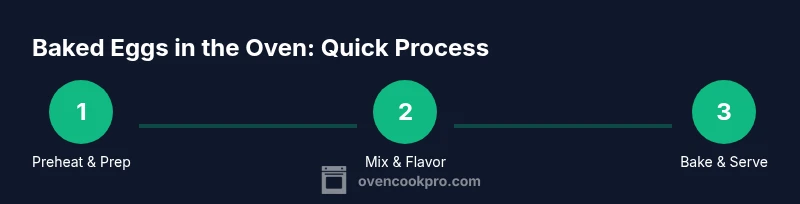
Preheat the oven to 350°F (175°C). Lightly grease ramekins or a rimmed sheet pan with butter or oil to prevent sticking and ensure easy removal.
Tip: Let butter come to room temperature for even coating. - 2
Whisk eggs and season
Crack the eggs into a bowl and whisk until fully blended with a splash of milk or cream if desired. Season with salt and pepper.
Tip: Whisk just until smooth to keep a light texture. - 3
Choose your vessel and portion
Distribute the egg mixture evenly among ramekins or across the sheet pan. For ramekins, aim for 1/2-3/4 full to avoid overflow.
Tip: Even portions ensure uniform doneness. - 4
Add fillings (optional)
Sprinkle cheese, sautéed vegetables, or herbs on top or fold them into the mixture for extra flavor.
Tip: Hard additions should be pre-cooked to avoid sogginess. - 5
Bake until just set
Place in the oven and bake until the edges are set and the center is still slightly jiggly. Sheet-pan eggs take longer than ramekins.
Tip: Check at the 12-minute mark and continue in 2–3 minute increments as needed. - 6
Rest, then serve
Remove from the oven and let rest 2–3 minutes. Serve warm with bread, salad, or roasted potatoes.
Tip: Resting helps the texture finish and makes slicing easier.
Questions & Answers
Can I bake eggs in the oven without dairy?
Yes. You can omit milk or cream and still achieve a tender texture by careful timing. The eggs will set with great flavor from the seasonings and any included fillings.
Yes. You can bake eggs without dairy; they will still set nicely when timed correctly and seasoned well.
How long do baked eggs take in ramekins?
Ramekins typically take about 12–15 minutes at 350°F, depending on the size and fillings. Check the center for a slight wobble before removing.
Usually 12 to 15 minutes at 350 degrees, depending on size and fillings.
Can I use a convection oven for this?
Yes. Convection can cook faster and more evenly; reduce the oven temperature by about 25°F and monitor closely.
Yes, a convection oven works; just lower the temperature a bit and watch closely.
What toppings work best with oven-baked eggs?
Cheese, spinach, mushrooms, tomatoes, and fresh herbs pair well. Avoid toppings that release a lot of water, like peppers, unless pre-cooked.
Cheese and greens like spinach or herbs are great choices.
How can I tell when baked eggs are done?
Edges should be set and the center should have a slight wobble. The eggs will continue to cook a bit after removal due to residual heat.
Look for set edges and a gently wobbly center; they’ll firm up a bit off the heat.
Watch Video
Main Points
- Preheat to 350°F for reliable results.
- Ramekins or a sheet pan both work—choose based on serving style.
- Bake until just set to preserve a creamy center.
- Add fillings for flavor variance and nutrition.
- Rest briefly before serving for best texture.