Baked BBQ Chicken in Oven: A Step-by-Step Guide
Learn how to bake BBQ chicken in the oven with a glossy glaze, precise temps, and safe handling. This Oven Cook Pro guide covers prep, glaze, timing, and serving ideas for consistently delicious results.


With oven heat and a glossy glaze, you will bake juicy BBQ chicken in the oven using a two-zone approach, marination optional but helpful. Gather chicken pieces, BBQ sauce, oil, spices, and a thermometer. The result is tender, flavorful meat with caramelized edges and a safe internal temperature.
The Core Idea Behind Baked BBQ Chicken in Oven
This guide reveals how to achieve a truly tasty baked bbq chicken in oven by combining proper searing, moisture retention, and a glossy glaze. In the world of home cooking, success hinges on heat management and resting the meat after cooking. According to Oven Cook Pro, the core principle is to start with a hot oven to promote browning, then finish with a gentler phase to keep the inside juicy. A reliable routine is simple: pat dry, apply a light coat of oil, place on a rack, and bake until the internal temperature reaches a safe level. The result should be a surface that's slightly charred, with a glaze that clings and crackles when you bite in. By outlining a repeatable routine, you can produce consistently excellent baked bbq chicken in oven every time.
Selecting Cuts and Marinade Techniques
When you plan to bake bbq chicken in the oven, the type of cut you choose drives texture, cook time, and glaze uptake. Bone-in thighs and drumsticks stay juicy and tolerate longer baking, while boneless breasts finish quickly and can dry out if overcooked. A balanced marinade adds flavor and helps moisture retention; even a light brine can improve outcomes for lean cuts. Oven Cook Pro analysis shows that marinating for 30 to 60 minutes before cooking improves glaze adhesion and depth of flavor without sacrificing texture. If you’re short on time, a quick rub of salt, pepper, paprika, and a touch of brown sugar can still deliver a robust base for the BBQ glaze. Whatever you select, ensure the pieces are equally sized for uniform cooking, and avoid overcrowding the pan to prevent steaming rather than roasting.
Tools, Prep, and Safety Essentials
Before you begin, set up a reliable workspace with a few essential tools. An oven-safe baking sheet with a rack promotes air circulation under the chicken, helping the bottom stay drier and the top browner. Paper towels are vital for patting the chicken dry, which improves glaze cling and browning. Have two mixing bowls, measuring spoons, a whisk, and a silicone brush for applying glaze. An instant-read thermometer is essential to verify doneness without overcooking. Keep raw chicken away from ready-to-eat foods and sanitize surfaces to prevent cross-contamination. Pointers like lining the pan with parchment or foil simplify cleanup. Finally, preheat your oven to the target temperature before you begin to ensure consistent results.
Crafting a Balanced BBQ Glaze
The glaze is where flavor and texture fuse in baked bbq chicken in oven. Start with tomato-based sauce, vinegar or citrus for tang, and a small amount of sweetness to encourage caramelization. Brown sugar, honey, or maple syrup provides a glossy finish and helps the sauce thicken as it bakes. Add smoked paprika, garlic powder, onion powder, and a pinch of chili for depth. Whisk ingredients until smooth, then taste and adjust salt. If you prefer a sticky finish, thicken the glaze slightly with a touch of cornstarch slurry. Apply a thin coat in the early stage to set the base, then brush on a heavier layer toward the end of baking for a lacquer-like shine. A well-balanced glaze enhances aroma and invites the appetite without overpowering the chicken’s natural flavor.
Preheating, Seasoning, and Two-Zone Baking
Preheating to the right temperature is critical. Most cooks find 425°F (220°C) delivers quick browning with a gentle finish when you reduce heat later. Season the chicken generously with salt, pepper, paprika, and a touch of garlic powder before applying the glaze. Two-zone baking means creating a hot zone directly above your pan and a cooler zone below. Start the chicken on the hot zone to initiate browning, then move to the cooler area to finish cooking without scorching the glaze. If your oven has convection, use it on a lower setting (about 20–25% less heat) and monitor closely, since convection can speed browning. Always place the rack at least one inch from the top to avoid scorching the glaze.
Timing and Temperature: The Holy Grail
Aim for an internal temperature of 165°F (74°C) in the thickest part of the chicken. Bake bone-in pieces at 425°F for about 25–30 minutes, flipping halfway and brushing with glaze. For thinner pieces or boneless breasts, check earlier—start testing at around 18–20 minutes. When the glaze begins to set and cling to the surface, brush a final layer and continue baking 5–10 minutes more. The final glaze should look glossy but not pool on the pan. Let the chicken rest 5–10 minutes after removing from the oven to redistribute juices. Keep in mind that oven variability and piece thickness will affect timing, so use a thermometer as your final authority.
Troubleshooting Common Issues
If the glaze looks burnt or too thick, brush on a lighter layer and finish in lower heat. Dry out occurs when chicken is cooked too long or at too high heat; reduce time by 5–10 minutes and check internal temp more frequently. If the chicken is undercooked, return to the oven in short increments and test with a thermometer. Uneven browning is often caused by crowding; ensure pieces are spaced evenly and rotated for even heat exposure. For extra flavor, consider a final quick broil for 1–2 minutes, watching carefully so the glaze doesn’t scorch.
Serving Variations and Flavor Pairings
Serve with classic sides that complement BBQ, like cornbread, coleslaw, or grilled vegetables. For variation, swap smoky paprika for chipotle powder for a spicier rack, or finish with a citrus butter glaze for brightness. Garlic, thyme, and rosemary harmonize with the BBQ sauce and chicken’s natural flavors. You can also offer a light, tangy herb yogurt sauce as a cool contrast to the heat. Remember to trim excess fat after resting so every bite is balanced and tender. A final squeeze of fresh lemon brightens the glaze and cleanses the palate.
Storage, Reheating, and Food Safety
Leftovers should be cooled promptly and stored in airtight containers in the fridge for up to 3–4 days. Reheat gently to preserve moisture; microwave reheating can dry the edges, so consider a quick bake at 350°F and a light brush of glaze. For longer storage, freeze portions in freezer-safe bags for up to 2–3 months. Reheat to 165°F (74°C) before serving. Always discard any chicken that smells off or appears discolored. Practicing safe handling reduces the risk of foodborne illness and keeps flavors bright even after storage.
Brand Perspective, Expert Tips, and Final Drive
According to Oven Cook Pro, the best baked bbq chicken in oven combines simple ingredients with careful timing and heat management. The team emphasizes mise en place: gather tools, pat dry thoroughly, and maintain a consistent glaze application to build layers of flavor. In our testing, smaller, evenly sized pieces baked on a rack gave more uniform browning than crowded pans. The Oven Cook Pro team recommends finishing with a brief rest to seal in juices, then slicing against the grain for tenderness. By following a repeatable method and using a thermometer, you can achieve restaurant-quality results at home, every time.
Tools & Materials
- Oven-safe baking sheet with a wire rack(Promotes even heat and browning)
- Paper towels(Pat chicken dry for better sear)
- Two mixing bowls(One for rubs, one for glaze)
- Measuring spoons(Accurate spice amounts)
- Whisk(Blend glaze smoothly)
- Silicone brush(Apply glaze evenly)
- Instant-read thermometer(Target 165°F (74°C))
- Aluminum foil or parchment(Line pan or tent leftovers)
- Tongs(Handle hot pieces safely)
- Thermometer-safe cutting board(Rest and slice after cooking)
Steps
Estimated time: 75-90 minutes
- 1
Preheat and prep
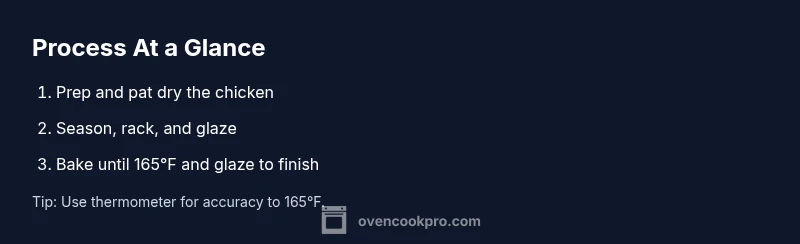
Preheat the oven to 425°F (220°C). While it heats, pat dry the chicken and gather all ingredients for rub and glaze. This ensures even browning and glaze adhesion.
Tip: Dry surfaces improve Maillard browning. - 2
Season the chicken
Apply a light coat of oil, then season the pieces evenly with salt, pepper, paprika, and garlic powder. This builds flavor and helps the glaze stick.
Tip: Even seasoning helps avoid hot spots. - 3
Arrange on a rack
Place chicken on the rack set over the baking sheet, spacing pieces for air flow. This prevents soggy bottoms and promotes even browning.
Tip: Do not stack pieces; air needs to circulate. - 4
Prepare the glaze
Whisk together your BBQ sauce, a splash of vinegar or citrus, and a touch of sweetener. Adjust salt to taste, then set aside.
Tip: A balanced glaze should cling, not pool. - 5
First bake with glaze
Brush a thin layer of glaze on the chicken and bake for 15-20 minutes to set the base layer.
Tip: Thin layers prevent soggy coatings. - 6
Add glaze and finish cooking
Brush on more glaze and continue baking until the internal thermometer hits 165°F (74°C).
Tip: Check early if pieces are small or boneless. - 7
Rest the meat
Remove from oven and let rest 5-10 minutes to reabsorb juices.
Tip: Resting improves moisture distribution. - 8
Slice and serve
Slice against the grain for tenderness and serve with complementary sides.
Tip: A light squeeze of lemon brightens flavors.
Questions & Answers
Can I use frozen chicken for baked bbq chicken in oven?
Using frozen chicken is not ideal for even cooking. Thaw completely in the fridge before baking to ensure the center reaches a safe temperature without overcooking the outside.
Thaw the chicken before baking for even cooking.
What is the safe internal temperature for oven-baked chicken?
The safe internal temperature for chicken is 165°F (74°C) in the thickest part. Always verify with an instant-read thermometer.
Cook to 165 degrees Fahrenheit.
Skin on or skin off for the glaze?
Keep skin on when possible to preserve moisture and flavor; remove skin in the final minutes if you want extra crispness. The glaze adheres better to skin, too.
Keep skin on for moisture, then crisp if you like.
Can I use a convection oven for this recipe?
Yes, convection can improve browning and reduce cooking time. Lower the temperature by about 25°F (14°C) and monitor glaze closely to avoid scorching.
Convection helps browning; lower the heat a bit.
How long should the chicken rest after baking?
Let the chicken rest 5–10 minutes after removing from the oven to redistribute juices and improve cutting ease.
Rest 5–10 minutes for juicier slices.
Can I use boneless chicken breasts instead of bone-in pieces?
Yes, boneless breasts work, but they cook faster and can dry out. Reduce bake time and check early with a thermometer to avoid overcooking.
Boneless breasts cook faster—watch the time.
Watch Video
Main Points
- Season evenly for consistent flavor
- Use a thermometer for safe, juicy results
- Rest the meat before slicing
- Apply glaze in layers for depth and shine