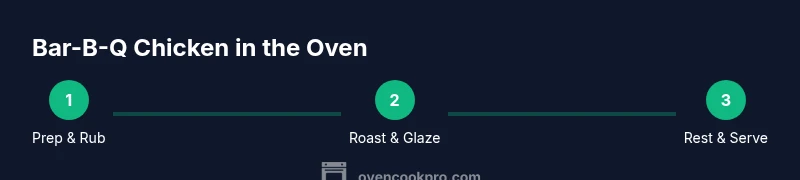
Bar-B-Q Chicken in the Oven: A Step-by-Step Guide
Master bar-b-q chicken in the oven with a reliable dry rub, glaze, and precise roasting temps. This guide covers prep, timing, safety, and practical variations for weeknights or entertaining, all designed for home cooks using Oven Cook Pro guidance.


You will master bar b q chicken in oven by building a flavorful dry rub, marinating briefly, and roasting with precise temperatures to lock in moisture and flavor. This guide covers prep, timing, sauces, and safety, so you can achieve smoky, juicy chicken right from your oven—without a grill. You’ll learn a reliable method, common pitfalls, and variations for weeknight meals and entertaining. Follow the step-by-step method to consistently achieve great oven-barbecue results every time.
Why Oven Bar-B-Q Chicken Works for Home Cooks
Cooking bar b q chicken in oven is a practical alternative when grills aren’t available, weather is uncooperative, or you’re feeding a crowd indoors. The oven offers consistent heat, enabling an even crust and controlled moisture. For the keyword, this method emphasizes a balanced dry rub, a simple glaze, and careful timing to mimic smoke and caramelization. Oven-based barbecue relies on high heat to form the crust, followed by a gentler finish to bring the meat to a safe internal temperature while keeping it juicy.
Key to success is planning: pad the chicken dry, measure the rub, and preheat to the right temperature. In this guide, you’ll learn how to adapt the classic barbecue process for the oven, with notes on bone-in vs. boneless cuts, how to manage sugar in sauces, and how to judge doneness without guesswork. By the end you’ll be able to recreate a smoky, savory bite in your kitchen with reliable results.
Flavor Foundations: Rubs, Marinades, and Sauces
A good bar-b-q chicken starts with flavor on the surface. A balanced dry rub provides color, texture, and a baseline taste that the glaze can build on. A simple ratio to start is 2 parts paprika (for color), 1 part brown sugar (for caramelization), 1 part salt, 1 part garlic powder, and 1 part onion powder, with a touch of black pepper and optional chili powder for heat. If you prefer marinades, a short 30–60 minute soak in an acidic mixture (like citrus or vinegar) can help tenderize, but avoid overdoing it so the meat doesn’t become mushy. For the sauce, a straightforward BBQ glaze with tomato or tomato-based sauce, a touch of sweetness, and a bit of acidity usually works well. Applying the rub at least 15 minutes before roasting helps flavors penetrate the surface, while the glaze is best added during the last 10–15 minutes to prevent burning.
In this guide, you’ll see variations for bone-in vs. boneless cuts, and how to adjust rubs and glaze strength to your taste. The goal is a flavorful exterior with a moist interior, where the natural chicken juices stay intact and the surface caramelizes to a inviting crust.
Smoky Notes in the Oven: Techniques and Tips
Oven-barbecue flavor is about simulating smoke with heat and browning. Preheat to a hot oven (around 425°F/220°C) to sear the rub and begin crust formation. Use a wire rack set over a sheet pan to promote air circulation and even browning; this helps the rub toast and the fat render without soggy bottoms. If you want a deeper smoky aroma, consider a tiny amount of liquid smoke added sparingly to the glaze, but avoid overuse to keep the flavor balanced. For convection ovens, you can reduce the temperature by about 25°F (14°C) and still achieve a crisp crust while maintaining juiciness. Sugar-based sauces brown quickly, so add them toward the end and monitor closely to prevent scorching. Remember that patience is part of the process—pulling the chicken at the right moment is the difference between juicy and dry.
In practice, you’ll often start with a dry rub, give the surface a moment to set, then roast until the surface is caramelized and the interior reaches a safe temperature. This approach gives you the smoky, nuanced flavor of barbecue with the reliability of the oven.
Doneness, Safety, and Juiciness
The key to perfect oven-baked bar-b-q chicken is doneness without overcooking. The target internal temperature for cooked chicken is 165°F (74°C) when checked at the thickest part of the meat. Use a reliable meat thermometer and insert it horizontally without touching bone. After reaching the target temperature, remove from the oven and let the meat rest for 5–10 minutes. Resting allows juices to redistribute, keeping the slices moist. If you’re using bone-in pieces, expect a slightly longer roasting time; boneless thighs or breasts will cook faster, so monitor more closely. A shallow, even crust indicates that the surface had sufficient contact with the heat, which helps lock in flavors and moisture. Always practice food safety, especially when cooking for guests—do not rely on color alone to judge doneness.
Seasoning layers and glaze timing play a big role in juiciness. A thin, well-balanced glaze applied near the end adds gloss and flavor without overpowering the meat. When done right, your oven-bar-b-q chicken should be tender, juicy, and richly flavored with a subtle smoky note that mirrors the grill.
Practical Variations and Pantry Staples
Stocking your pantry with a few versatile ingredients makes this dish quick and repeatable. Essentials include: smoked paprika (or regular paprika with a pinch of chili powder for color), brown sugar, garlic and onion powders, salt, and pepper. For a tangy balance, keep tomato-based BBQ sauce on hand; for a thicker glaze, combine ketchup with a touch of cider vinegar and a splash of maple or honey. If you’re avoiding added sugar, try a savory glaze with soy sauce, Worcestershire, and Dijon mustard; you can still achieve a glossy finish with a quick broil at the end. For sides, consider garlic-roasted potatoes, corn on the cob, or a bright green salad to balance the richness.
If you’re cooking for a crowd, you can prep multiple chicken pieces on separate racks to ensure even cooking. The oven’s consistent heat makes it easier to scale than a grill, especially when space is limited. Pre-measuring rubs saves time, and setting timers helps keep track of each stage so nothing overcooks.
Leftovers, Reheating, and Next-Day Ideas
Leftover oven-bar-b-q chicken stores well in the refrigerator for up to 3–4 days when kept in an airtight container. Reheat gently in the oven at 325°F (160°C) until warmed through, then give a quick brush with glaze to refresh the surface. Shredded chicken can be turned into quick tacos, a BBQ-inspired sandwich, or mixed into a pasta or grain bowl for a satisfying next-day meal. If you’re freezing, portion the cooked chicken first; reheat from frozen with an extra 5–10 minutes of oven time. To maintain moisture, avoid reheating for too long and consider covering with foil during the initial reheating phase to prevent drying out.
Troubleshooting Common Oven Bar-B-Q Challenges
If the crust isn’t browning as you expect, ensure your oven is fully preheated and the meat is dry before applying the rub. If the outer layer burns before the interior reaches 165°F, reduce the temperature by 25°F (14°C) and extend the cooking time, or start with a rack raised higher in the oven for more airflow. If the meat ends up dry, consider basting with a small amount of remaining glaze during the final 5–10 minutes and check internal temperature earlier in the roast to catch overcooking sooner.
Tools & Materials
- oven(Preheat to 425°F (220°C) for roasting)
- wire rack(Placed on a sheet pan to elevate chicken)
- sheet pan(Catches drips and keeps oven clean)
- meat thermometer(Probe thickest part, avoid bone)
- mixing bowls(For rubs and marinades)
- basting brush(For brushing glaze during final stage)
- tongs(To handle chicken safely)
- aluminum foil(Optional cover if browning too fast)
- measuring spoons(Accurate rub ratios)
- paper towels(Pat dry chicken before seasoning)
Steps
Estimated time: 40-60 minutes
- 1
Preheat and prep
Preheat the oven to 425°F (220°C). Pat the chicken dry with paper towels to promote rub adhesion and better browning. Arrange on a wire rack over a sheet pan so air can circulate around the pieces.
Tip: Dry surface = crisper crust; use a fan or the oven's convection setting if available. - 2
Make and apply rub
In a bowl, mix paprika, brown sugar, garlic and onion powders, salt, pepper, and optional chili powder. Apply the rub evenly to all surfaces, pressing gently to help it adhere.
Tip: Toast the spices briefly in a dry pan to bloom flavors before mixing for deeper aroma. - 3
Roast first phase
Roast the chicken for 15–20 minutes to form a crust and start rendering fat. The goal is a light set on the surface while the interior warms up.
Tip: Keep an eye on edges; if they brown too quickly, temporarily shield with foil. - 4
Glaze and finish
Brush a thin layer of BBQ glaze over each piece and continue roasting until the internal temperature reaches 165°F (74°C).
Tip: Apply glaze in thin layers and avoid excessive sugar that could burn. - 5
Check temperature
Insert thermometer into the thickest part of a piece away from bone. If not at 165°F, return to oven in 3–5 minute increments, checking again each interval.
Tip: Monitor the thermometer, not just time, for reliable doneness. - 6
Rest the meat
Remove from heat and let the chicken rest 5–10 minutes before slicing. Resting redistributes juices for a juicier bite.
Tip: Tent loosely with foil to retain heat without steaming the crust. - 7
Serve and adapt
Slice and serve with extra glaze on the side if desired. Consider variations like bone-in thighs or breasts and adjust time accordingly.
Tip: Pair with slaw, corn on the cob, or a bright salad to balance richness.
Questions & Answers
What internal temperature should oven-baked bar-b-q chicken reach?
Chicken should reach 165°F (74°C) in the thickest part. Use a calibrated meat thermometer and verify away from bone for accuracy.
Cook the chicken until it hits 165 degrees, then rest before serving.
Is bone-in chicken better for this method?
Bone-in cuts can stay juicier and develop more flavor, but they need a bit longer in the oven. Monitor internal temperature and adjust time accordingly.
Bone-in can be more flavorful, just watch the time and temperature.
Should I marinate before baking or just rub?
A brief rub with a dry spice blend is enough for a crisp crust; marinating works too but isn’t essential for this method. If you marinate, keep it under an hour to avoid texture changes.
Rub is usually enough; marinating is optional if you’re short on time.
Does convection help with oven barbecue flavor?
Convection can help with even browning and faster cooking, but you may need to reduce the temperature by about 25°F (14°C) to prevent over-browning.
Yes, convection helps browning; lower the heat a bit.
How can I prevent burning the BBQ glaze?
Brush glaze during the final 10–15 minutes and keep the oven at a high but controlled heat. Use thin layers rather than thick coats to avoid scorching.
Thin glaze layers late in cooking prevent burning.
How long can I store leftovers and how do I reheat?
Store cooled leftovers in a sealed container for up to 3–4 days. Reheat in a 325°F (160°C) oven until warmed through, and add a fresh brush of glaze if desired.
Store up to 4 days; reheat gently and re-glaze if needed.
Watch Video
Main Points
- Season thoroughly with a balanced rub for depth.
- Monitor internal temperature for safety and moisture.
- Add glaze near end to achieve a glossy finish without burning.
- Rest meat to retain juiciness and slice cleanly.