Bake Turkey Bacon in the Oven: A Crisp, Reliable Method
Learn how to bake turkey bacon in the oven for crispy, mess-free results. This step-by-step guide covers prep, airflow, timing, and flavor twists with expert tips from Oven Cook Pro.


Bake turkey bacon in the oven to achieve crisp, evenly cooked slices with minimal splatter. This method delivers consistent texture by preheating, using parchment or a rack, and cooking at a moderate temperature. You'll flip halfway for uniform browning and rest briefly before serving, making it ideal for quick breakfasts and meal prep. Oven Cook Pro confirms this approach as dependable and efficient.
Why oven baking shines for turkey bacon
Cooking turkey bacon in the oven is a clean, consistent method that minimizes splatter and reduces the need to babysit the pan. When you bake it, fat renders away and the slices cook evenly from edge to center. According to Oven Cook Pro, this approach often yields crisper edges without the curling that sometimes happens on a skillet. Temperature control matters: a steady oven creates uniform heat that browns without burning, which is especially helpful when you’re preparing multiple servings for a family breakfast or meal prep. With the right setup, you can go from bag of bacon to ready-to-serve strips in minutes, leaving your stovetop free for other tasks. This method also reduces cleanup compared to pan-frying and scales well for batch cooking. Bake turkey bacon in the oven and you’ll notice the difference in texture and cleanup.
Choosing turkey bacon: thickness, sodium, and flavor
Turkey bacon comes in various thicknesses and salt levels. Thick-cut slices resist overcooking and stay chewy longer, while regular-thickness cuts crisp quickly. If you’re watching sodium, look for options labeled lower sodium or reduced-salt. Flavor variations exist as well, from peppery to maple-glazed varieties. For oven baking, uniform thickness helps ensure even browning across all slices. If you’re cooking for kids or guests with dietary preferences, read the label to understand added sugars and flavor enhancers. In general, plan for a consistent batch size so all slices cook at the same rate, and avoid mixing different thicknesses on the same sheet. This keeps texture even and predictable.
Tools and setup for best results
The basic setup is simple: a rimmed baking sheet, parchment or foil for easy cleanup, and an optional cooling rack to elevate the slices for better fat drainage. A pair of tongs or a spatula makes turning convenient, while oven mitts protect your hands during handling. If you routinely bake in batches, consider a second sheet pan for parallel cooking. A timer helps you stay precise, though you’ll still monitor the color as doneness can vary with thickness and oven variances. For best results, keep your workspace organized and ready before you begin so you can focus on timing and texture. Remember, clean tools contribute to crisp results as much as clean sheets.
Preheating and prepping the sheet
Set your oven to a steady 400°F (205°C) for most turkey bacon cuts. While it heats, line a rimmed sheet with parchment paper or foil to catch fat drips and prevent sticking. If you’re using a rack, place it on the sheet so air can circulate under the slices. Ensure slices are laid flat in a single layer with a touch of space between each piece. Overlapping reduces airflow and creates soggy edges. Preparing the sheet properly is half the battle for evenly crispy results.
Rack vs sheet: airflow matters
Using a cooling rack elevates the bacon so fat can drain away, promoting crisper edges. A rack setup increases airflow around every slice but requires careful transfer to the rack to avoid tearing. If you don’t have a rack, a parchment-lined sheet works fine; just flip slices halfway through to promote even browning. The key is to avoid crowding; space between slices ensures hot air reaches each surface. If you’re cooking for a crowd, two racks with a shared pan can keep pace without sacrificing texture.
Temperature and timing: base guidelines
Most home cooks start at 400°F (205°C) for 8–12 minutes, flipping once halfway through. If slices are very thin, check closer to 8 minutes to prevent over-crisping. For thicker, maple-flavored, or lower-sodium varieties, plan for 12–14 minutes and monitor for dark browning rather than burning. Every oven varies slightly, so use color as a guide: edges should be golden, not burnt, and centers should look firm. If you’re cooking multiple batches, keep the oven door closed between batches to maintain even heat.
Doneness cues: color, crisp, and texture
Done turkey bacon in the oven should appear golden-brown with crisp edges and a firm, not rubbery, center. The color browns evenly rather than concentrating on the tips. A light sizzle as you remove the sheet indicates a good crisp. If you’re unsure, test one slice by biting into it—should be crisp with a slight snap. Remember that bacon continues to crisp slightly as it rests, so pull it just shy of your preferred level and let it rest on a rack or paper towels for a minute.
Common mistakes and fixes
Overcrowding leads to soggy slices; always leave space between pieces. Using a cold sheet cools the surface and slows browning, so preheat and line properly. Flipping too early or not flipping at all can create uneven browning. If the bacon seems oily, switch to a rack or drain fat onto parchment rather than letting it pool on the sheet. If you’re short on time, a short blast under the broiler for a minute—watch closely—can finish the crisp without turning the oven back on.
Storing and reheating leftovers
Cool the slices on a rack for 5–10 minutes before storing to prevent sogginess. Store in an airtight container in the fridge for up to 4 days or freeze for longer-term use. Reheat in a 350°F (175°C) oven for 5–7 minutes, or until warmed through and crisp again. Reheating on a rack yields better texture than microwaving, which can leave the bacon rubbery. For best results, re-crisp in small batches to maintain texture.
Flavor twists: herbs, pepper, and glaze ideas
Add variety with cracked black pepper, smoked paprika, or chili flakes for a quick kick. A light maple glaze in the last minute of baking creates a glossy, sweet-and-savory finish. If you prefer extra zing, finish with a squeeze of lemon or a dusting of garlic powder. For a smoky profile, use a tiny spray of liquid smoke before baking. Flavoring should be subtle enough to enhance turkey bacon rather than overpower it.
Cleaning up: quick cleanup tips
Let the sheet cool completely before handling. Use a paper towel to dab up excess fat from parchment or foil, then recycle the liner if appropriate. Wash tools with warm, soapy water and dry thoroughly to prevent rust on racks. If you used a rack, soak it briefly to loosen fat and prevent sticking. Regularly lining the sheet saves time on cleanup and makes future batches faster.
Quick-start reference: cheat sheet
- Preheat to 400°F (205°C) and line a sheet.
- Use a rack if possible for best crisp.
- Space slices, flip halfway, bake 8–14 minutes.
- Let rest briefly before serving or storing.
- Reheat to 350°F (175°C) if crisp texture is desired.
Tools & Materials
- Sheet pan(Large rimmed baking sheet, 9x13 inches or larger)
- Cooling rack (optional)(Elevates slices for fat drainage and crispness)
- Parchment paper or aluminum foil(Line the sheet to prevent sticking and ease cleanup)
- Tongs or spatula(For turning slices halfway through bake)
- Oven mitts(Safety heat protection when handling hot sheet)
- Kitchen timer(To track bake time and avoid overcooking)
- Storage container(For leftovers, with air-tight seal)
Steps
Estimated time: Estimated total time: 12-18 minutes
- 1
Preheat and prepare
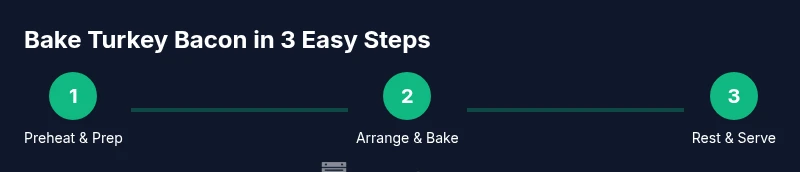
Preheat the oven to 400°F (205°C). Line a rimmed sheet with parchment or foil and, if available, place a rack on top. This setup prevents sticking and helps fat drain away for crisper results.
Tip: Fully preheating ensures consistent browning across all slices. - 2
Arrange the slices
Lay turkey bacon slices in a single layer with a little space between them. Avoid overlapping because crowded slices steam rather than crisp, leading to uneven edges.
Tip: If slices vary in thickness, cook the thicker ones on the outer portions where heat is more even. - 3
Bake and flip
Bake for 8–12 minutes, flipping halfway with tongs to promote even browning. Keep an eye on color toward the end to prevent over-crisping, especially with thinner cuts.
Tip: Flipping once is usually enough; avoid constant turning which can cause uneven texture. - 4
Check doneness
Check for golden edges and a firm texture. If needed, continue baking in 1–2 minute increments until the desired crispness is reached.
Tip: Remember bacon continues to crisp slightly as it rests off the heat. - 5
Rest and drain
Transfer to a rack or plate lined with paper towels to absorb excess fat for about 1–2 minutes before serving.
Tip: Resting helps set the crispness and prevents soggy edges. - 6
Store or serve
Serve immediately or store leftovers in an airtight container in the fridge. Reheat at 350°F (175°C) for 5–7 minutes to restore crispness.
Tip: Small batches reheat more evenly and maintain texture.
Questions & Answers
Should I use a rack or parchment to bake turkey bacon in the oven?
Both methods work. A rack provides the best airflow and crispness, while parchment makes cleanup easier. If you’re after maximum crisp, use a rack. If you’re pressed for time, parchment is a perfectly acceptable alternative.
You have two good options: rack for crispness or parchment for easy cleanup.
What temperature is best for baking turkey bacon in the oven?
A common, reliable setting is 400°F (205°C). Some thinner slices may do well at 375°F, while thicker cuts tolerate up to 425°F for crisper results. Adjust based on thickness and desired crispness.
Most people bake at 400 degrees, but adjust if your slices are unusually thick or thin.
How long does it take to bake turkey bacon in the oven?
Typical bake time is 8–12 minutes for regular slices, 12–14 minutes for thicker cuts. Always start checking at the 8-minute mark to avoid burning.
About 8 to 12 minutes, depending on thickness; check early to prevent burning.
Can I bake frozen turkey bacon?
Yes, but expect a longer bake time and watch for uneven browning. Add a few extra minutes and check often for doneness.
You can bake from frozen, but it takes longer and you should check for doneness as you cook.
Is turkey bacon healthier than pork bacon when baked?
Turkey bacon generally has less fat, but sodium levels vary by brand. It can be a lighter option if you choose lower-sodium varieties.
It can be a leaner option, but check the label for sodium and added sugars.
How do I reheat baked turkey bacon without losing crispness?
Reheat in a 350°F oven for 5–7 minutes, or briefly under a hot broiler watchfully. Avoid microwaving, which can soften texture.
Reheat in the oven at 350 and keep an eye on it to stay crispy.
Watch Video
Main Points
- Bake with consistent heat for even browning
- Use a rack or parchment to manage fat and airflow
- Space slices apart to avoid soggy edges
- Rest briefly before serving or storing to set texture