How to Cook Bacon in the Oven: Crisp Every Time
Master oven-cooked bacon with a reliable, step-by-step method. Learn temps, timing, tools, and tips for perfectly crispy results with minimal mess. This Oven Cook Pro guide covers safety, cleanup, and variations.


You will learn how to cook bacon in the oven for perfectly crispy, even browning with minimal mess. The method uses a rimmed sheet pan, parchment or foil, and a hot oven around 400°F. You’ll flip once and rest briefly before serving for ideal texture and easy cleanup. This guide covers timing, safety, and cleanup tips.
Why Oven-Baked Bacon Is the Best Method
Crispy, evenly cooked bacon is within reach when you move the cook from the stovetop to the oven. According to Oven Cook Pro, using a radiant heat source from all directions creates uniform rendering of fat and a consistent bite from edge to edge. The oven’s gentle, steady heat minimizes splattering and reduces the mess that often accompanies pan-frying. You’ll often notice crisper edges and less chewy texture, especially with thicker cuts. The technique also scales easily for families or batch cooking, keeping results predictable regardless of the number of slices. For busy mornings or weekend breakfasts, oven-baked bacon offers a reliable workflow with fewer babysitting moments than pan-cooking on the stove.
In addition to texture advantages, the oven method simplifies timing and cleanup. You can spread a sheet pan with dozens of slices and monitor doneness without turning individual pieces. This is particularly helpful when bacon is part of a larger meal, such as breakfast bowls or-topped salads, where timing coordination matters. Using the oven also reduces grease splatter, helping keep cabinets and countertops cleaner. When you want restaurant-like crispness at home, the oven is your best ally.
For safety and consistent results, invest in a good rimmed baking sheet and use parchment or foil liners. These tools catch grease and prevent sticking, making cleanup quick. The Oven Cook Pro team recommends maintaining a set temperature and using a single sheet with even spacing to avoid overlapping slices, which can cause uneven cooking. With proper setup, you’ll enjoy crisp bacon with minimal effort and maximum flavor.
note}:null,
Tools & Materials
- rimmed baking sheet(15x12 inches (38x30 cm) or larger for even rendering of fat.)
- parchment paper or aluminum foil(Line the sheet for easy cleanup and to prevent sticking.)
- oven-safe tongs(For turning slices halfway through cooking.)
- bacon slices(Choose center-cut or thick-cut for best texture.)
- cooling rack (optional)(Elevates bacon for extra air circulation and crisper edges.)
- paper towels(Pat slices after cooking to remove excess grease.)
- meat thermometer (optional)(Check doneness if desired, though not required for standard bacon.)
Steps
Estimated time: 15-25 minutes total, plus 1–2 minutes rest
- 1
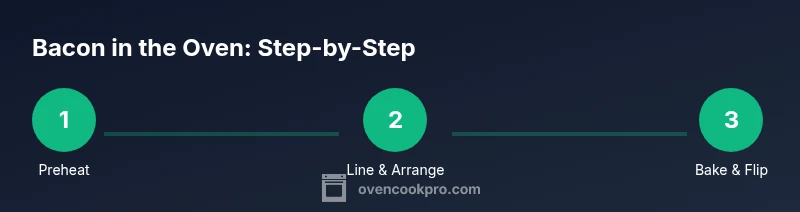
Preheat and prepare
Preheat your oven to 400°F (200°C). While it comes to temperature, line a rimmed baking sheet with parchment or foil and set out your bacon slices in a single layer, leaving a small gap between pieces. This ensures even heat transfer and crisp edges. Start your timer early so you’re ready to slide the pan in as soon as the oven settles.
Tip: Preheating ensures immediate sizzle and even rendering from the first minute. - 2
Line and arrange
Place the bacon in a single layer on the lined sheet. Avoid overlapping slices, which can lead to irregular cooking. If your slices don’t all fit, bake in batches rather than stacking. Overlapping traps fat and steams the meat rather than browning it.
Tip: Spacing is key to uniform crispness across every slice. - 3
Bake and monitor
Bake on the center rack for 12–20 minutes, depending on thickness and desired crispness. Start checking at 12 minutes, then extend in 1–2 minute increments if needed. Keep an eye on edges turning golden brown to prevent burning.
Tip: Thinner slices cook faster; thicker slices stay crisper with a bit more time. - 4
Flip for even browning
Halfway through cooking, use tongs to flip the slices. This helps render fat evenly and prevents curling on one side. If you see curling early, pausing to flip can improve the final texture.
Tip: Flipping ensures both sides crisp up equally. - 5
Rest and drain
Transfer the cooked bacon to paper towels to drain excess grease. Let it rest 1–2 minutes before serving; the brief rest lets the fat reabsorb slightly and improves texture.
Tip: Resting creates a crisper bite and reduces grease slick on plates. - 6
Optional finish
If you want extra crispness, you can place the bacon under the broiler for 1–2 minutes, watching closely to prevent burning. This step is optional and depends on your oven’s performance.
Tip: Broiling is a quick finish—watch carefully to avoid scorching.
Questions & Answers
Can I bake bacon without parchment paper?
You can, but parchment makes cleanup much easier and prevents sticking. If you skip it, line the sheet with foil and spray lightly.
You can skip parchment, but cleanup will be messier; foil works as a backup.
What temperature is best for bacon in the oven?
A common, reliable temperature is 400°F (200°C). Some cooks prefer 425°F for extra crispness; adjust based on thickness and your oven.
Most people bake at 400 degrees, tweaking slightly for thickness.
How long does oven bacon take?
Typically 12–20 minutes, depending on slice thickness and desired crispness. Start checking at 12 minutes.
Most bacon finishes in about 12 to 20 minutes.
Can I prepare bacon in advance and reheat it later?
Yes. Cooked bacon can be stored in the fridge for up to 4–5 days and reheated briefly in a hot pan or oven.
You can reheat bacon quickly for a same-day meal.
Why does my bacon curl or curl unevenly?
Uneven cooking can be due to overlapping slices or uneven oven heat. Space slices and consider rotating the pan halfway through.
Spacing and even heat are the fix for curling.
Is oven-baked bacon healthier than pan-fried bacon?
Nutritionally, bacon has fat and calories regardless of cooking method. Oven-baking reduces splatter and may feel cleaner, but the fat content remains similar.
Both have similar fat content; oven-baking mainly reduces mess and splatter.
Main Points
- Preheat to 400°F for even browning
- Line the sheet and space slices for uniform crisp
- Bake 12–20 minutes; flip halfway for even browning
- Let resting bacon blot grease before serving
- Optional broil finish can add extra crispness