How to Make Bacon in the Oven
Learn a reliable, step-by-step method to bake bacon in the oven for crispy, mess-free results. From preheating to storage, master thickness, timing, and flavor variations with expert guidance from Oven Cook Pro.


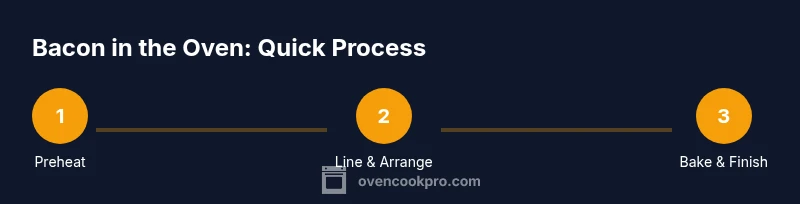
Cooking bacon in the oven yields evenly crisp slices with less mess and shrinkage than pan frying. To succeed, preheat the oven, line a sheet pan with parchment, arrange bacon in a single layer, and bake until crispy. Let the fat drain on paper towels before serving for maximum crispness and flavor.
Why Oven-Baked Bacon Is a Smart Choice
Baking bacon in the oven yields evenly crisp edges with less mess and splatter compared with pan frying. According to Oven Cook Pro, this method minimizes shrinkage and produces consistent results batch after batch. You’ll appreciate the hands-off approach: once the bacon is on the sheet, you can focus on sides, drinks, or other prep while the oven does the work. In this section, we’ll cover how to pick bacon, preheat correctly, and achieve your preferred level of crispness.
Choosing Bacon Thickness and Cuts
Regular sliced bacon cooks quickly and is ideal for classic breakfast crispness. Thick-cut bacon yields a meatier bite and takes longer to render fat, but can still achieve a satisfying snap when baked properly. Consider the fat cap, marbling, and overall size of slices to avoid crowding. For beginners, start with regular slices; you can experiment with thick-cut as you gain confidence. No matter the cut, give each slice space on the sheet.
Essential Tools and Setup
To bake bacon successfully, assemble a few basic tools: a rimmed sheet pan to catch fat; parchment paper or a silicone mat for easy cleanup; a pair of tongs for safe handling; paper towels to blot excess fat; and an optional metal rack if you want to elevate the bacon for extra crispness. An oven thermometer can help verify accuracy if your oven runs hot or cool. Set out a timer and a cutting board or plate for resting slices.
Preheating and Pan Prep
Preheat the oven to 400°F (205°C). While the oven warms, prepare the sheet by lining with parchment paper. If you prefer extra crispness, you can place a cooling rack on the sheet; this elevates the bacon, allowing fat to drain away and air to circulate.
Arranging Bacon for Even Crispness
Place the bacon in a single layer, with slices not overlapping. This arrangement ensures each piece cooks evenly and becomes uniformly crisp. If necessary, trim longer strips so every piece has air around it. Pro tip: leave at least 1/4 inch of space between slices for hot air to reach every edge.
Baking Time and Doneness Indicators
Baking time varies by thickness: regular slices typically crisp in about 12-15 minutes; thick-cut may take 15-20 minutes. Start checking at the 12-minute mark to avoid overcooking. Look for browned edges and rendered fat; the bacon should be crisp but not burnt. If your oven runs hot, you may need to adjust by 1–2 minutes.
Draining, Resting, and Serving
Carefully remove the sheet and transfer the bacon to a plate lined with paper towels to blot fat. Let it rest 1-2 minutes; this helps the crisp texture set and reduces grease on plates. Serve immediately for maximum crunch; store any leftovers in an airtight container in the refrigerator for up to 3-4 days. Reheat on a fresh sheet in a 350°F (175°C) oven for 3-5 minutes to re-crisp.
Flavor Variations and Finishing Touches
Add a sprinkle of black pepper, brown sugar, or maple syrup before baking for a caramelized crust. For a smoky finish, brush lightly with smoked paprika or chili powder before baking. If you prefer a milder flavor, skip additions and rely on the bacon's natural savor. You can also crumble baked bacon over salads or baked potatoes.
Cleanup and Storage
Cool the pan slightly before washing. If using parchment, simply discard the sheet with fat and crumbs for less cleanup. The rendered bacon fat can be saved for cooking; strain and refrigerate for future use. Properly cleaning the pan extends its life and keeps flavors clean for your next bake.
Tools & Materials
- Rimmed sheet pan(16x12 inch or larger with a rim)
- Parchment paper or silicone baking mat(For easy cleanup and nonstick surface)
- Tongs(For safe handling and turning if needed)
- Paper towels(To blot surface fat after cooking)
- Cooling rack (optional)(Elevates bacon for extra crispness)
- Oven thermometer(Verify actual oven temperature)
- Timer(Track bake time accurately)
- Plate for resting(Catch fat as slices rest)
Steps
Estimated time: Total time: 25-30 minutes
- 1
Preheat the oven
Preheat the oven to 400°F (205°C). This ensures heat is evenly distributed from the moment the bacon goes in, promoting uniform crispness. If your oven tends to run hot or cool, adjust accordingly and use an oven thermometer to verify accuracy.
Tip: Set the timer for 5 minutes after the oven reaches temperature to ensure stability before the bacon goes on the sheet. - 2
Line the sheet with parchment
Line a rimmed sheet pan with parchment paper or a silicone baking mat. This prevents sticking, makes cleanup easier, and helps render fat away from the bacon.
Tip: For extra easy cleanup, pre-cut parchment into sheets that fit the pan. - 3
Arrange bacon in a single layer
Lay bacon strips in a single, flat layer with slices not overlapping. This arrangement ensures even cooking and prevents soggy spots. If needed, trim longer strips so every piece has air around it.
Tip: Avoid stacking slices; use multiple pans if you have a lot. - 4
Bake until crispy
Place the pan in the hot oven and bake until the edges are browned and fat is rendered. Regular slices typically crisp in 12-15 minutes; thick-cut may take 15-20 minutes. Check a minute or two before the 12-minute mark to gauge pace.
Tip: If bacon curls, gently press flat with tongs halfway through. - 5
Drain and rest
Carefully remove the pan and transfer the bacon to a plate lined with paper towels to blot fat. Let it rest 1-2 minutes; this helps the crisp texture set and reduces grease on plates.
Tip: If you’re cooking a large batch, keep finished bacon warm on a rack in a 200°F (93°C) oven while finishing the rest. - 6
Serve or store leftovers
Serve immediately; crispy bacon is best fresh. Refrigerate leftovers in an airtight container for up to 3-4 days. Reheat on a fresh sheet in a 350°F (175°C) oven for 3-5 minutes to re-crisp.
Tip: Save the rendered fat for cooking eggs or potatoes; strain and store in the fridge.
Questions & Answers
Can I cook bacon in the oven without parchment?
Yes, you can bake bacon on a lightly oiled sheet or directly on foil, but parchment helps prevent sticking and speeds cleanup. If you skip parchment, monitor for sticking and adjust cleanup.
You can bake bacon on foil, but parchment makes cleanup easier.
How do I know when bacon is crispy?
Crispness is achieved when edges are browned and fat is rendered. The center may look slightly wavy, and there should be little to no translucent fat left.
Look for browned edges and rendered fat; the slices should be firm and crisp.
Should I flip bacon while baking?
Flipping is not required if the bacon is in a single layer with space. Some cooks flip for extra evenness, but many ovens bake evenly without flipping.
No flip needed if laid flat with space.
Can I cook bacon from frozen in the oven?
Yes, frozen bacon can be baked, but expect longer cooking times and the need to separate frozen clumps first; thawing slightly improves evenness.
Frozen bacon takes longer to cook and may cook unevenly.
What temperature is best for bacon in the oven?
A common starting point is 400°F (205°C); adjust for your oven and bacon thickness. Verify doneness by crispness and rendered fat.
Typically 400°F, but adjust for your oven.
How long does it take bacon to cook in the oven?
Regular slices finish in about 12-15 minutes; thick-cut 15-20 minutes. Times vary with thickness and oven performance, so start checking early.
Most bacon is done in 12-20 minutes depending on thickness.
Main Points
- Preheat to the right temperature for even cooking
- Line the pan and give each slice space
- Monitor time based on thickness for optimal crispness
- Drain fat and rest briefly before serving
- Experiment with flavors and storage options