Should the Oven Be Open When Grilling? A Practical Guide
Learn whether to keep the oven door open during grilling, with step-by-step guidance, safety tips, and model-specific nuances from Oven Cook Pro.


Should the oven be open when grilling? In most cases, keep the door closed during broiling to reach and maintain high heat. Open the door only briefly to check progress, and never rely on a fully open door for browning. Some models allow a slight ajar position for extra airflow, but always follow your appliance’s manual. According to Oven Cook Pro, model guidelines vary, so confirm with the manual.
How Oven Doors Work During Grilling
When you grill in an oven, the door position dramatically affects heat retention and airflow. Keeping the door closed helps maintain a steady, high-temperature environment essential for browning and even cooking. Opening the door interrupts this steady state, causing heat loss and temperature fluctuations that can lead to uneven searing or slower browning. Convection fans also respond to door position, influencing how heat circulates around the food. For most home cooks, a closed door provides the most reliable results, while occasional brief checks are acceptable. According to Oven Cook Pro, following the manufacturer’s guidance yields the best consistency, so always confirm with your specific model and setting.
Model-Specific Rules: Check Your Manual
Oven designers vary, and the recommended door position during grilling/broiling is not universal. Some models are designed to be used with the door fully closed, while others permit a slight ajar angle for managing browning in very intense heat. The safest approach is to start with the door closed and monitor progress closely. If your manual or manufacturer’s online guidance mentions an ajar configuration, apply that precisely. Oven Cook Pro Analysis, 2026 emphasizes that model-specific rules can matter more than a one-size-fits-all rule, so treat the manual as your primary reference.
Practical Scenarios: What to Grill and How to Position It
Most proteins and vegetables that benefit from quick searing should be placed on a rack close to the top of the oven. Preheat the oven to the broiling or grill setting with the door closed, then position the food so heat directly browns the surface. For items prone to flare-ups, such as fatty meats or marinated foods, a shallow pan to catch drippings can reduce smoke and burning. Use a timer and a meat thermometer to track doneness rather than relying solely on visual cues. If you notice excessive browning early, you can rotate the pan or move it slightly farther from the heat source, but avoid reopening the door for long periods, as this will prolong cooking time and uneven browning.
Safety and Food Quality: Implications of Door Position
Door position impacts both safety and food quality. A closed door minimizes stray heat and smoke, reducing the chance of accidental burns or oven damage. However, some cooks prefer a brief ajar gap to curb excessive browning or to vent steam from fatty foods. Always ensure the oven is clean, free of spills that could ignite, and that your hood vent is functioning. The Oven Cook Pro Team emphasizes consistent practice with your model to optimize results without compromising safety.
Quick-Start Checklist for Grilling in the Oven
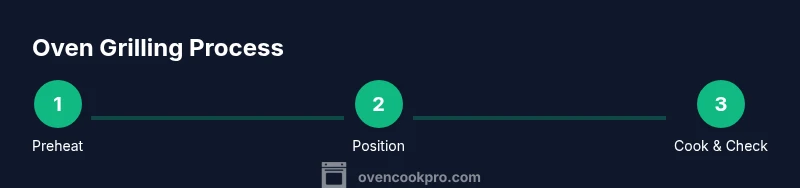
- Preheat the oven to the grill/broil setting with the door closed.
- Position the rack near the top and place the food on a stable pan or rack.
- Use a timer and a thermometer to monitor doneness; avoid relying on color alone.
- Open the door only briefly to check progress, then close it quickly to maintain heat.
- If your model allows, experiment with a very small ajar gap but revert to closed if you notice shimmering heat or smoke.
- After cooking, rest the meat briefly and wipe down any drips to minimize smoke during future uses.
Monitoring Browning Without Guesswork
The easiest way to maintain browning is to set a timer for short intervals and rely on a thermometer for internal temperature. Checking every 2–3 minutes during the final browning phase helps you prevent overcooking. If your oven supports a dedicated broil setting, follow the recommended time targets for your food type and adjust based on your observations. Remember, heat management is more about consistent practice than chasing a perfect browning cue every time.
Tools & Materials
- Oven with broil/grill function(Ensure it’s functioning and set to broil/grill mode.)
- Oven-safe thermometer(Probe or dial thermometer to monitor internal doneness.)
- Oven mitts(Heat-resistant and well-fitting for safe handling.)
- Baking sheet and/or broiling pan(Use a rack if possible to maximize air circulation.)
- Timer(Essential for short, controlled checks.)
- Tongs(For safe turning without piercing the meat.)
- Aluminum foil(Optional for lining pan to simplify cleanup.)
- Oil spray or brush(Lightly oil to promote browning without smoking.)
Steps
Estimated time: 25-40 minutes
- 1
Preheat and prepare
Preheat the oven to the grill/broil setting with the door closed. While it heats, prepare the food on a rack or broiling pan, pat dry, and season as desired. This ensures a clean browning surface when heat arrives.
Tip: Avoid opening the door during preheat to maintain a stable temperature. - 2
Position the rack and food
Place the rack near the top of the oven and set the pan so food sits flat. Elevate fatty items on a rack to prevent soggy bottoms and allow fat to drain away from the surface.
Tip: If using a fatty cut, place a shallow tray below to catch drippings and reduce smoke. - 3
Start grilling and monitor
Switch to broil/grill and keep the door closed. Set a timer for short intervals and observe browning through the glass. Adjust distance if your food browns too quickly or too slowly.
Tip: Use a timer every 2–3 minutes during the first stage to prevent overcooking. - 4
Check progress and adjust
Open the door briefly to check progress, then close it quickly to preserve heat. If needed, move the rack slightly farther from the heating element for gentler browning or closer for faster color.
Tip: Always wear mitts and avoid leaving the door ajar for extended periods. - 5
Finish, rest, and clean
Remove from heat using tongs, rest for a couple of minutes to reabsorb juices, and wipe up any splatters. A quick clean between batches preserves oven performance for future grilling sessions.
Tip: Resting improves juiciness and helps with even final texture.
Questions & Answers
Should I always keep the oven door closed when broiling?
In most cases, start and maintain with the door closed to reach and hold high heat. Briefly open only to check progress, and follow your model’s manual for any ajar recommendations.
Most broiling should be done with the door closed, with brief checks as needed. Always follow your oven’s manual for the safest guidance.
Is it safe to grill vegetables or seafood in the oven using broil?
Yes, with caution. Use a rack near the top, monitor closely, and keep a timer. Avoid leaving the door open for extended periods, and ensure good ventilation.
You can grill vegetables or seafood in the oven by broiling, but monitor closely and keep the door mostly closed.
What if my oven doesn’t specify door position for broiling?
If there’s no specific guidance, start with the door closed and monitor progress with short checks. If browning seems too rapid, consider a very slight ajar position only if your model allows it.
If the manual doesn’t specify, start closed and watch closely, adjusting only if your model allows it.
Can I use convection mode while grilling in the oven?
Convection can speed browning due to airflow, so you may need to reduce time or the heat setting and monitor more frequently. Follow tested guidelines for your food type.
Using convection can brown foods faster; adjust time and monitor closely.
What safety steps should I take before starting?
Clean the oven, remove excess fat, and keep a fire extinguisher nearby. Wear heat-resistant gloves and never pour water on grease flames.
Clean the oven, keep a fire extinguisher handy, and protect your hands with oven mitts.
Why does opening the door affect cooking when grilling?
Opening the door lets heat escape, lowering temperature and slowing browning. It can also cause uneven cooking if done repeatedly.
Opening the door cools the oven and disrupts browning, so use quick checks only.
Watch Video
Main Points
- Keep the oven door closed for most grilling tasks.
- Check model guidance before using ajar positioning.
- Monitor browning with a timer and thermometer.
- Use a rack and pan to promote even browning and drippings control.