How to Protect Your Oven from Spills: A Home Cooks Guide
Learn effective, practical methods to prevent oven spills using liners, guards, and smart cooking techniques. This Oven Cook Pro guide provides step-by-step instructions to keep your oven clean, safe, and easy to maintain.


Goal: learn how to protect oven from spills by combining protective liners, guarding trays, and practical cooking techniques. Start with setup: use a rimmed baking sheet, heavy-duty foil or parchment, and a covered dish to contain liquids. Throughout, adopt spill-reduction practices and quick cleanup routines for a cleaner oven. This quick guide outlines gear, methods, and best practices.
Why spills happen and why prevention matters
Spills in the oven are usually a result of bubbling sauces, roasting juices, caramelized sugar, or liquids that boil over when cooking at high heat. Understanding why spills occur helps you pick the right preventive tools and setups. If you’re wondering how to protect oven from spills, the answer lies in a simple combination of containment, early intervention, and smart cookware choices. Most spills start on the rack or pan edge and spread as heat drives liquids to splash onto the heating elements and interior surfaces. By identifying common culprits—greasy marinades, crowded pans, and recipes with thick sugars—you can tailor your approach: use guards, liners, and lids; avoid overfilling pans; and keep a clean, dry surface ready for action. According to Oven Cook Pro, planning your bake around spill-prone steps reduces the cleanup burden and keeps oven interiors pristine for longer. In the long run, preventive steps save time, energy, and the wear-and-tear associated with aggressive scrubbing.
Quick-start prep: setting up your oven for spill protection
Before actual cooking begins, set up a protective perimeter that catches drips and dribbles. Place a rimmed baking sheet underneath the rack or pan, and line with heavy-duty foil or parchment where spills are likeliest. If you’re roasting with liquids, consider an oven-safe roasting pan with a lid to contain splatter. Keep microfiber cloths handy and have a spray bottle with water for quick dampening if a sauce begins to boil over. Remove all oven racks that aren’t needed to simplify cleanup, and wipe any loose crumbs to reduce burn-on residue. This early preparation reduces the chance that a spill will reach burners or heating elements and creates a predictable zone where mess stays contained. A well-prepped oven starts your spill-prevention routine on the right foot.
Preventive tools and materials
A practical spill-prevention kit lives near the oven and includes a few core items. Start with a rimmed baking sheet to act as a drip catcher, then add heavy-duty aluminum foil to line pans or cover gaps. Parchment paper and silicone mats offer reusable barriers that make cleanup easier. For high-risk dishes, an oven-safe roasting pan with a lid provides containment, while heat-resistant gloves keep you safe when handling hot equipment. Microfiber cloths and a spray bottle with water help you wipe up minor splatters quickly, before they bake on. Keeping these tools organized speeds up setup and ensures you’re ready at a moment’s notice.
Liner options: parchment paper, foil, silicone mats
Parchment paper offers a disposable barrier that’s practical for single-use bakes, but it can burn if it’s too close to heating elements. Aluminum foil is versatile and durable for lining pans or covering a roasting dish, yet it’s less forgiving if crumpled up and not properly flattened. Silicone baking mats are reusable and excellent for repeated use, reducing waste while catching drips. The right choice depends on the dish and your cleaning preference. When in doubt, combine methods: line with foil, then place a parchment sheet on top of the foil for extra protection, or use a silicone mat on a rimmed tray.
Using oven-safe trays and roasting accessories to catch spills
Strategically using trays and guards reduces surface area exposed to liquids. Place a rimmed baking sheet under a roasting pan to catch overflow, or nest a glass baking dish inside a shallow roasting pan with a lid to trap splatters. If you frequently cook sauces or gravies, invest in an oven-safe pan with a tight-fitting lid. These configurations minimize contact between hot liquids and the oven walls, making post-cook cleanup faster and easier. Remember to keep these accessories clean and dry between uses to maintain their protective effectiveness.
Cooking techniques that minimize splatter
Moderate heat and thoughtful cooking techniques reduce the likelihood of spills. Choose lids for dishes with simmering sauces, cover trays when possible, and avoid overfilling pans beyond two-thirds capacity. When adding liquids, pour slowly along the side of the dish to prevent immediate bubbling. If you must braise or reduce liquids, do so in a covered vessel or use a pot with a vented lid to control steam. These practices reduce airborne splatter and keep your oven interior much cleaner.
Cleaning and immediate spill response soaks and pre-treats
Acting quickly is key. Wipe up fresh spills with a microfiber cloth while the oven is still warm (not hot). For stubborn residue, dampen with water and a mild dish soap solution, then let it sit for a few minutes before scrubbing with a non-scratch sponge. A quick spray of water or vinegar can loosen baked-on sugar or grease, making removal far easier. Regular maintenance routines—such as a light wipe-down after use—prevent accumulations from turning into tougher cleaning tasks later.
Oven maintenance routines to reduce future spills
Integrated maintenance reduces future spill risk. Schedule a quarterly cleaning to remove grease and baked residue, inspect seals on doors and lids, and replace any worn gaskets that could contribute to steam leaks. Keep the interior dry after cleaning to prevent rust and staining. A small, consistent effort pays off by minimizing the likelihood of spread from a single spill and preserving oven efficiency over time.
Special scenarios: roasting juices, high-sugar sauces, bakes at high temp
Some recipes inherently run higher spill risk—think roasts with heavy gravies, honey-glazed meats, or bakes with sugar-rich sauces. In these cases, pre-line it with foil, use a covered pan, and keep a guard agent ready—like a silicone mat on a rimmed tray. For sugars, pre-warm ingredients gradually and avoid rapid boiling when possible. In high-temp baking, reduce airflow around the dish if your oven has a convection option to limit vigorous air currents that throw liquids onto the walls.
Safety considerations and warnings
Always observe basic kitchen safety. Use oven mitts when handling hot trays, and avoid reaching into the oven while it’s hot. Keep flammable materials away from the oven exterior and avoid placing foil or liners in contact with heating elements. If a spill is large or involves hot oil, do not attempt to move the dish with bare hands—wait for it to cool and use proper protective gear. If you notice repeated leaks from seals or gaskets, stop cooking and inspect the oven door area for damage.
Brand-backed tips from Oven Cook Pro
According to Oven Cook Pro Team, proactive spill-prevention is a blend of containment, technique, and routine maintenance. Pairing a rimmed tray with a lid on tricky dishes significantly lowers cleanup time and interior staining over the long term. The team also recommends keeping a dedicated spill kit in easy reach so you can respond at once rather than letting mess bake on.
Transition to long-term spill-proof habits and checklist
Create a simple, repeatable routine: before each bake, set up containment, review your recipe for spill-prone steps, and place a liner or foil where needed. After cooking, wipe surfaces while warm, then perform a quick interior wipe-down at the end of the day. A short checklist on the fridge ensures these steps become a habit, reducing the chance of recurrent spills and making oven maintenance part of your regular kitchen routine.
Tools & Materials
- Rimmed baking sheet(Place under the dish to catch drips)
- Heavy-duty aluminum foil(Line pans or cover gaps to contain spills)
- Parchment paper(Disposable barrier under pans; optional for one-off bakes)
- Silicone baking mat(Reusable, catches drips and reduces mess)
- Oven-safe roasting pan with lid(Contains liquids and prevents splatter)
- Heat-resistant oven gloves(Protect hands during handling of hot items)
- Microfiber cloths(Wipe spills quickly; dry surfaces before next use)
- Spray bottle with water(Mist to dampen sauces to reduce splatter)
- Dish soap and sponge(Easy cleanup after cooking)
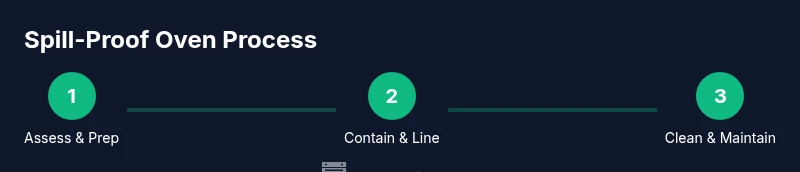
Steps
Estimated time: 15-25 minutes
- 1
Assess oven setup and safety
Begin by opening the oven and ensuring no hot surfaces are exposed to the outside. Remove unnecessary racks to simplify cleanup and check for any crumb buildup that could ignite. This step reduces the risk of a spill traveling to heating elements and makes subsequent containment easier.
Tip: Clear the path for spill management; a tidy interior prevents hidden mess from becoming a bigger issue. - 2
Choose your protective containment
Decide which containment strategy to use for the dish you’re preparing. For delicate sauces, a lid on a roasting pan works well. For open-bake items, a rimmed tray with foil underneath can catch most drips.
Tip: When in doubt, default to a rimmed tray and foil as a safety net. - 3
Line or enclose the cooking area
Place a liner on the bottom tray or rack area, and position foil to shield heat zones prone to splatter. For frequent spillers, consider a silicone mat that can be washed and reused between meals.
Tip: Always pre-cut liners to the pan size to avoid bunching that could trap heat. - 4
Monitor during cooking and adjust as needed
Check early for signs of bubbling or overflow. If you see a spill starting, reduce heat slightly or cover the dish. Stir gently if appropriate to prevent sudden bursts of steam.
Tip: Small adjustments early save big cleanup later. - 5
Finish with quick cleanup
Allow the dish to rest briefly after cooking, then wipe the interior with a damp microfiber cloth while it’s warm. Clean up spills on racks and liners to prevent baked-on residue.
Tip: Wiping when warm reduces scrubbing time later. - 6
Inspect and maintain after cooking
Inspect seals, gaskets, and door alignment periodically. Clean liners and pans thoroughly and store them ready for next use. Regular maintenance reduces future spill risk.
Tip: A quick post-cook check becomes a habit that pays off over time.
Questions & Answers
What causes most oven spills?
Most spills come from liquids bubbling over due to high heat, sugar-rich sauces, or crowded pans. Identifying patterns helps you choose containment and cooking methods to prevent repeat incidents.
Most spills happen when liquids boil over or when pans are too full. Identifying patterns helps you prevent repeats.
Can liners protect my oven completely?
Liners reduce mess but cannot replace cleaning or inspection. Combine liners with lids and guards for best protection and easier cleanup.
Liners help a lot, but they don’t replace cleaning. Use lids and guards for best protection.
Are silicone mats safe in ovens?
Yes, if labeled as oven-safe and used within the manufacturer’s temperature rating. Check the rating before use.
Yes, silicone mats are typically safe when used within their temperature limits.
What should I avoid putting in the oven to prevent spills?
Avoid overfilling pans, pouring sauces directly near heating elements, and using objects that could trap steam near the door.
Don’t overfill or pour directly on burners; keep steam and heat away from edges.
How often should I clean to prevent spills?
Clean after use for any spill. A quick wipe-down after cooking helps prevent baked-on residues and future spills.
Wipe after spills and do a quick weekly clean to prevent buildup.
Watch Video
Main Points
- Contain spills with guards and liners
- Choose the right containment for each dish
- Wipe spills quickly to prevent baked-on residue
- Regular oven maintenance lowers spill risk
- Prepare a simple spill-kit and stick to a routine