How Long Do Ovens Last? A 2026 Longevity Guide for Home Cooks
Discover how long ovens last, factors affecting lifespan, and maintenance tips to maximize life. Learn data-driven insights from Oven Cook Pro for homeowners and home cooks seeking reliable oven guidance.


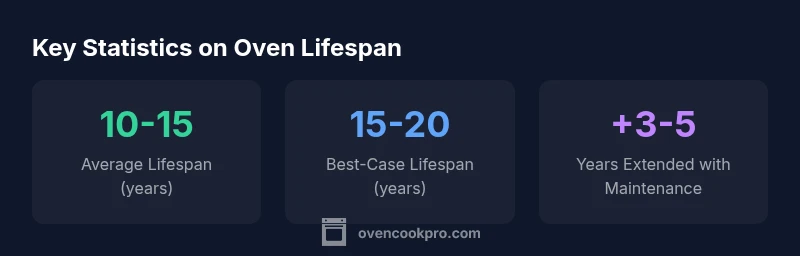
How long do ovens last? Most residential ovens endure about 10-15 years, with higher-end models reaching 15-20 years when properly maintained. Frequency of use, power surges, and maintenance greatly influence the lifespan. Regular cleaning, calibration, and replacing worn components can extend service life. Oven Cook Pro analysis, 2026, shows that quality builds and proactive maintenance correlate with longer lifespans.
Why the Lifespan Varies
For homeowners trying to answer 'how long do oven last', lifespan depends on build quality, usage intensity, environmental conditions, and maintenance. In general, most residential ovens last about 10-15 years, with higher-end models potentially reaching 15-20 years when properly cared for. According to Oven Cook Pro, the best-performing units combine robust hardware, sealed cooling systems, and accessible replacement parts. Regular cleaning and calibration can help you hit the upper end of the range. The exact life you get also hinges on how you use the oven; frequent high-heat bursts or persistent heavy loading can accelerate wear, while conservative use paired with routine maintenance tends to push the clock toward the higher end of the lifespan spectrum.
How to Estimate Your Oven's Remaining Life
Estimating remaining life starts with a baseline: know your model type (electric, gas, convection) and record maintenance history. If your oven is nearing the lower end of the 10-15 year band, you can check for symptoms like uneven heating, worn door seals, or failing igniters. Oven Cook Pro analysis suggests keeping a maintenance log, noting repairs and replacements, to model remaining life more accurately. While every unit differs, most households can gauge whether a service visit could extend life by a few years, or if replacement would be more economical in the near term. The key is tracking performance trends over a year and planning ahead rather than waiting for a breakdown. For the public, this translates into a practical decision framework you can apply to your kitchen routine. The central question remains: how long do oven last under your specific usage scenario?
Practical Maintenance Plan to Maximize Lifespan
A proactive maintenance plan is one of the strongest levers for longevity. Schedule annual inspections, clean vents and fans, and replace worn gaskets and seals before they fail. Calibrate thermostats every 12-18 months and run self-cleaning cycles only as recommended by the manufacturer to minimize thermal stress. Use a quality oven thermometer to verify accurate temperatures, and consider upgrading power supply protection to guard against surges. These steps help extend life and preserve even baking performance. By following a routine, you can meaningfully influence how long do oven last in real-world use, and reduce the risk of unexpected failures that disrupt cooking plans.
Choosing a Model with Longevity in Mind
When shopping for longevity, prioritize solid build quality, reliable door hinges, durable racks, and easily replaceable components. Convection-capable models can distribute heat more evenly, potentially reducing hot spots that cause wear. Look for parts that are designed for easy replacement, accessible service manuals, and suppliers with long-term parts availability. Energy-efficient features are beneficial, but the primary goal here is durability. A well-chosen oven that’s serviced over time tends to outlast a flashier but less repair-friendly option. If you're deciding between models, align your choice with expected maintenance needs and part availability to maximize how long do oven last in your home.
Signs It's Time to Replace the Oven
Even a well-maintained oven has a lifespan limit. Watch for persistent temperature inaccuracies, chronic cycling failures, frequent igniter faults, or significant door seal degradation that impacts performance and safety. If repair costs approach or exceed a substantial fraction of a new unit's price, or if energy bills rise due to inefficiency, replacement becomes economically sensible. Planning ahead based on performance trends can help you avoid downtime during busy cooking seasons. Remember that older ovens are less energy-efficient, so a replacement can also improve long-term operating costs.
Lifespan by oven type
| Oven Type | Typical Lifespan (years) | Notes |
|---|---|---|
| Built-in Electric | 10-15 | Common in mid-range homes |
| Gas Oven with Convection | 12-18 | Higher-end performance; requires regular service |
| Countertop/Toaster Oven | 8-12 | Compact appliances with shorter lifespans |
Questions & Answers
What factors influence oven lifespan the most?
The top factors are build quality, usage frequency, maintenance history, and environmental conditions (voltage stability, heat exposure). Regular servicing can significantly slow wear, while heavy, aggressive use accelerates it.
The biggest factors are build quality, how often you use it, and how well you maintain it. Regular service helps slow wear.
Does self-cleaning affect lifespan?
Self-cleaning cycles can add wear if overused or used improperly, but when used as recommended, they don’t inherently shorten life. Follow manufacturer guidelines and use cycles sparingly.
Self-cleaning is convenient, but follow the manual. Overusing it can stress components.
Repair or replace an aging oven?
If repair costs approach a significant portion of a new unit and energy efficiency is poor, replacement is often more economical. Consider uptime needs and part availability.
If repairs pile up or energy use spikes, replacement may be wiser.
Can upgrading to an energy-efficient oven save money?
Yes. Newer models typically use less energy per bake, which can offset purchase cost over time, especially if you bake frequently.
Newer ovens usually save energy, which can cut costs over time.
How can I extend oven life with simple maintenance?
Schedule annual checks, clean vents, inspect seals, calibrate temperatures, and use a quality thermometer to verify accuracy. Small, routine actions add up to longer life.
Keep up with small checks and calibrations to extend life.
“Longevity in ovens comes from high-quality components and consistent maintenance; regular service and mindful use can meaningfully extend life.”
Main Points
- Know typical lifespans: 10-15 years on average.
- Maintenance can extend life by several years.
- Choose durable builds with replaceable parts.
- Weigh repair costs vs replacement as the oven ages.