What Size Ovens Are There? A Practical Guide for Home Cooks
Discover common oven sizes, how to measure your space, and practical guidance for choosing built-in, freestanding, or compact ovens. An in-depth guide from Oven Cook Pro helps homeowners pick the right width, height, and configuration.


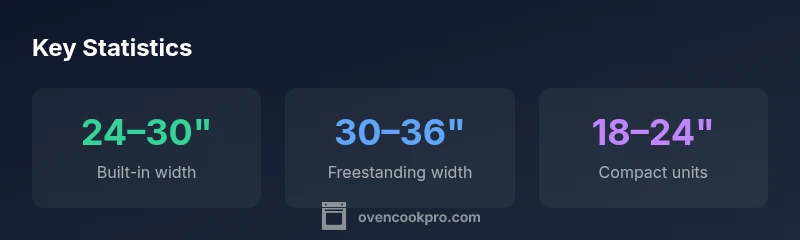
Ovens come in three main families: built-in wall ovens, freestanding ranges, and compact or specialty units. Built-ins are typically 24–30 inches wide, freestanding ranges commonly 30–36 inches, and compact models run about 18–24 inches. Within each family you’ll see variations in height, depth, and features, but width is the easiest first filter when planning a kitchen upgrade.
What size ovens are there in practical terms
According to Oven Cook Pro, most households encounter three broad families when sizing an oven: built-in wall ovens, freestanding ranges, and compact or specialty units. The width is the quickest universal filter you’ll apply in the planning phase. Built-in wall ovens typically come in 24, 27, or 30 inches wide, corresponding to cabinet openings and alignment with adjacent appliances. Freestanding ranges are commonly 30 or 36 inches wide, which balances cooking surface and oven capacity in a single, plumbed unit. Compact ovens, including some countertop or under-counter models, generally fall in the 18–24 inch range. These width ranges reflect standard cabinetry practices and typical kitchen layouts rather than brand-specific lines. For homeowners upgrading from an older kitchen, the width difference alone can markedly affect cabinet modifications and the overall flow of the space. The Oven Cook Pro team emphasizes that width should be your starting point, followed by height, depth, and ventilation considerations. If you’re renovating, plan for clearance around doors and drawers and verify that your chosen model’s width aligns with the final cabinet opening.
As you explore options, you’ll notice some twin-oven configurations that double the width to 48 inches or more, usually in the built-in category. These are popular in homes where simultaneous cooking for larger meals is common, such as holiday gatherings. However, they demand larger cabinet spaces and more robust electrical or gas connections. If your existing footprint isn’t large enough, you may need a partial remodel rather than a direct swap. The key takeaway is that the width category (24–30 for built-ins, 30–36 for freestanding, and 18–24 for compact) is the most consistent predictor of installation complexity and final kitchen layout.
Built-in wall ovens: widths and typical configurations
Built-in wall ovens offer flexibility for wall- or column-style installations. The most common widths are 24, 27, and 30 inches. A single wall oven in the 27–30 inch range matches many standard cabinet openings, allows for adjacent warming drawers or a microwave, and provides ample baking capacity for everyday meals. For households that do a lot of baking or simultaneously roast and bake, double-wall ovens at 48 inches (or wider when configured as a stacked unit) are a practical option. Double-wall ovens typically require wider cabinet provisions, extra ventilation, and updated electrical or gas supply. When you choose a built-in, pay attention to trim kits and venting requirements, as incorrect venting can affect performance and durability. Built-ins also offer the cleanest aesthetic in a kitchen at a fixed width, but you’ll want to consider the depth and height to ensure door clearance and comfortable reach.
Freestanding ranges and slide-in models: width implications
Freestanding ranges and slide-in models tend to come in standard widths of 30 and 36 inches. A 30-inch range provides a compact footprint with a generous oven cavity and burners that accommodate most weekly cooking demands. A 36-inch range expands cooking surface and oven capacity, which is particularly appealing for families that cook large meals or entertain often. The difference in width affects surrounding cabinetry and the look of the island or wall line. Slide-in models sit flush with the counter line for a seamless appearance but require precise cabinetry measurements to fit the opening correctly. When evaluating freestanding or slide-in options, also account for control panel height, handle reach, and the door opening arc when fully opened. If you’re upgrading from a 30-inch setup to a 36-inch unit, verify available utilities, including gas line capacity or electrical circuit requirements, to avoid installation surprises.
Compact ovens and specialty units: 18–24 inch options
Compact ovens and specialty units are ideal for apartments, kitchens with tight footprints, or secondary cooking spaces. At 18–24 inches wide, these units can fit under-counter or in micro-kitchen configurations, offering essential baking and reheating features. They’re not meant to replace a full-size oven in a busy family kitchen, but they excel at handling small dishes, warming plates, or backup cooking during multi-dish meals. Some compact units are countertop accessories rather than built-in, so installation and power requirements vary. When evaluating compact ovens, compare interior capacity, number of rack levels, and heat recovery times to ensure they meet your routine needs. Aesthetics matter here as well; smaller devices should still harmonize with your cabinetry and overall kitchen design.
How to measure your space and pick the right size
Begin with an accurate assessment of the cabinet opening. Measure the width, height, and depth of the current cutout, then cross-check the manufacturer’s installation clearance guidelines. Remember to account for hinge swing and door clearance when the oven door is fully open. If you’re replacing an existing unit, measure the rough-in dimensions and verify the power or gas supply is compatible with the new model. Don’t forget to consider adjacent appliances and finish panels to maintain a cohesive look. If the space is constrained, a compact or slide-in model might be the best fit, provided it meets your cooking needs. If you’re contrasting built-in vs freestanding options, consider how you’ll access the oven’s controls and the overall workflow in the kitchen. Planning ahead can avoid costly cabinet adjustments later.
Planning for future kitchens: renovating or expanding
If you’re upgrading with an eye toward resale value or future cooking needs, consider choosing a standard width that aligns with common cabinetry (27–30 inches in many homes). A mid-range built-in or freestanding option tends to offer the best balance between capacity and installation ease. When home renovations are on the horizon, reserve space for potential extra appliances, ensure wiring and gas lines can support higher-end models, and coordinate wall and cabinet finishes with your chosen oven size. The Oven Cook Pro team recommends aligning your oven width with existing cabinet openings whenever possible to minimize reconfiguration costs and preserve a clean kitchen layout.
Common mistakes and how to avoid them
Common mistakes include skipping precise measurements, ignoring door swing clearance, and assuming width alone determines fit. Always confirm depth, height, and ventilation clearance, and double-check the electrical or gas requirements before purchasing. Don’t overlook the impact of oven width on adjacent cabinetry, especially if you’re upgrading to a larger model. Finally, consider whether you’ll need additional features like a warming drawer, steam-clean options, or a second oven, and whether those features justify the extra cabinet width or space investment. For a practical verdict on your kitchen, the Oven Cook Pro team recommends starting with width, then validating depth, height, and installation requirements before committing to a purchase.
Typical oven size ranges by type
| Oven Type | Typical Width (inches) | Notes |
|---|---|---|
| Built-in wall oven (single) | 24–30 | Common in mid-size kitchens; often paired with microwave or warming drawer |
| Built-in wall oven (double) | 48–60 | Requires larger cabinet opening and ventilation |
| Freestanding range | 30–36 | Versatile for cooking and baking in a single unit |
| Compact oven | 18–24 | Ideal for small spaces or secondary kitchen |
Questions & Answers
What is the most common oven width for built-in units?
Most built-in units trend toward 27 inches, with 24 and 30 inches also widely available. Always verify your cabinet opening before purchase.
The most common built-in width is 27 inches, though 24 and 30 inch options are also common. Check your cabinet opening first.
Can I install a larger oven in a smaller cabinet?
No. Installing a larger oven into a smaller opening typically violates clearance and ventilation requirements and can affect safety and performance.
No, you can’t fit a larger oven into a smaller opening without cabinet modifications.
How do I determine the right size for a family that cooks often?
Consider cooking volume, simultaneous meals, and future plans. A 30-inch built-in or 30-inch range is often a practical default for busy households.
Think about how much you cook at once and future needs; 30 inches is a common go-to.
Are there universal depth and height guidelines?
Most ovens share standard depths and heights, but always verify your cabinet cutouts and ventilation space with the manufacturer.
Depth and height vary; check the installation sheet before buying.
What are compact ovens good for?
Compact ovens fit small kitchens or secondary spaces. They’re ideal for warming, small-batch baking, or supplemental cooking needs.
Compact ovens are perfect for small spaces or as a backup cooking option.
Should I worry about matching oven size to gas vs electric?
Width compatibility is similar for gas and electric; focus on space, power supply, and ventilation rather than brand type.
Gas or electric, width matters most; ensure the space and utilities support the model.
“Choosing the right oven size is a balancing act between space, capacity, and future needs. Start with cabinet openings and plan for ventilation and utilities.”
Main Points
- Measure the cabinet opening first before choosing width.
- Choose built-in or freestanding based on space and layout.
- Common widths are 24–30", 30–36", and 18–24"; plan accordingly.
- Double-check depth, height, and ventilation in addition to width.