Average Oven Dimensions: How to Choose the Right Sized Oven for Your Kitchen
Understand typical oven widths, heights, and depths for freestanding and built-in models. Learn how to measure spaces, evaluate fit, and plan your kitchen layout with expert guidance from Oven Cook Pro.


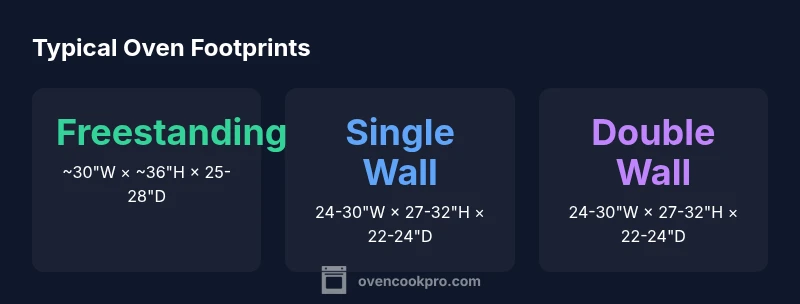
The average oven dimensions vary by type, but most kitchens rely on a few common footprints. Freestanding ranges typically measure about 30 inches wide, 36 inches high, and 25–28 inches deep. Built-in wall ovens commonly come in 24, 27, or 30 inch widths, with heights around 27–32 inches and depths about 22–24 inches. Always verify exact specs from the manufacturer before purchase.
Why Average Oven Dimensions Matter
According to Oven Cook Pro, understanding the average oven dimensions helps homeowners plan kitchen layouts, avoid sizing mistakes, and select models that actually fit. The term average oven dimensions refers to the typical width, height, and depth you’ll encounter across common oven types. Knowing these footprints reduces the risk of buying an appliance that won’t fit through doors or into a cabinet opening.
Key dimension categories are width, height, and depth. Width determines how much horizontal space the unit needs; height affects vertical clearance under cabinets or a range hood; depth influences the amount of wall and floor space the oven will occupy and how far it will protrude into a kitchen aisle.
Practical considerations:
- What type are you installing? Freestanding ranges tend to be wider with full doors that swing out; built-in wall ovens offer modular widths.
- Are you replacing an existing unit? Confirm the cavity size and door swing rather than assuming the same footprint.
- Ventilation and clearance matter. Most installations require space behind and to the sides for airflow and heat dissipation.
In broad terms, you’ll see: Freestanding widths around 30 inches, with heights near 36 inches and depths in the mid-20s; built-in wall ovens commonly come in 24, 27, or 30 inch widths, with heights roughly 27–32 inches and depths around 22–24 inches.
Oven Size by Type: Freestanding vs Built-in
Different kitchen configurations demand different footprints. Freestanding ranges are designed to a standard overall footprint and can be swapped with limited cabinet work; built-in wall ovens are modular and offer multiple width options inside a coordinated cabinet. The average dimensions we see in practice align with two patterns: freestanding units around 30"W x 36"H x 25–28"D, while built-in configurations cluster at 24–30"W, 27–32"H, and 22–24"D per cavity. Remember that door swing, handle projection, and side ventilation can effectively increase the space you need in front of the unit.
How to Measure Your Space for an Oven
Begin by measuring the opening in your cabinets or showroom space. Measure width at the narrowest point (including any trim) and height from floor to top of cabinet frame. Then measure depth from the back wall to the front edge of the cabinet or to the face of the open door. Don’t forget to account for clearance: allow space for door swing, hinges, and any adjacent appliance. Finally, check the ventilation gap specified by the manufacturer, usually a few inches behind the unit, and record the measured dimensions.
Planning for Clearance, Ventilation, and Doors
Door swing and clearance: ensure your floor plan accommodates the door when fully opened.
Ventilation: leave the recommended gap behind and on the sides (typical guidance ranges from 1–2 inches behind and 0.5–1 inch to the sides).
Cabinet alignment: ensure trim and face frame won’t obstruct installation or future service access.
Electrical/vent ducts: verify service clearances meet local codes and the model’s requirements.
How to Compare Models and Plan for Future-Proofing
Start with the spec sheet: width, height, depth, and cutout dimensions.
Create a simple measurement map of your space to compare against each model’s footprint.
Consider future needs: if you’re remodeling for a larger family, plan for a flexible width or a taller unit with accessible controls.
Check door clearance: measure the space in front of the oven to ensure comfortable operation.
Special Considerations for Small Kitchens and Accessibility
Compact spaces often rely on 24-inch built-in wall ovens or single compact ranges.
Accessibility: choose models with reachable controls and ergonomic door handles; align with workstation height if you cook while seated.
Ventilation and serviceability: ensure you can access the back of the cabinet and service panels easily.
Future-proofing: if you expect upgrades, consider standard widths (24/27/30 inches) and modular configurations.
Footprint ranges by oven type
| Oven Type | Avg Width | Avg Height | Avg Depth | Notes |
|---|---|---|---|---|
| Freestanding Range | 30 inches | 36 inches | 25-28 inches | Standard kitchen footprint |
| Built-in Wall Oven (Single) | 24, 27, or 30 inches | 27-32 inches | 22-24 inches | Cabinet cutout dependent |
| Built-in Wall Oven (Double) | 24, 27, or 30 inches | 27-32 inches | 22-24 inches | Stacked configuration |
Questions & Answers
What counts as an 'average' oven dimension?
It's a broad range that covers common freestanding and built-in footprints; widths typically 28-30 inches for freestanding and 24-30 inches for built-ins, with heights and depths varying by model.
The average size depends on type; freestanding is usually around 30 inches wide, built-in options come in 24, 27, or 30 inches.
What is a typical built-in width?
Common built-in widths are 24, 27, and 30 inches.
Built-in ovens usually come in 24, 27, or 30 inches.
How do I measure for a new oven?
Measure the cabinet opening width, height clearance, and depth, then check the appliance's specs and door swing.
Measure width, height, and depth, then verify the door swing and specs.
Should I include ventilation space behind the oven?
Yes, leave the recommended ventilation space behind and to the sides per the installation guide.
Yes—leave space behind and to the sides as directed by the install guide.
Are there ADA or accessibility considerations?
Some wall ovens and controls are designed for accessibility; look for models with reachable controls and proper height.
Some models are accessible; check reach and control height.
What if my space is non-standard?
Consult a professional installer; you may need cabinet modifications or a different size model.
Non-standard spaces may require cabinet work or a different size.
“Accurate oven dimensions are the foundation of a safe, efficient kitchen; choosing the wrong size can force costly renovations or compromise performance.”
Main Points
- Measure space before shopping.
- Know standard footprints for freestanding vs built-in models.
- Check door swing and ventilation early in planning.
- Use official specs to compare models, not photos.
- Plan for future needs and kitchen layout constraints.