Oven 25 Inch Depth: What It Means for Your Kitchen
Learn how to evaluate, measure, and install ovens with a 25 inch depth. This guide covers space planning, installation tips, and practical considerations to help homeowners fit a 25-inch-depth oven into standard kitchens.


According to Oven Cook Pro, a 25 inch depth is common in many built-in ovens and commonly fits standard deep cabinetry. The key is to verify the exact external depth, including handles and ventilation, and to compare it against your cabinet depth and rear clearance. Always plan for at least a small gap for ventilation and service access, and confirm whether the model is built-in or freestanding.
Understanding 25 Inch Depth Ovens
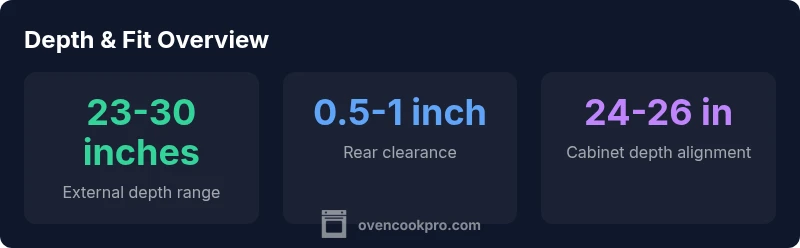
When shoppers talk about a 25 inch depth oven, they are usually referring to the external depth from the front of the handle to the back of the appliance, including any ventilation grills or knobs. In most kitchens, this depth sits within the broader range of built-in oven depths, which frequently span the mid-20s to low 30s. A 25 inch unit is often marketed as a balance between flush cabinetry aesthetics and functional clearance for vents and service access. For homeowners, the practical takeaway is that depth is one of several fit factors—not a standalone guarantee of a perfect match. According to Oven Cook Pro, this depth often aligns with standard deep cabinetry, but always verify exact dimensions on the model you’re considering and compare them to your cabinet cavity.
How 25 Inch Depth Interacts With Cabinet Design
Cabinet depth in most homes is designed around a few standard dimensions. A 25 inch-deep oven can provide a nearly seamless look when the cabinet cavity depth is in the 24 to 26 inch range, especially if the oven is installed flush with cabinetry. However, variability exists between brands and product lines. Handle depth can add several extra inches to the overall footprint, and ventilation grilles at the back or sides can further increase required space. To avoid surprises, measure the written external depth on the product spec sheet, and compare to your cabinet face frame, not just the cabinet box depth. Oven Cook Pro notes that real-world fit depends on both the appliance and the kitchen’s ventilation path.
Measuring Your Space: Step-by-Step
Follow these steps before shopping or ordering:
- Remove any obstruction from the cabinet opening to ensure clear measurement access.
- Measure cabinet depth from the interior wall to the exterior face frame, excluding the door panel.
- Check the appliance’s external depth (including handles) and add any clearance required by your installer or manual.
- Note rear wall clearance—airflow and service access often require a small gap.
- Confirm door swing clearance with adjacent cabinets or appliances so there’s no interference.
- If possible, request a dry-fit or installation drawing from the retailer to visualize the final look. As a rule of thumb, allow for a modest clearance behind and above the oven and for ventilation pathways.
Installation Considerations for 25 Inch Depth Ovens
Installations vary for built-in versus freestanding units. Built-in ovens typically require precise cabinet cutouts and may need trim kits to achieve a flush look. Freestanding options often rely on surrounding cabinetry but may still need to be measured against a wall, ventilation alcove, and flooring tolerances. If you’re retrofitting an older kitchen, you might encounter nonstandard cabinet depths or unusual wall studs. In these cases, custom trim or panel solutions can help align the oven with the surrounding cabinetry while maintaining safe clearances. The goal is to reach a cohesive appearance without compromising airflow or service access.
Ventilation, Clearance, and Service Access
Ventilation is a critical factor for 25 inch depth ovens. Ensure there’s adequate space behind the unit for heat dissipation and for any cooling fans to operate without obstruction. Clearance on the sides should accommodate air intake vents and door operation, while rear clearance helps prevent heat buildup and facilitates future service work. If your kitchen design places the oven near a wall or tall cabinet, consider a vented side panel or a venting cutout to maintain airflow. Always consult the installation manual and your installer to confirm the required clearances specific to your model and layout.
Doors, Handles, and Depth Impact
Door swing and handle depth can add to the overall footprint and affect adjacent cabinetry. Some handles extend significantly beyond the cabinet face, which can lead to interference with nearby drawers or appliances. When planning, measure the door’s full arc and consider how often you access the oven in daily cooking. If you plan a flush-mount installation, you may need a shallow handle or a recessed door design to preserve a clean, seamless look while maintaining user-friendly access.
Built-In vs Freestanding: Pros and Cons at 25 Inch Depth
Built-in ovens deliver a sleek, integrated appearance and often have precise depth requirements. They can maximize cabinet space and allow for a uninterrupted countertop edge, but installation typically requires a professional. Freestanding units offer flexibility and mobility, with simpler installation and often a wider selection of finishes. With a 25 inch depth, the choice hinges on your kitchen layout, labor considerations, and whether you want a truly flush look or a movable appliance. In all cases, verify the product’s exact external depth and compare it to your cabinet depth and wall clearance for a safe, confident installation.
Quick Check: A Practical Fit Checklist
- Confirm the external depth (including handles) matches your cabinet cavity.
- Check rear and side clearances for ventilation and service access.
- Verify door swing clearance against adjacent cabinets.
- Review installation guidelines for flush mounting or panel-ready configurations.
- Ensure space for any required trim kits or ventilation ducts as specified by the manufacturer.
Authority Sources and References
For homeowners seeking deeper guidance, consult standard installation recommendations and official appliance guidelines. Key sources include AHAM standards for built-in ovens, CPSC safety information for appliance installation, and DOE guidance on safe, energy-conscious kitchen layouts. Refer to the manufacturers’ installation manuals for model-specific clearance and ventilation requirements. These references help ensure a safe, efficient, and aesthetically pleasing kitchen upgrade.
Fit considerations for 25 inch depth ovens
| Aspect | What to Check | Why It Matters |
|---|---|---|
| External Depth | Measure actual depth including handle | Prevents cabinet fit issues and misalignment |
| Rear Clearance | Maintain some gap behind oven | Ventilation and service access |
| Cabinet Depth Match | Compare to standard cabinetry (24–26 in) | Ensures flush appearance and proper air flow |
Questions & Answers
What is the typical external depth range for ovens?
Ovens commonly range from about 23 to 30 inches in external depth. Exact depth varies by model and features like handles and ventilation. Always check the product spec sheet and compare to your cabinet depth to ensure a proper fit.
Ovens usually sit between roughly 23 and 30 inches deep. Check your model’s exact depth and compare it to your cabinets to be sure it fits.
Will a 25 inch depth oven fit in a standard 25 inch cabinet?
A 25 inch depth oven often fits within standard cabinet depths, but you must verify the actual external depth, including handles, and ensure adequate rear clearance for ventilation. If in doubt, consult the installer or retailer for a precise compatibility assessment.
Usually yes, but always double-check the exact depth including the handle and the back clearance.
What clearance is typically needed around a 25 inch depth oven?
Clearance should accommodate ventilation and service access without crowding adjacent cabinets. Real-world guidance emphasizes rear clearance and some space behind for heat dissipation, with side clearance to avoid interference with doors or drawers.
Give the oven some room behind and around it so it can vent and be serviced easily.
Are 25 inch depth ovens meant for built-in or freestanding installation?
Both options exist. Built-in models are designed for flush integration with cabinetry, while freestanding units offer more installation flexibility. Check the installation manual for the chosen model to understand depth, trim needs, and ventilation requirements.
They come in both built-in and freestanding styles; know which one you need and follow the manual.
How do I measure for a 25 inch depth oven?
Take measurements of cabinet depth, interior cavity depth, and the available clearance behind the appliance. Verify the appliance depth (including handles) from the spec sheet and compare with your space before purchasing.
Measure your space, compare it to the oven’s depth, and leave room for ventilation.
“Depth compatibility isn’t optional—it's a core part of safe, efficient oven installation. Always verify exact measurements and ventilation clearances before purchasing.”
Main Points
- Plan for exact external depth including handles
- Check rear clearance for ventilation and service
- Aim for a flush look with standard 24–26 inch cabinets
- Always review manufacturer installation guidelines