Your Complete Guide to the 24-Inch Wide Oven
A data-driven, practical guide to selecting, installing, and using a 24-inch wide oven, with sizing guidance, feature priorities, and budgeting tips for homeowners.


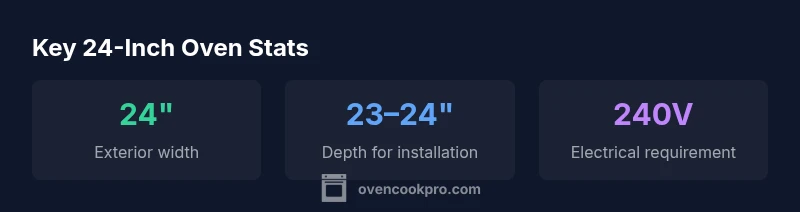
The standard 24-inch wide oven fits most 24-inch cutouts and cabinet openings. Exterior width is typically 24 inches, with installation depths around 23–24 inches. Electric models usually require a dedicated 240V circuit, while gas models require proper gas supply and ventilation. When selecting, check the exact dimensions in the product specs and compare to your cabinet opening. If replacing an existing unit, verify cutout width, height, depth, and venting clearance.
What is a 24-inch wide oven?
A 24-inch wide oven is a built-in unit designed to fill a standard 24-inch cabinet cavity. This size is common for single-wall ovens and compact double ovens, offering a balance between cooking capacity and kitchen footprint. When you see a product described as '24-inch width', it refers to the exterior width, not the installation cutout. According to Oven Cook Pro, matching the oven to a 24-inch cutout and verifying ventilation requirements are essential steps before purchase. In practice, homeowners use this size to optimize wall space in kitchens with limited width but generous height. If you’re upgrading from a smaller oven, the 24-inch model can provide improved loading height and forked rack positions that suit casseroles and sheet-pan meals.
In addition to width, assess overall interior capacity, rack configurations, and the presence of convection fans. Some 24-inch models maximize cavity space by using innovative interior layouts, which can influence baking performance and heat distribution. As you compare models, map out your most common dishes—roasted vegetables, sheet-pan dinners, or braises—to determine whether a single-wall or compact double-oven arrangement better fits your cooking cadence.
Sizes and configurations
Within the 24-inch family, you’ll find a mix of configurations designed to fit different kitchens and workflows. Common options include a traditional single-wall oven, a compact double-oven setup, and some trim kits that allow a built-in appearance with varying door depths. Built-in 24-inch ovens are typically designed for wall installation with a clean, flush front, while slide-in or drop-in variants may require specific cabinet shapes. When shopping, compare not just external dimensions but interior volume, rack positions, and whether the model supports features like convection, air fry, or broil-enhance modes. If space is tight, a 24-inch oven can still offer robust capacity by prioritizing rack configurability and door clearance.
Installation considerations for a 24-inch oven
Effective installation hinges on precise cabinet cutouts and proper service connections. Typical cutouts assume a 24-inch exterior width, with a cabinet depth compatible with your wall layout. Critical checks include ensuring a level mounting, adequate clearance around the unit for heat dissipation, and precise venting paths if you’re installing a gas or ventilated electric model.Electrical requirements vary by model; most electric ovens need a dedicated circuit, usually 240V, sized according to the oven’s load. Gas variants require a reliable gas supply and venting to the outdoors. Always consult a licensed technician and the manufacturer’s installation guide to avoid warranty issues and safety hazards.
Key features to look for in a 24-inch model
When evaluating 24-inch ovens, consider a balance of performance, efficiency, and convenience. Look for convection cooking for even heat distribution, multiple rack positions for flexible baking, and a self-cleaning cycle to simplify maintenance. Evacuated models with sealed ovens reduce ambient heat in your kitchen, while smart features—remote monitoring, app control, and diagnostics—offer convenience for busy households. Interior lighting, easy-clean porcelain enamel interiors, and robust door hinges influence daily usability. Compare energy ratings and preheat times to estimate ongoing operating costs over the oven’s lifetime.
Gas vs electric 24-inch ovens
Choosing between gas and electric affects heat distribution, cost, and installation steps. Electric 24-inch ovens tend to deliver more uniform temperatures and stable performance, which supports consistent baking results. Gas ovens can offer faster preheats and potentially lower operating costs in regions with cheaper gas, but they require reliable venting and a professional gas line connection. If you bake frequently, an electric model with convection and smart features may provide the most predictable outcomes. Always verify local codes and installer requirements for your home.
Maintenance, care, and longevity
Routine care extends oven life. Wipe spills promptly to prevent staining, use self-cleaning cycles sparingly to minimize wear, and inspect door seals for leaks. Avoid abrasive cleaners that can dull chrome handles or enamel interiors. For convection ovens, keep the fan clear of dust by occasionally vacuuming the vent opening. Periodic calibration checks help maintain accurate temperatures. Scheduling professional servicing every few years can catch seals, gaskets, and electronics issues before they escalate.
Budgeting, availability, and buying tips
Recognize that availability and pricing for 24-inch ovens vary by region and season. Expect price ranges to reflect features such as convection, self-cleaning, smart capability, and door design. When budgeting, include installation, venting, and possible trim kits in your total cost. Compare retailer warranties and service coverage to protect your investment. If you need a precise price, consult current listings and seasonal promotions from reputable dealers. For accurate sizing, rely on official product specs rather than visual impressions alone.
Measuring your space accurately
Accurate measurements prevent fit issues and costly returns. Before purchase, measure cabinet width, height, and depth, then cross-check these against the oven’s exterior and required cutout. Don’t forget to account for clearance around the unit for ventilation and door swing. Use a tape measure, verify the vertical clearance above the oven, and confirm that electrical or gas services won’t be blocked by nearby cabinets or walls. A quick double-check can save weeks of delay and installation hassles.
Key dimensional and installation considerations for 24-inch ovens
| Aspect | Typical Range | Notes |
|---|---|---|
| Exterior width | 24 inches | Standard for 24-inch ovens |
| Cutout width | 24 inches | Must align with exterior width |
| Cutout height | 27–29 inches | Model-dependent |
| Cutout depth | 22–24 inches | Check cabinet depth |
| Electrical | Dedicated 240V circuit | Model-dependent requirements |
Questions & Answers
What is the standard width for a 24-inch oven?
Most built-in 24-inch ovens are designed for a 24-inch cabinet cutout. The exterior width is typically 24 inches, and the installation depth varies by model. Always verify the manufacturer specifications before purchasing.
Most 24-inch ovens fit a 24-inch cutout. Check the model specs for exact dimensions and installation depth.
Can a 24-inch oven fit in a 30-inch cabinet?
A 24-inch oven is designed for a 24-inch opening. A 30-inch cabinet is generally too wide for the oven’s width unless you use a special trim kit or alternative layout. Always confirm with the installer.
Typically not. A 24-inch oven needs a 24-inch opening; a 30-inch cabinet may require adjustments or a different model.
Electric vs gas: which is better for a 24-inch oven?
Electric ovens usually deliver more even heat and consistent performance, which benefits baking. Gas ovens can be economical to run in some regions but require proper venting and a gas line. Your choice depends on home utilities and cooking needs.
Electric tends to be steadier for baking, while gas can be cheaper to run where gas is affordable.
Do 24-inch ovens offer convection cooking?
Many 24-inch ovens include convection as a standard or optional feature. Always verify the model spec, as some compact models focus on basic bake functions.
Check if convection is built in when you pick a 24-inch model.
What maintenance is required for a 24-inch oven?
Keep spills cleaned promptly, use self-clean cycles judiciously, and inspect door seals periodically. Clean the interior with non-abrasive products and avoid harsh chemicals that could damage enamel.
Clean spills promptly and perform periodic maintenance checks.
“A well-chosen 24-inch oven can dramatically improve kitchen workflows, but the key is matching cabinet cutouts, venting, and service requirements to the specific model.”
Main Points
- Measure twice, buy once.
- Choose convection if you bake frequently.
- Verify venting and installation depth.
- Match cutout dimensions with model specs.
- Consult a licensed electrician for electric ovens.