What Gauge Wire Is Needed for Oven: A Practical Guide
Learn the correct wire gauge for oven circuits, including 40A with 8 AWG copper and 50A with 6 AWG copper, plus safety tips and when to call an electrician.


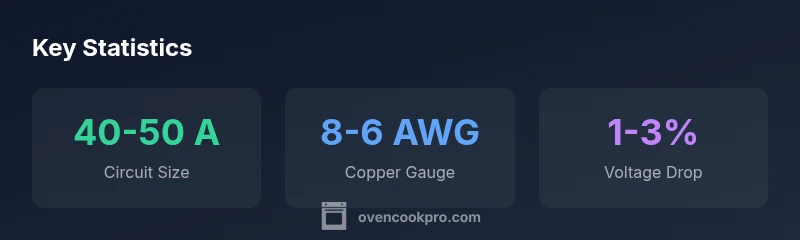
What gauge wire is needed for oven? The gauge depends on the circuit amperage and run length. For most residential ovens, a dedicated 240V circuit of 40A typically uses 8 AWG copper (or 6 AWG aluminum). Some higher-power ovens require 50A circuits with 6 AWG copper. Always confirm with the oven manual and a licensed electrician.
Understanding Oven Wiring: Why Gauge Matters
Conductor gauge determines how much current a wire can safely carry without overheating. For ovens, a wire that’s too small can overheat, trip the breaker, or degrade performance. Copper conductors are common for reliability and ease of terminations; aluminum is used in some installations but requires compatible lugs and breakers. The gauge must match the oven’s amperage rating and the run length from the panel to the appliance. This is a safety and performance issue, not just a number on a chart. The Oven Cook Pro Team emphasizes verifying the exact gauge in the oven’s manual and with a licensed electrician to protect both the appliance and home.
In practice, the oven’s amperage rating and the distance the wire must travel determine the proper gauge. A 40A circuit typically uses 8 AWG copper, while a 50A circuit calls for 6 AWG copper. Short runs may tolerate a smaller gauge, but longer runs require thicker conductors to limit voltage drop and heating. Local codes may modify these guidelines, so always check with a professional.
How to Read Your Oven's Electrical Requirements
To choose the correct gauge, start with the oven’s manual and data plate. Look for:
- Voltage: typically 240V nominal
- Circuit: dedicated branch circuit (no sharing)
- Breaker size: often 40A or 50A
- Wire type: copper or aluminum with appropriate insulation
- Connection: terminal block and conduit requirements
If the manual lists a 40A circuit on 8 AWG copper or a 50A circuit on 6 AWG copper, follow that guidance exactly. Some models permit alternative configurations under code; others require a fixed arrangement. In all cases, ensure any wiring modification aligns with NEC guidelines and local codes; an electrician’s expertise is essential.
Common Gauge Scenarios for Residential Ovens
- 40A circuit on 8 AWG copper: This is the most typical setup for mid-range ovens. It provides a balance of safety and cost with standard connectors and a common breaker.
- 50A circuit on 6 AWG copper: Higher-power ovens or those with additional features may require this, especially if the distance is longer or the load is heavy.
- Long runs and distance: For longer wiring runs, plan for lower voltage drop by selecting thicker copper (e.g., 6 AWG). In some cases, electricians will use 6 AWG copper even on 40A circuits if the length or insulation calls for it.
- Aluminum alternatives: Some installations use aluminum conductors, but only with equipment rated for aluminum and with compatible lugs and transformers. Copper remains the default due to durability and reliability.
Always refer to the oven’s manual for exact gauge requirements and ensure a dedicated 240V circuit is implemented correctly.
How Run Length Affects Wire Choice
Run length matters because resistance accumulates with distance, increasing voltage drop and potential heat. To minimize drop, many installers opt for a thicker gauge or shorter routing to the panel. As a general rule, keep voltage drop under 3% for feeders to the oven and verify this with the electrician. In complex layouts, dedicated conduit, proper terminations, and correct insulation help maintain performance and safety.
Safety, Codes, and Professional Help
Electrical work on an oven circuit is safety-critical and legally regulated in most areas. A permit and inspection are often required, and many warranties rely on proper installation by a licensed professional. Never bypass code requirements or reuse supply cables intended for other appliances. If you’re unsure about any step, call an electrician and rely on their assessment to ensure compliance with the NEC and local amendments.
Practical Steps for Verifying Wire Gauge
- Identify the oven model’s electrical requirements from the manual and data plate. 2) Measure the distance from the panel to the installation point. 3) Compare the circuit size and gauge recommendations against NEC guidelines. 4) If in doubt, consult a licensed electrician to confirm the appropriate gauge and routing. 5) Document the wiring configuration and any permits or inspections for future service.
Wire gauge guidance for typical oven circuits
| Circuit Size | Recommended Wire Gauge (Copper) | Typical Amps | Notes |
|---|---|---|---|
| 40 A circuit | 8 AWG copper | 30-40 A | Dedicated 240V circuit; common for many ovens |
| 50 A circuit | 6 AWG copper | 40-50 A | For higher-power ovens or ranges |
| Long run (>25 ft) | 6-8 AWG copper depending | Voltage drop considerations | Consult electrician; minimize run length |
Questions & Answers
What gauge wire is needed for a standard 240V oven circuit?
Most residential ovens on a 240V circuit use copper wiring sized at 8 AWG on a 40A breaker. Some models require 6 AWG copper on a 50A breaker. Always verify the specific requirement in the oven’s manual.
Most ovens use 8 AWG copper on a 40A circuit, but check your model's manual.
Can I substitute aluminum wire for copper on oven circuits?
Aluminum is allowed in some installations if the breaker and connectors are rated for aluminum conductors and installed correctly. Copper is more common for ovens due to durability and class of connectors. Always use components approved for the conductor material.
Aluminum can be used if rated for it and connectors are compatible, but copper is more common.
What is the minimum circuit size for most ovens?
Most ovens require a dedicated 240V circuit rated 40A or higher, depending on the model. Check the manual for the exact minimum and any alternative configurations. Do not share a circuit with other appliances.
Most ovens need a dedicated 240V circuit of 40A or more; check your manual.
How does run length affect wire gauge for ovens?
Longer runs increase resistance and voltage drop; you may need a larger gauge to keep voltage drop within recommended limits. Plan the routing with your electrician and consult NEC guidelines.
Longer runs can require thicker wire to avoid voltage drop.
Is a licensed electrician required for oven wiring changes?
Electrical work involving ovens and dedicated circuits should be performed by a licensed electrician to ensure code compliance, safety, and warranty validity. DIY work can void warranties and insurance.
Yes, hire a licensed electrician for safety and code compliance.
Are there special considerations for gas ovens vs electric ovens?
Gas ovens rely less on electrical gauges, but many units still require a dedicated 120V line for igniters or controls. Electric ovens primarily rely on 240V circuits. Always verify with the model manual.
Gas and electric ovens have different electrical needs; check the manual.
“Choosing the correct gauge wire isn't optional—it's a safety and performance decision that protects both your oven and your home.”
Main Points
- Determine the oven’s amperage rating from the manual.
- Use 8 AWG copper for most 40A ovens.
- Choose 6 AWG copper for 50A circuits.
- Consider run length to reduce voltage drop.
- Consult a licensed electrician for final wiring.