Mastering the Top Oven: A Comprehensive How-To for Home Cooks
Learn how to choose, use, and care for a top oven with practical steps, safety tips, and real-world guidance from Oven Cook Pro. Elevate weeknight meals with even heat and reliable results.


A top oven is a versatile, high-heat cooking compartment designed for even browning and precise control. In this guide you’ll learn how to choose the right model, set it up safely, and use it effectively for everyday baking and roasting. You’ll also learn key safety practices and maintenance tips to keep it performing.
What is a top oven and why it matters for home cooks
A top oven is a secondary cooking chamber built into many ranges or wall ovens, positioned above the main oven. It excels at finishing dishes, browning surfaces, and handling smaller batches without heating the entire oven cavity. For busy households, a top oven adds flexibility and can streamline weeknight dinners. According to Oven Cook Pro, understanding this extra chamber helps home cooks optimize cooking times and results, especially for pastries, roasts, and broiled finishes. Mastery comes from knowing when to use the top oven versus your main oven, and how to prevent overheating or uneven browning.
How a top oven differs from a conventional oven
Top ovens often offer independent controls or a separate cavity from the main oven. They excel at finishing steps, browning, and small-batch baking, while the primary oven handles bulk cooking. Convection features may be present in one or both cavities, changing heat distribution and cook times. Understanding these differences helps you plan meals more efficiently and avoid double-cooking or undercooking.
Key features to look for in a top oven
When shopping or evaluating a top oven, prioritize reliable heat distribution, adjustable rack configurations, a clear temperature display, and accurate preheating times. Look for convection capability, an even-cook venting system, a sturdy door seal, and a user-friendly control panel. Safety features like auto Shutoff, cool-touch handles, and approved self-cleaning cycles can save time and effort in busy kitchens.
Safety basics for using a top oven
Always use heat-resistant gloves when handling hot racks or pans and keep children away from the oven area during operation. Avoid storing flammable items near the oven and never place plastic dishes directly inside; use oven-safe cookware. Regularly check door seals and vent openings to prevent heat loss and uneven cooking. When in doubt, consult the manufacturer manual for your model.
Step-by-step workflow: basic top oven cooking concepts
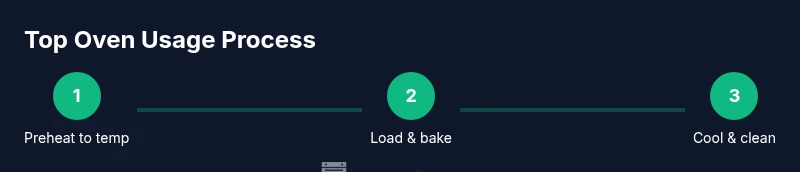
A well-run top-oven workflow starts with a precise preheat, followed by proper rack placement and cookware selection. Use the top oven for finishing and browning tasks, then move items to the main oven if needed for larger batches. This approach minimizes energy use while maximizing texture and flavor.
Practical tips for consistent results
Preheat to the exact recipe temperature and verify with an oven thermometer. Use rimmed baking sheets to prevent spills and allow air to circulate. If your top oven has convection, lower the recipe temperature by about 25F (15C) and start checking earlier. Avoid overfilling pans to maintain even browning.
Maintenance and cleaning essentials
Wipe spills once the oven cools to prevent baked-on residue. Use a non-abrasive cleaner on enamel surfaces and avoid harsh chemicals on seals. If your model supports it, run the self-clean cycle when cool and inspect the door gasket periodically. Regular maintenance extends the life of the top oven and preserves performance.
Troubleshooting and common issues
If the top oven cooks unevenly, verify rack height and check for heat source obstructions or built-up grease. If preheat takes unusually long, inspect the door seal and vent for blockages. For persistent issues, consult a professional technician or the manufacturer’s support line.
Quick-start ideas and temperature guidelines
For finishing touches, try broiled salmon, browning a gratin, or crisping garlic bread in the top oven. Typical finishing temperatures range from 375F to 450F (190C–230C) depending on the recipe and texture desired. Always monitor closely when attempting new techniques.
Tools & Materials
- Oven-safe thermometer(Place at least one in the center of the oven for accurate temps)
- Rimmed baking sheets(Support air flow and catch spills)
- Oven-safe pans (metal)(Avoid glass during high-heat top-oven tasks)
- Oven-safe glass dish (Pyrex) optional(Great for casseroles or gratins if used with care)
- Silicone baking mats or parchment paper(Prevent sticking and make cleanup easier)
- Heat-resistant oven mitts(Protect hands when loading/unloading)
- Timer or timer app(Keep bake times precise and prevent overcooking)
Steps
Estimated time: 45-60 minutes
- 1
Preheat to target temperature
Set the top oven to the recipe temperature and allow it to reach that heat. Use the oven thermometer to confirm accuracy, since top ovens can vary by model. Waiting ensures even browning and prevents undercooked interiors.
Tip: Verify temperature with an independent thermometer for best results. - 2
Position racks correctly
Place the rack in the center for most foods, or use the bottom rack for crisper bottoms. Avoid overcrowding; air needs to circulate for even heat.
Tip: Keep at least 1 inch of space around each pan. - 3
Choose the right bakeware
Use sturdy metal pans for even heat and avoid glass when high heat is involved. Dark-coated pans brown faster; lighten times accordingly.
Tip: If using glass, reduce time slightly and monitor closely. - 4
Convection awareness
If your top oven has convection, consider lowering the temperature by 25F (15C) and start checking earlier. Airflow speeds up browning.
Tip: Consult your model manual for exact convection adjustments. - 5
Load, time, and monitor
Load foods carefully, set a timer, and avoid opening the door repeatedly. Check progress at the 2/3 mark to adjust as needed.
Tip: Lightly rotate pans halfway through for even exposure. - 6
Finish and cool
Finish with desired browning, then let foods rest briefly before serving. Cooling helps set textures and flavors.
Tip: Don't cut too soon; rest improves juiciness and tenderness.
Questions & Answers
What is a top oven and how does it work?
A top oven is a secondary cooking chamber above the main oven, designed for finishing, browning, and small-batch cooking. It heats independently and may offer convection or conventional modes depending on the model.
A top oven is a second oven above the main one, used for finishing and browning foods. It often has its own settings and can run with convection or standard heat.
Can I use glass bakeware in a top oven?
Yes, but glass heats more slowly. Start at a lower temperature if switching from metal, and monitor closely to avoid uneven browning.
Yes, glass is fine, but it heats slower. Start lower and watch closely for even browning.
Should I preheat the top oven separately from the main oven?
Yes, especially when finishing foods or browning. Preheat to the target temperature and use an oven thermometer for accuracy.
Yes. Preheat the top oven to the target temperature and verify with a thermometer.
How do I convert recipe temps for a top oven with convection?
If convection is available, reduce the temperature by about 25F (15C) and start checking earlier. If not, follow standard recipe temps.
If convection is on, lower by about 25F and check earlier; otherwise use standard temps.
What safety precautions should I follow?
Wear heat-resistant gloves, keep kids away, and avoid placing flammable items near the oven. Regularly inspect seals and vents.
Wear oven mitts, keep kids away, and ensure vents are clear.
How do I clean and maintain a top oven?
Wipe spills after cooling, use non-abrasive cleaners, and run self-clean cycles if available. Inspect seals regularly and address buildup promptly.
Wipe spills after it cools, use gentle cleaners, and check the seals regularly.
Watch Video
Main Points
- Choose correct rack positions for even heat.
- Preheat accurately and verify with a thermometer.
- Adjust temps for convection and avoid overfilling.
- Maintain safety with gloves and mindful handling.