Is an Oven the Same as a Grill? A Clear Side-by-Side
Explore the key differences between ovens and grills, including heat sources, cooking methods, flavor, and best-use scenarios. A data-driven comparison from Oven Cook Pro to help home cooks decide which tool to use.


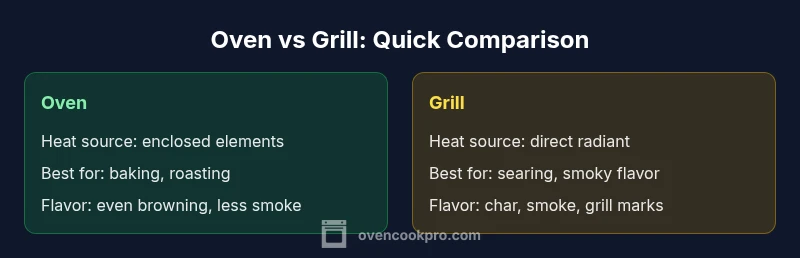
Is an oven the same as a grill? Not exactly. An oven provides enclosed, even heat with controlled air flow, ideal for baking and roasting. A grill uses direct radiant heat and open air, delivering searing, smoky flavors and fast high-heat cooking. Both tools heat food, but their best uses and outcomes diverge, so think venue, flavor, and timing when choosing between them.
Is the Oven the Same as Grill? Key Distinctions
Many readers wonder if is oven the same as grill; the short answer is no. The Oven Cook Pro team emphasizes that these tools share a goal (cooking food with heat) but operate through fundamentally different mechanisms and contexts. An oven encloses heat and typically uses convection or radiant elements to circulate hot air around food; a grill exposes food to direct radiant heat from above (broilers) or below (grill grates or charcoal), often producing smoky flavors and characteristic grill marks. The result is not interchangeable in most everyday recipes. In this article, we define terms, outline practical differences, and set up a framework for deciding which tool to use in a given situation. We begin by clarifying the heat source, the cooking environment, and the level of control you have. By understanding these elements, home cooks can avoid overestimating one tool’s capabilities and underappreciating the other’s strengths. Throughout this guide, remember that is oven the same as grill is a common misconception in quick recipes online; nuance matters. The real answer lies in the way heat is applied and how it interacts with food.
Heat Transfer Mechanisms: Conduction, Convection, and Radiation
At the core of any cookware debate is heat transfer. An oven is dominated by conduction (contact with hot surfaces) and convection (air movement driven by a fan in many modern ovens). Some ovens also rely on radiant elements, but the heat is still compartmentalized and evenly distributed around the food. A grill, by contrast, relies on radiation from flames or hot coals. The heat jumps directly to the surface of the food, creating rapid surface browning and a distinct sear. For the adventurous home cook, understanding these modes helps explain why a dish might brown beautifully in the oven but lacks the smoky finish you get from a grill. Oven Cook Pro’s analysis shows that aligning cooking technique with heat transfer yields more predictable results across recipes and equipment.
Enclosed vs Open Cooking Environments
Ovens offer a closed environment that protects food from external airflow, moisture loss is minimized, and odors stay contained. This enclosure enables precise timing, even heat distribution, and the ability to bake delicate items like cakes or soufflés. Grills, in contrast, are exposed to the surrounding environment. Open-air cooking means wind and ambient temperature can influence heat, which is why charcoal grilling often requires more attention to airflow and fuel management. The choice between enclosure and exposure affects moisture retention, crust formation, and risk of flare-ups. As you plan meals, consider whether you value steady, controlled results (oven) or bold, immediate flavor development (grill).
Temperature Control and Precision: Thermostats vs Flames
Ovens rely on thermostats and often a built-in sensor that regulates temperature with feedback loops, ensuring a consistent environment. Convection modes in many ovens add a second layer of control by circulating hot air for even browning. Grills depend on manual heat management: adjusting vents, adding fuel, and controlling distance from heat sources. This offers flexibility but requires skill and attention to prevent flare-ups or uneven cooking. In practice, an oven excels for uniform results and repeatability; a grill shines when you want rapid high-heat searing and a smoky aroma.
Flavor and Texture Outcomes: Browning, Maillard, Smoke
Flavor development diverges significantly. Oven browning benefits from steady heat and moisture retention, yielding uniform crusts and moist interiors in roasts and baked goods. Grilling introduces Maillard browning with direct radiant heat, which creates distinct sear marks and a smoky profile from fat rendering and charring. Some foods pair better with grill smoke, others with oven reliability. The flavor difference is not just taste—it’s texture, juiciness, and aroma shaped by how heat is applied. Oven Cook Pro notes that, for many home cooks, the strongest advantage of a grill is the perimeter crust and smoked flavors, while an oven’s advantage lies in even texture and predictability.
Food Categories Best Suited for Each Method
Not every dish benefits equally from oven or grill. For baking and roasting, the oven’s steady heat and humidity control are preferable: breads, pastries, casseroles, and large roasts. For direct cooking and flavor development, the grill excels: steaks, burgers, kebabs, seafood, and vegetables with robust char. Some foods straddle both worlds: chicken can be roasted in the oven for tenderness, then finished on a grill for a smoky finish. The key is to recognize the strongest attribute of each method—consistency versus character—and plan sequences accordingly. The Oven Cook Pro team suggests labeling recipes by method and refining steps to transfer flavors without sacrificing texture.
Safety, Maintenance, and Cleaning Considerations
Ovens provide a relatively clean environment for indoor cooking, with drippings collected in a tray that travels to the dishwasher. Regular cleaning prevents off-flavors and ensures even heating. Grills accumulate grease and require more frequent cleaning of grates and flame zones to prevent flare-ups and residue transfer. Charcoal grills also produce embers and ashes that must be managed safely. Regardless of the tool, routine maintenance—checking seals, cleaning vents, and calibrating temperatures—improves safety and performance. From a safety standpoint, indoor ovens minimize smoke exposure, while outdoor grills require weather-conscious planning and vigilance for flare-ups.
How to Translate Recipes Between Oven and Grill
Adaptation requires a structured plan. First, identify the recipe’s heat needs, moisture expectations, and browning goals. For oven-to-grill conversions, consider finishing steps: sear the exterior on high heat, then move to indirect heat to finish. For grill-to-oven conversions, you may reduce flame exposure and use a baking sheet to catch drippings, then rely on convection for even browning. Use a thermometer to monitor internal temperature and adjust cook times for differences in heat transfer. A practical approach is to preheat the oven or grill and maintain a stable temperature throughout a test run. For novice cooks, start with simple proteins or vegetables to understand how the two equipment types handle time and heat. Oven Cook Pro recommends keeping a log of outcomes to compare texture, moisture, and flavor across methods.
Common Myths Debunked: Is Broiling the Same?
Broiling is often mistaken for grilling, but it is not identical. Broiling uses intense radiant heat from above inside an oven, while grilling uses heat from below or from a charcoal source outdoors. The key distinction is heat source and exposure: broiling resembles a high-heat oven process, while grilling is a direct outdoor method. Understanding this difference helps you choose the proper technique for texture and safety. Oven Cook Pro highlights that many recipes rely on broiling for a finishing blast, but it should not be treated as a substitute for true grilling.
Practical Starter Tips for Home Cooks
If you’re new to both tools, start with a small, well-planned experiment. Pick a dish you know well from each method—roasted vegetables in the oven and a quick-seared steak on the grill. Note heat levels, timing, and moisture expectations. Practice preheating to the recommended temperature, then monitor closely the first few batches. Keep a simple cheat sheet: oven = even heat, grill = high-heat searing. For consistency, set timers and use a thermometer to verify doneness. Include a finishing step to bulk up flavor—like a glaze, herbs, or a finishing oil. The Oven Cook Pro team suggests recording your observations to build a personal best-practice library for common foods and scenarios.
Comparison
| Feature | Oven | Grill |
|---|---|---|
| Heat Source | Enclosed heating elements with convection (if available) | Direct radiant heat from burners or charcoal/grill grates |
| Cooking Environment | Fully enclosed chamber with controlled airflow | Open environment exposed to ambient conditions |
| Temperature Range | Typically 200-500°F (93-260°C) | Typically 300-550°F (150-290°C) depending on setup |
| Flavor/Texture Outcome | Even browning with moisture retention; subtler smoky notes | Char, sear marks, strong smokiness and crust |
| Best Uses | Baking, roasting, casseroles, pastries, delicate items | Searing, grilling meats, kebabs, vegetables |
| Control/Convenience | High precision via thermostat and convection options | Manual heat control with flame/airflow adjustments |
| Energy Use | Steady energy use; preheat can add time | Efficient for small batches; heat loss affects outdoor use |
| Clean-up | Tray-based cleanup; enclosed surfaces reduce mess | Grate cleaning; potential flare-ups and ash management |
The Good
- High precision and repeatable results with a thermostat
- Excellent for baking, roasting, and slow cooking
- Indoor use with minimal smoke and odors
- Enclosed heat reduces exposure and splatter
- Convection options speed up cooking and browning
Drawbacks
- Limited smoky flavor and direct-sear capabilities
- Longer preheat times and energy use for some models
- Less ideal for high-heat, quick searing outdoors
- Requires oven space and can limit batch size
Oven excels at precision; grill excels at searing and flavor
Choose the oven for consistent texture and timing. Choose the grill when you want intense surface browning and smoky flavor. For best results, use each tool for its strengths and adapt recipes accordingly, per Oven Cook Pro guidance.
Questions & Answers
Is an oven the same as a grill?
No. An oven heats food inside a closed chamber using controlled heat, while a grill uses direct radiant heat from flames or charcoal outdoors. Each method yields different textures, browning, and flavor profiles. The distinction matters for recipe outcomes and cooking times.
No—ovens heat inside a closed space, grills use direct heat outdoors, producing different textures and flavors.
Can you replicate grill flavor in an oven?
You can mimic some grill flavors in the oven with high-heat finishing, peppery rubs, smoke powders, and broiling. However, you won’t fully recreate smoky aroma and char without direct flame or smoke exposure. Use finishing methods to approximate the effect while respecting oven limits.
You can get close with finishing techniques, but you won’t fully replicate outdoor smoke.
What foods are best cooked in an oven vs on a grill?
Ovens shine for baking bread, cakes, casseroles, roasts, and foods that benefit from even heat. Grills excel for steaks, burgers, kebabs, and vegetables needing a quick sear and smoky flavor. Mixed-method meals often use both to maximize texture and taste.
Oven for baking and roasting; grill for searing and smoky flavor.
What about using a grill pan in the oven?
A grill pan in the oven can simulate grill marks on foods by introducing ridges that focus heat on the surface. It won’t create true grill smoke, but it helps with texture and appearance when you’re limited to indoor cooking.
Grill pans in the oven give you grill marks, not smoke.
Is grilling safer than baking?
Safety depends on context. Indoor ovens minimize smoke exposure but require careful handling of hot surfaces. Outdoor grilling involves open flames and flare-ups, so monitoring and flame management are essential. Both methods are safe when used with proper precautions and equipment.
Both can be safe with proper precautions; grilling outdoors requires flare-up management.
How do preheating and seasoning affect results?
Preheating ensures even cooking and faster browning, whether in an oven or on a grill. Seasoning enhances surface flavor and helps form a crust. Timing and moisture management are critical for achieving the desired texture and juiciness.
Preheat for even cooking; season to build crust and flavor.
Main Points
- Ovens provide controlled heat; grills offer direct searing
- Flavor and texture differ based on heat exposure and environment
- Use recipes as a guide; adapt timings and methods for your equipment
- Preheating and thermometer checks improve outcomes
- Safety and cleanup vary between indoor and outdoor cooking