Gas Oven vs Electric Oven: A Comprehensive Comparison
Compare gas oven vs electric oven: heat source, temperature control, installation, operating costs, and safety to decide which oven best fits your kitchen.


Gas oven vs electric oven: the heat source and control methods define the experience. Electric ovens offer precise temperature stability and easier placement in modern kitchens, while gas ovens deliver faster preheat and often lower operating costs where gas is cheap. The right choice depends on your cooking style, kitchen setup, and safety considerations.
Gas Oven vs Electric Oven: Core Differences
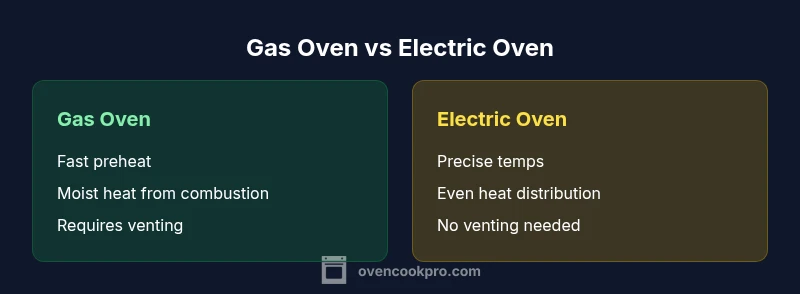
Choosing between a gas oven and an electric oven starts with understanding how each model creates heat and how that heat is distributed. A gas oven burns natural gas or propane to generate heat, typically delivering a brisk preheat and a moister cooking environment due to combustion byproducts. An electric oven uses heating elements and, in many cases, a convection fan to distribute heat evenly. In the gas oven vs electric oven debate, the heat source is the defining variable, and it influences everything from preheat speed to baking results. According to Oven Cook Pro, the foundational difference comes down to how heat is produced and controlled, then how that heat interacts with your food over time.
Across a broad set of home kitchens, electric ovens have become the default in new builds, appreciated for their predictable performance and simpler venting requirements. Gas ovens are common in older homes or regions with affordable natural gas, favored for quick heat and robust broiling. The choice isn’t merely about energy type; it’s about compatibility with your cooking routines and the ventilation infrastructure in your kitchen. The Oven Cook Pro Team emphasizes that this decision should align with how you actually cook, not just the headline features.
Comparison
| Feature | Gas Oven | Electric Oven |
|---|---|---|
| Heat source | Gas (natural gas/propane) | Electric heating elements (often top and bottom) |
| Heat-up time & preheat | Typically faster preheat and quick bursts | Often slightly slower to preheat, but very stable once hot |
| Temperature stability | Variable without advanced controls; can vary with flame | Typically more consistent with electronic regulation |
| Evenness of cooking | Can have hot spots; convection improves evenness | Usually even with proper convection and calibration |
| Moisture and browning effects | Moist environment from combustion can affect browning | Drier heat favors browning and pastry textures |
| Installation & venting | Requires gas line and venting | No venting required beyond standard electrical installation |
| Maintenance/parts | Gas burners, orifices, and valves require maintenance | Heating elements and sensors common replacement items |
| Safety considerations | Gas leaks and CO risk if venting is inadequate | Electrical risks primarily related to wiring and outlets |
The Good
- Gas ovens offer fast preheat and strong broil performance
- Electric ovens deliver precise temperatures and consistent baking results
- Convection options improve heat distribution in both types
- Electric installations generally avoid venting complexities
Drawbacks
- Gas installation requires a gas line and proper venting, increasing setup complexity
- Gas ovens can exhibit heat variability without convection or precise controls
- Electric ovens depend on reliable electricity; outages stop cooking
- Some gas models may have higher ongoing maintenance costs for burners and valves
Electric ovens win for baking consistency; gas ovens win for fast preheat and broiling in gas-equipped homes
If your priority is repeatable baking with precise temps, electric is the safer bet. If you already have a gas line and want quick heat, gas can be cost-effective and faster to preheat. An informed choice considers kitchen layout, ventilation, and typical dishes.
Questions & Answers
Is a gas oven safer than an electric oven?
Both can be safe with proper installation. Gas ovens require adequate venting to prevent CO buildup; electric ovens eliminate combustion risks but still need proper electrical safety and GFCI protection where required. Choose based on your home's ventilation and electrical infrastructure.
Safety hinges on proper installation: venting for gas and solid electrical wiring for electric. Ensure codes are met and installation is done by a qualified professional.
Which oven is better for baking bread and pastries?
Electric ovens generally provide more stable temperatures ideal for bread and pastries, especially with a true convection setting. Gas ovens can produce great results too, particularly with convection, but may show more temperature fluctuation without calibration.
For bread and pastries, most home bakers prefer electric due to stable heat; add a convection setting for even browning.
Do gas ovens require venting?
Yes, most gas ovens require proper venting to safely remove combustion byproducts. Installation typically involves a dedicated gas line and vent hood or exhaust system as part of the kitchen design.
Gas ovens need ventilation; ensure the range hood is appropriately sized and installed by a professional.
Can you convert a gas oven to electric?
Conversions are not common because ovens are typically sold as gas or electric units. A full replacement is usually required if you want to switch heat sources, and a licensed technician should assess electrical capacity and gas line implications.
Conversion isn’t typical; you’ll usually replace the appliance and adapt wiring or gas lines as needed.
Are electric ovens more energy-efficient than gas ovens?
Electric ovens can be more energy-efficient in terms of heat distribution and insulation, but overall efficiency depends on usage patterns and energy costs in your area. Gas may be cheaper where natural gas prices are low, but efficiency varies by model.
Electric ovens often use energy more efficiently for baking; gas costs depend on local fuel prices.
What about preheating times?
Gas ovens often preheat faster due to the flame, but modern electric ovens with true convection can heat quickly as well. Preheat time varies by model and the presence of convection fans.
Preheat times vary; gas can feel faster, while electric with convection delivers consistent heat quickly.
Main Points
- Prioritize baking consistency with electric ovens
- Choose gas if fast preheat and existing gas line matter
- Convection improves heat distribution in either type
- Plan for ventilation and electrical capacity before buying