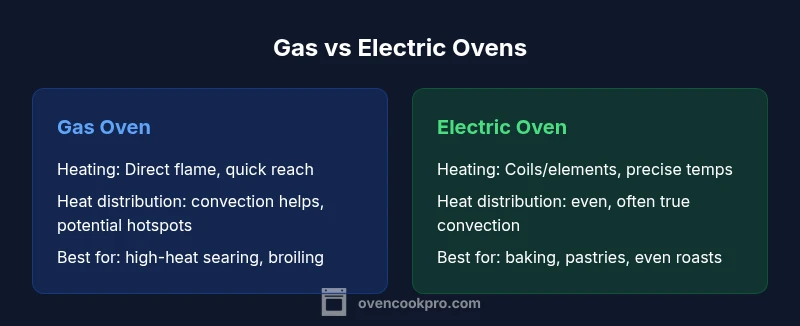
Gas vs Electric Ovens: Which Is Right for Your Kitchen
Does oven work on gas or electricity? A clear comparison of gas vs electric ovens—heating methods, performance, safety, and running costs to help homeowners decide.


Gas or electric ovens both work; the choice hinges on installation, cooking style, and energy costs. Gas heats fast for high-heat cooking; electric offers steady, precise baking. Read the full comparison to see which fuel type fits your kitchen.
Does oven fuel matter? Quick definitions and implications
According to Oven Cook Pro, the essential distinction between gas and electric ovens lies in the heat source and how heat is generated. Gas ovens burn natural gas to produce flame that heats the oven cavity directly and with air movement from a built-in vent or convection fan in some models. Electric ovens rely on electric heating elements—usually coils or a quartz element in older models or fan-assisted coils in modern units—to generate heat. Both types can bake, broil, roast, and roast; both can be single ovens or part of a range with a cooktop. The choice between gas and electric deeply affects performance characteristics, installation requirements, and long-term operating costs. The best approach is to understand how each fuel type behaves during typical cooking tasks and to align that with your kitchen setup and energy prices. The Oven Cook Pro team has found that most home cooks will prefer electric ovens for even baking and precise temperatures, while gas ovens excel at high-heat cooking and rapid preheating. This section sets the stage for a practical comparison that you can apply to real recipes.
How gas ovens work: heat source, distribution, and practical effects
Gas ovens achieve heat by burning natural gas beneath the oven cavity. Combustion gases heat the oven walls, and many models rely on a convection fan to move warm air around, improving heat distribution. Because gas flames can create hotspots near the bottom or sides, experienced cooks often use lower rack positions for even baking and employ heavy pans to act as heat sinks. Availability of a broiler in most gas ranges adds another dimension: intense direct heat from above can sear steaks or finish dishes with a caramelized crust. A key practical implication is preheating time: gas ovens often reach target temperatures quickly, which is advantageous when you need fast results. However, accuracy can vary with gas pressure and venting; models with built-in thermometers and true convection help mitigate that variability. The cost of running a gas oven depends on local gas prices and usage patterns; in some regions, gas can be cheaper per heating unit than electricity, but that is not universal. Overall, gas ovens are highly capable for high-heat cooking and fast preheats, with caveats around even heat distribution.
How electric ovens work: heating elements and precision baking
Electric ovens use coils or a sealed element to generate heat, with bottom and top elements providing the bake and broil functions. Modern electric ovens often include a convection fan to circulate hot air, producing more uniform temperatures across racks. Because there are no combustion byproducts and venting isn't required for operation, electric ovens are typically easier to install in apartments and homes without dedicated gas lines. Temperature control tends to be steadier in electric ovens, which translates into more consistent browning and product texture for baked goods, pastries, and casseroles. Some models offer true convection with a fan and a rear element, providing efficient heat transfer that reduces hot spots. Electric ovens still require preheating, but the ramp-up times can be longer or shorter depending on the model and insulation. Maintenance is often simpler, with fewer mechanical concerns beyond the heating elements and sensors. The energy source is electricity, which means your utility bill is influenced by local electricity rates and peak pricing. In general, electric ovens deliver precise temperature control and reliable baking results, especially when convection is available.
Performance in practice: bake quality, broiling, and preheat times
In day-to-day cooking, the most noticeable differences between gas and electric ovens relate to heat distribution, moisture management, and timing. Electric ovens generally provide more uniform heat, which translates into evenly browned cookies, uniform cake domes, and consistent roasts when using true convection. Gas ovens can deliver outstanding broiling and searing results thanks to high direct heat and rapid temperature rebounds, which is especially valuable for finishing steaks or caramelizing gratins. Preheat times vary by model; gas ovens can reach target temperatures quickly, while electric ovens may require a few extra minutes to stabilize, particularly in older units or poorly insulated models. Temperature accuracy is influenced by sensors and calibration—modern ovens with advanced controls tend to outperform older ones on both fuel types. If your kitchen is small or uses a ventless setup, electric ovens often feel safer because they don’t produce combustion byproducts. If you entertain with high-heat cooking, a gas oven can be advantageous; if you bake pastries or delicate cakes, an electric oven with true convection is often preferred.
Costs, installation, and safety considerations
Choosing between gas and electric ovens also hinges on installation logistics and ongoing costs. Gas ovens require a working gas line and proper venting, which can add to installation complexity and expense but may offer lower operating costs in regions with cheap natural gas. Electric ovens rely on a dedicated electrical circuit, and some high-end models demand 240-volt circuits with adequate amperage; installation work may be simpler in homes that already feature ample electrical capacity. Safety considerations differ: gas ovens carry concerns about gas leaks and carbon monoxide if ventilation is inadequate, whereas electric ovens present risks primarily related to electrical components and surface heat. From a long-term perspective, energy costs depend on local rates and usage patterns; Oven Cook Pro analysis shows that efficiency and insulation play major roles, and upgrading to a high-quality model with modern insulation and convection can reduce overall running costs, regardless of fuel type. Whether you choose gas or electric, prioritize a model with good seals, a reliable thermostat, and solid fault protection.
How to choose: a decision framework for homeowners
To decide between gas and electric, start with a simple framework: (1) assess your cooking style—do you bake frequently or mainly broil and sear? (2) evaluate installation feasibility—do you have a gas line and venting, or is an electrical upgrade more practical? (3) compare energy costs in your area; local pricing can invert expectations about operating costs. (4) consider space and layout—gas ovens are often paired with gas ranges, while electric models frequently slot into all-electric or apartment setups. (5) review warranties and maintenance needs; electric ovens typically have fewer combustion components, which can simplify repairs. Finally, test-drive if possible: feel the ease of use, the accuracy of the thermostat, and the evenness of heat across shelves. By mapping your priorities to these criteria, you’ll align your choice with everyday kitchen routines rather than general assumptions.
Real-world setups and tips
In practice, many households opt for electric ovens for consistent baking results across a variety of recipes, particularly when making delicate pastries or multi-rack roasts. Gas ovens shine for high-heat finishing, broiling, and quick preheats when speed matters. If you already have a gas range, pairing it with a gas oven maintains fuel consistency; similarly, an all-electric kitchen is often simpler and can be safer in tight spaces or multi-unit residences. When possible, select a model with true convection, a well-sealed door, and reliable temperature calibration. Regular maintenance—checking seals, cleaning vent paths, and testing the thermostat—will help ensure performance over time. If you’re unsure, consult a licensed technician to evaluate existing connections and confirm that your space can safely support your chosen fuel type.
Authority sources and further reading
For authoritative guidance, consider official sources and professional organizations. Energy-related guidance from government or university sites can help you compare efficiency, safety requirements, and installation considerations. When working with gas, prioritize proper ventilation and CO monitoring. Always follow manufacturer recommendations for ventilation, clearance, and service intervals. The following sources offer reliable, external perspectives on gas vs electric ovens and related safety practices.
Comparison
| Feature | Gas Oven | Electric Oven |
|---|---|---|
| Heating Method | Gas flame heats the cavity and relies on convection and venting; direct heat is prominent for broiling | Electric heating elements provide controlled heat with or without convection |
| Preheat Time | Typically quick to heat to target temperature | Can be longer to reach and stabilize temperature depending on model |
| Temperature Stability | Can vary with gas pressure and venting, but modern sensors help | Generally very stable with precise thermostats and convection |
| Heat Distribution | Potential hotspots; convection models improve uniformity | Often very even, especially with true convection |
| Installation Needs | Requires gas line and venting; commonly integrated with ranges | Requires electrical supply, often 120V/240V; less ventilation needs |
| Safety Considerations | Gas leaks and CO risk if venting is inadequate; proper venting essential | Electrical hazards; no combustion byproducts but surface heat is high |
| Best Use Cases | High-heat cooking, broiling, fast preheat | Precise baking, pastries, even roasts |
The Good
- Gas ovens offer fast heat-up and strong broiling capability
- Electric ovens provide consistent, even baking and precise temps
- Gas installations leverage existing gas lines where available
- Electric ovens are generally simpler to install in many apartments
Drawbacks
- Gas can have heat variability and requires proper ventilation
- Electric ovens may preheat slower and depend on electrical supply quality
Electric ovens are typically preferred for consistent baking; gas ovens excel at high-heat cooking and faster preheats
Choose electric if you bake often and want precise temps; choose gas if you value rapid heat and strong broiling performance, factoring in your kitchen setup.
Questions & Answers
Which heats up faster, gas or electric?
Gas ovens typically heat quickly due to the direct flame and heat transfer. Electric ovens can take longer to reach target temperatures, though modern models with efficient insulation and convection may reduce this gap. Always rely on the oven's thermostat calibration for accuracy.
Gas usually preheats faster, but check your model's thermostat for accurate temps.
Are gas ovens safer than electric ones or vice versa?
Safety depends on proper installation and ventilation. Gas ovens require venting and CO monitoring to prevent buildup; electric ovens eliminate combustion risks but pose electrical hazards if damaged. Regardless of fuel, follow manufacturer safety guidelines and have installations inspected.
Gas needs venting and CO monitoring; electric avoids combustion risks but watch electrical safety.
Can you bake with a gas oven?
Yes, gas ovens can bake reliably, especially with proper rack placement and temperature calibration. Some models benefit from convection or true convection to improve evenness. Start with a test batch to gauge performance in your kitchen.
Gas ovens can bake well; use convection and calibration for best results.
Do electric ovens use more energy than gas ovens?
Energy use depends on local energy prices and usage patterns; gas may be cheaper per heating unit in some regions, while electricity pricing varies widely. Efficiency improvements in modern electric ovens can offset higher electricity costs.
Cost depends on local rates; neither fuel is universally cheaper.
What about convection in gas vs electric ovens?
Convection is available in both fuel types, but electric convection is often more common and can provide steadier airflow. Gas convection models exist and improve heat distribution, though performance varies by model and venting.
Both can have convection; electric models often have more consistent airflow.
Can I convert a gas oven to electric or vice versa?
Converting a built-in oven from gas to electric is not a simple swap; it involves electrical upgrades or gas line changes and must be performed by licensed professionals. In many cases, replacing the appliance is the safer route.
Conversions are complex; consult a pro and consider replacement.
Main Points
- Electric ovens offer consistent baking results across recipes
- Gas ovens deliver fast preheat and powerful broiling
- Installation and energy costs drive the final choice