Gas vs Electric Oven for Baking: Which Is Best for Your Kitchen?
Explore the key differences between gas and electric ovens for baking, including heat behavior, preheat dynamics, bake outcomes, and practical tips from Oven Cook Pro for home bakers and cooks.


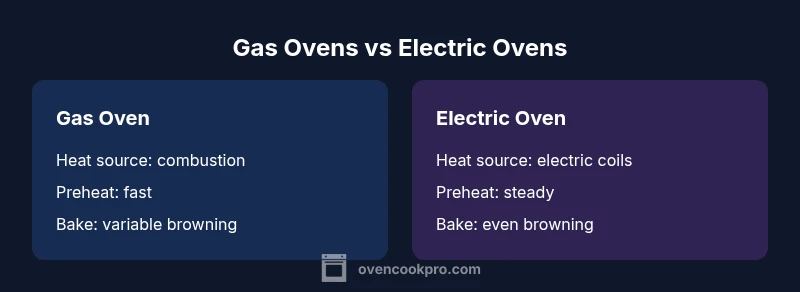
According to Oven Cook Pro, choosing between a gas vs electric oven for baking hinges on heat behavior, bake consistency, and installation realities. Gas ovens heat fast and excel at high-heat tasks, but require careful rotation for even results. Electric ovens offer more consistent temperatures and reliable convection options, helping with even browning and predictable results.
Gas vs Electric Oven for Baking: Core Differences
Gas ovens rely on a flame to heat air inside the cavity, which then circulates to cook food. This can create rapid initial heat and moist, steamy conditions near the rack. Electric ovens use radiant coils or hidden elements to heat the air and food more steadily, with fewer dramatic swings. The core difference is not just where heat comes from, but how it distributes: gas tends to create hotspots and humidity from combustion, while electric tends toward steadier, more uniform temperatures. According to Oven Cook Pro, this baseline distinction shapes everyday baking results, influences crust development, and affects how you fine-tune temperatures for delicate pastries.
Brand note: The Oven Cook Pro team emphasizes that your kitchen’s utility setup and ventilation will influence practical outcomes as much as the oven’s internal design.
Bake Behavior Under Real-World Conditions
In gas ovens, preheating can feel brisk, with quick climbs to high temperatures. Home bakers often notice hotter spots near the back or sides, which means rotating trays and using multiple racks becomes essential for even browning. Electric ovens tend to maintain a steadier temperature, which helps with gradual, predictable rises in dough and more uniform browning. The trade-off is sometimes a longer preheat phase and the potential for subtle temperature drift if the oven isn’t well calibrated. When baking cookies or cakes, electric heat often yields consistent results, while gas can shine for high-heat crust formation if controlled with proper airflow and an even rack setup.
Bake Quality: Crust, Moisture, and Texture
Heat source and humidity play big roles in crust formation and moisture retention. Gas ovens can encourage a crisp outer crust quickly on breads and pizzas, thanks to vigorous initial heat and elevated humidity near the flame. Electric ovens commonly deliver even browning across baked goods and steadier crumb structure, especially for delicate pastries that require precise diffusion of heat. Bakers who crave a chewy crust or a blistered edge may prefer gas for performance during the first minutes, while those seeking uniform texture across a sheet of pastries may favor electric. The choice often comes down to texture preferences and the specific bake being attempted.
Temperature Control and Calibration
Thermostat accuracy matters more than the heating element alone. Gas ovens can exhibit larger temperature fluctuations during burner cycles, which means frequent calibration or use of an oven thermometer is advisable. Electric ovens generally offer more stable temps, but calibration remains important to avoid drift, especially after frequent door openings. Regardless of type, rely on an accurate thermometer placed in the center of the rack to monitor temp, then adjust recipes accordingly. Regular calibration helps ensure repeatable results across multiple baking sessions.
Preheating Time and Consistency
Preheating length varies by model and size, but gas ovens often feel quicker to bring to a target high temperature, while electric ovens may require longer warmups to achieve the same stability. For baking, consistency matters more than speed. A practical approach is to preheat to your target temperature, then let the oven rest for a few minutes before placing items inside, and use oven thermometers to confirm readings before starting. This reduces unexpected temperature swings that can affect rise and texture.
Energy Efficiency and Operating Costs
The energy efficiency picture depends on regional energy prices, insulation, and how the oven is used. Gas ovens typically consume natural gas more quickly during peak cycles, and venting can carry away heat, reducing net efficiency in some layouts. Electric ovens use electricity and may benefit from tighter insulation and sealed doors, translating to steadier heat with potentially lower energy loss per bake in well-insulated models. In practice, the cost advantage of gas vs electric varies by local utility rates and your baking frequency.
Maintenance, Safety, and Long-Term Costs
Gas ovens require proper venting and a safe gas connection, plus periodic checks for gas leaks or faulty ignition systems. Electric ovens require attention to electrical connections, pace of element wear, and the condition of the door seal to prevent heat loss. Both types demand routine cleaning, especially around racks and seals, to prevent residue buildup that can affect temperature fidelity. For households with young children or smoke-sensitive environments, improved ventilation and smoke alarms are prudent regardless of oven type.
Practical Scenarios: When Gas Shines
Gas ovens often perform exceptionally for high-heat tasks like pizza, certain bread crusts, and roasting temperatures that benefit from a quick burst of heat. If you frequently bake at very high temperatures or enjoy a charred, blistered finish, a gas oven can be an asset. The quick warmth and the visible control of the flame can help experienced bakers push boundaries and achieve distinctive textures. However, you should plan for rotation and careful rack placement to counteract hotspots.
Practical Scenarios: When Electric Shines
Electric ovens excel in environments where consistency and repeatable results are paramount. If you bake delicate pastries, tanned crusts, cookies, or layered cakes, electric heat with reliable thermostats and convection capability often yields more uniform outcomes. Bakers who value controlled browning and predictable rise may prefer electric as their primary baking platform, especially when precise timing and repeatable textures matter for the weekly bake schedule.
How to Optimize Baking Regardless of Oven Type
No matter which oven you own, several techniques improve results. Preheat properly, use a clean oven and racks, and consider a baking stone or steel to stabilize heat. If your oven supports convection, enable it and adjust recipes to account for the more efficient air circulation. Place racks to avoid crowding, rotate trays mid-bake, and use an oven thermometer in the center of the rack to verify temperatures. Humidity can influence crust development; a light pan of water placed in the oven can subtly modify moisture during baking, but monitor carefully to avoid soggy results. Following these steps helps you achieve consistent outcomes across gas and electric ovens.
Convection: Does It Favor Gas or Electric?
Convection changes how heat moves inside the cavity, not the heat source itself. Electric convection generally offers consistent airflow with reliable temperature control, which translates to uniform browning and evenly baked goods. Gas convection can also perform well, but hotspots may persist if the airflow isn’t evenly distributed. The best practice is to test and calibrate your convection settings with your usual recipes, regardless of the oven type, and use a thermometer to ensure you stay within the target range during critical bake moments.
What Home Cooks Should Consider Before Buying
When shopping for a new oven, assess your baking habits, kitchen layout, and long-term costs. If you frequently bake bread or pizza at high heat, a gas option may suit your style with careful calibration. If you bake pastries, cookies, and cakes with a focus on uniform texture, electric with convection is a strong candidate. Consider installation costs, venting requirements for gas, electrical circuit needs for electric ovens, and the potential for retrofit options such as a convection kit. Finally, determine whether you value rapid preheating, precise temperature control, or a balance of both, as you compare models and brands.
Quick-Start Checklist for Bakers Choosing Gas vs Electric
- Assess your typical baking load and preferred textures
- Check for convection capability and its performance in each oven type
- Calculate installation costs for gas lines or electrical circuits
- Use oven thermometers to verify internal temps regularly
- Plan for routine calibration and maintenance to sustain accuracy
Comparison
| Feature | gas oven | electric oven |
|---|---|---|
| Heat source and heat distribution | Gas flame + air circulation; potential hotspots | Electric coils/radiant heat; generally even distribution |
| Preheat time | Typically quick to high temps | Often longer to reach target temps but steadier |
| Temperature accuracy | Possible fluctuations; calibrate with thermometer | Typically more stable; calibrate for drift |
| Bake quality (crust, browning) | Crusts can form quickly; hotspots may affect browning | Even browning and consistent texture across the bake |
| Energy efficiency | Heat losses through venting; efficiency varies by model | Tends to be more insulated and consistent |
| Convection support | Available in many gas ovens; performance varies | Common in electric ovens; often strong convection results |
| Installation/maintenance | Requires gas line and venting; periodic safety checks | Requires electrical circuit; occasional element maintenance |
| Price/installation considerations | Installation cost may include venting; comparable base price | Electrical costs depend on circuit requirements; installs can be costly |
| Best for | High-heat, fast preheat, pizza/bread mastery | Even baking, precise control, pastries and cakes |
The Good
- Gas ovens heat quickly and excel at high-heat baking when properly managed
- Electric ovens provide more consistent temperatures and reliable convection for even baking
- Both types can be safe and durable with proper installation and maintenance
- Convection options are widely available in modern models for both fuels
Drawbacks
- Gas ovens can have uneven heat and humidity from combustion, requiring more monitoring
- Gas installation may require venting and gas line work with higher upfront costs
- Electric ovens can preheat slower and may require dedicated electrical circuits
- Convection performance varies by model and may require calibration
Electric ovens generally offer more consistent, even baking, while gas ovens excel at high-heat performance with careful management
Choose electric for reliability and uniform texture, especially in pastries and cakes. Opt for gas if your baking emphasizes rapid high-heat, bold crusts, and you have access to proper ventilation and calibration.
Questions & Answers
What are the main differences between gas and electric ovens for baking?
Gas ovens heat quickly and can produce bold crusts but may have hotspots. Electric ovens tend to offer more stable temperatures and even browning, especially with convection. The right choice depends on your baking style and kitchen setup.
Gas heats fast with potential hotspots; electric offers stable temps and even browning, especially with convection.
Is one type better for bread or pastries?
Bread benefits from even heat and humidity, which electric convection often provides. Pastries usually need precise temperatures and consistent airflow, where electric ovens typically perform well. Some bakers succeed with gas by rotating trays and using steam as needed.
Electric convection often excels for bread and pastries due to even heat; gas can work with technique.
Can I use convection in a gas oven?
Many gas ovens include a convection setting that circulates air with a quiet fan. The effectiveness depends on model design, so test with your favorite recipes and adjust times.
Gas convection exists in many models; test and adjust timings accordingly.
Does preheating time differ significantly?
Gas ovens often reach high temps quickly, but may require monitoring to avoid hotspots. Electric ovens typically take longer to preheat but offer steady temperatures once stabilized.
Gas heats up fast; electric preheats slower but stabilizes temps well.
What installation considerations should I plan for?
Gas ovens require a safe gas line and venting; electric ovens need a dedicated electrical circuit and proper clearance. A licensed technician should handle installation for both.
Gas needs a proper line and vent; electric needs a circuit. Hire a pro.
Are there cost differences to consider?
Installation costs vary based on local codes and home layout. Ongoing operating costs depend on energy prices in your area and baking frequency.
Costs depend on installation and local energy prices; assess long-term use.
Main Points
- Evaluate your typical baking tasks before choosing
- Consider installation requirements and utility costs
- Use thermometers to verify oven temperature accurately
- Leverage convection if available to improve evenness
- Always calibrate and rest the oven before critical bakes