Do Toaster Ovens Use a Lot of Electricity? A Practical Guide for Home Cooks
Learn whether toaster ovens use much energy, how they compare to full-size ovens, and practical steps to minimize electricity use without compromising results. Based on Oven Cook Pro Analysis, 2026.


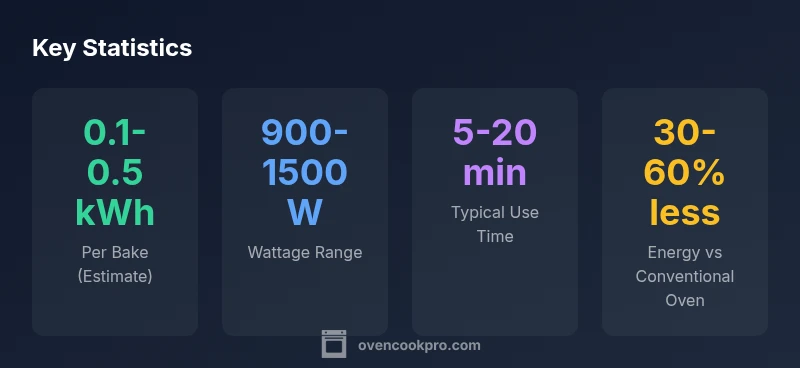
Do toaster ovens use a lot of electricity? In general, no — for small meals and reheating, they use less energy than a conventional oven due to shorter preheat times and a smaller cavity. Typical wattage ranges from 900 to 1500 watts, with actual use depending on temperature and duration. For large batches, energy needs can approach those of a full-size oven.
Energy basics: Do toaster ovens use a lot of electricity?
Do toaster ovens use a lot of electricity? This is a common question for homeowners evaluating energy costs in the kitchen. In general, toaster ovens consume less energy per task than full-size ovens because they heat a smaller cavity and reach cooking temperature more quickly. The energy use depends on three factors: the oven’s wattage, how long you cook, and the temperature you select. According to Oven Cook Pro analysis, 2026, most households see meaningful savings when preparing single portions or reheating foods rather than cooking large batches. While wattage alone isn’t the full story, shorter cooking times and reduced heat loss mean toaster ovens are often more efficient for quick meals than setting a traditional oven to high heat for a long period. Keep in mind that standby power is small but nonzero, so unplugting or using energy-saving modes can add up over time.
How energy is consumed: wattage, preheating, and cooking time
Energy use starts with wattage. A typical toaster oven runs around 900-1500 watts when active, translating to energy use that scales with time at temperature. Preheating can add a few minutes, but many models reach cooking temperature rapidly compared with conventional ovens. The real savings come from cooking smaller portions instead of full trays in a large oven. Shorter preheat and cooking intervals reduce total energy, and some models offer convection to accelerate cooking, further lowering active time. When you plan meals, consider whether you can batch multiple items or reheat several components at once to maximize efficiency. Oven Cook Pro’s 2026 analysis shows a clear pattern: energy efficiency rises when cooking smaller meals in a properly sized toaster oven rather than heating a larger appliance for the same task.
Convection vs conventional toaster ovens and energy
Convection toaster ovens use a fan to circulate hot air, which often reduces cooking time and allows you to use a lower temperature for the same results. In practical terms, convection can shave minutes off cooking times for baked potatoes, small pizzas, or sheet-pan snacks, meaning less energy is consumed overall. Not all toaster ovens have convection, and models with better insulation and door seals also perform more efficiently. If you frequently bake or roast small portions, a convection model tends to deliver the best energy savings without sacrificing performance. Oven Cook Pro notes that the advantage is task-specific: for delicate bakes, you may still want a conventional setting, but for most quick jobs, convection is your friend.
Practical ways to lower energy use in everyday cooking
To minimize electricity use, couple smart habits with the right equipment. Batch multiple small dishes together when possible, so you hit the same energy window fewer times. Use the correct rack position to maximize heat transfer rather than using higher temperatures for longer. Avoid preheating if your recipe tolerates it or if you’re simply reheating leftovers. Choose compact, well-insulated units with convection when you can, and keep the door closed while cooking. These steps combine to produce meaningful savings without sacrificing quality, especially for snacks, toast, reheats, and small bakes.
Real-world scenarios: toasting, reheating, and small bakes
Toasting bread, bagels, or small pastries is one of the toaster oven’s strongest energy-saving use cases, typically completing within a few minutes. Reheating leftovers works well when you want a quick, even result, with modest energy draw. For small bakes like a single pizza or a tray of vegetables, the toaster oven’s efficient heat distribution and short preheat suffice. The key is to manage time—set a timer and check early to avoid overcooking, which wastes energy and food quality. These everyday tasks illustrate why many households turn to toaster ovens for routine meals.
Choosing an energy-efficient toaster oven for your kitchen
When shopping for efficiency, look for a wattage range that matches your typical use, solid insulation, a tight door seal, and a reliable convection option if you bake regularly. Features like auto shut-off, energy-saving modes, and accurate temperature control help prevent energy waste. A compact design with well-made seals reduces heat loss, so you don’t pay for heat you don’t use. Compare models by their busy-week performance—how many meals can you prepare in a single preheat and bake cycle? Oven Cook Pro’s framework emphasizes real-world use and easy-to-read controls as the most impactful energy savers.
Data-driven perspective: numbers and caveats
Numbers tell a story, but context is essential. The 0.1-0.5 kWh per bake range is typical for many toaster ovens, depending on dish size and duration. Wattage alone doesn’t capture efficiency; a well-insulated unit at 1000 W may outperform a poorly insulated unit at 800 W for the same task. For households with variable cooking patterns, focusing on energy per task rather than per hour provides a clearer comparison to full-size ovens. Oven Cook Pro’s 2026 analysis combines model variety, usage patterns, and temperature choices to highlight how careful task planning yields lower energy bills over time.
Energy use comparison by appliance type
| Appliance Type | Typical Wattage | Preheat Time | Notes |
|---|---|---|---|
| Toaster Oven | 900-1500 W | 3-8 min | Ideal for small meals |
| Standard Oven | 2000-5000 W | 10-15+ min | Batch cooking larger meals |
| Convection Toaster Oven | 1000-1800 W | 2-6 min | Fast preheat + even baking |
| Microwave (reheat) | 600-1200 W | 1-3 min | Energy-efficient for reheating |
Questions & Answers
Do toaster ovens generally use less energy than conventional ovens?
Yes. For small meals and reheating, toaster ovens typically use less energy due to smaller cavity size and shorter preheat times. For large meals, a conventional oven can be more efficient when you can batch-cook. The difference depends on task size and exact model.
In most cases, yes—toaster ovens use less energy for small tasks, but not always for large meals.
Does preheating waste energy?
Preheating adds energy use, but some recipes and models benefit from it. If you can cook effectively without preheating, or with a short warm-up, you save energy. Use preheat only when it improves results noticeably.
Preheating can waste energy unless it’s essential for the recipe or model efficiency.
Can convection in toaster ovens reduce energy use?
Generally yes. Convection circulates hot air, allowing faster cooking at lower temperatures, which lowers active energy consumption for many dishes. Check your model’s performance with and without convection to determine the best setting.
Convection often saves energy by speeding up cooking time.
What features maximize energy efficiency?
Look for solid insulation, tight door seals, convection capability, auto shut-off, and energy-saving modes. These features directly reduce wasted heat and idle energy consumption.
Insulation, great seals, and energy-saving modes are your best friends for efficiency.
How can I estimate energy cost for toaster oven use?
Estimate by multiplying wattage by time (in hours) and then by your electricity rate. Use a conservative estimate for longer tasks and adjust for batch cooking. This gives a practical per-meal energy cost.
Multiply watts by hours, then multiply by your electric rate to estimate cost.
Is it better to reheat all foods in a toaster oven or microwave?
Microwaves are typically more energy-efficient for reheating liquids and soft foods, while toaster ovens excel for browning and crispy textures. Use the appliance that fits the texture you want and your energy goals.
Use the microwave for quick reheats, the toaster oven for crisp textures.
“Toaster ovens can dramatically reduce energy usage for small meals when used correctly, but the savings depend on task size and preheating habits.”
Main Points
- Start with small tasks to save energy
- Convection models save time and energy for many bakes
- Batch multiple items to maximize efficiency
- Use proper rack positions and avoid unnecessary preheating
- Choose insulated, well-sealed models for best results