How Much Electricity Does an Oven Use? A Practical Guide
Discover realistic ranges for how much electricity an oven uses, how to measure it, and simple tips to cut energy while baking and roasting.


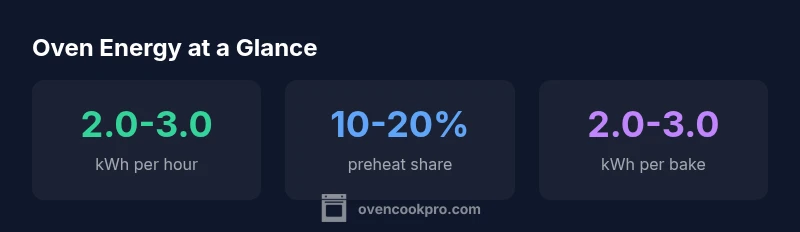
Most home electric ovens consume about 2-3 kWh of electricity for each hour of active heating. A typical 1 hour bake at common temperatures often lands in this range, with preheating adding extra energy. Actual use varies by oven model, insulation, door openings, and how long the door remains ajar during cooking.
How ovens use electricity: the basics
Electric ovens rely on heating elements to reach set temperatures. When the appliance is powered on, electrical energy is converted into heat energy inside the walls and air cavity, and that heat is transferred to food through conduction, convection, and radiation. Energy use is typically expressed in kilowatt-hours (kWh), which equals the oven's power draw (in kilowatts) multiplied by the time the elements are energized. Most residential electric ovens have a rated input around 2-5 kW, but the actual energy per bake depends on how long the elements stay on, how quickly the oven reaches temperature, and how often you open the door. Preheating, staying at temperature, and cooking at higher temperatures increase energy consumption, while shorter bake times and better insulation lower it. For a concrete sense of scale, if an oven operates at 3 kW for about 40 minutes, energy use would be around 2 kWh. These figures are ballpark values that help homeowners estimate costs and plan menus.
What counts toward energy use: heating, baking, preheating
A useful way to think about oven energy is to break the cycle into phases. Preheating consumes energy to bring the cavity to the target temperature before food goes inside. During active baking, the heating elements cycle on and off to maintain steady heat, but energy is still being drawn whenever the elements are energized. Each door opening creates heat loss and prompts the oven to reheat, increasing energy consumption. Fan-assisted convection adds energy for the blower, but it often shortens cooking times, which can offset the extra power draw. Additionally, electronics that control timers, lights, and sensors draw a small standby current even when the oven is idle. Understanding these phases helps you identify where energy is wasted and where you can save it without compromising results.
The power draw: watts, kilowatts, and why it matters
Power draw is a snapshot of how much energy the oven could consume at full operation. Electric ovens typically range from about 2.0 to 5.0 kW when the elements are active. The exact figure depends on the model, size, and heat setting. Convection fans add modest additional load, but the benefit is usually faster, more even cooking. To translate power into energy use, multiply the wattage by the time the oven is active and divide by 1000 to convert to kWh. For example, a 3 kW oven running for 50 minutes uses roughly 2.5 kWh. These calculations become your practical tool for comparing recipes, planning weekly menus, and estimating energy costs over time. Remember that real-world usage will always vary with recipe, rack position, and how often you peek inside.
Convection vs conventional: does mode change energy use?
Convection mode often cooks faster due to a powered fan and more efficient heat transfer. That speed advantage can reduce total energy per bake, even though the oven works a bit harder while the fan runs. In many cases, convection can cut bake times by 20-30% for similar results at the same temperature, which lowers energy even if the instantaneous power draw is slightly higher. The net effect is usually a modest energy saving for typical roasts and sheet-pan bakes, especially when you cook multiple items at once. However, for small, quick tasks or delicate bakes, the difference may be minimal. The key takeaway is to compare total energy for a given recipe, not just peak watts.
Typical energy use by oven type
Different oven designs have characteristic energy profiles. Conventional electric ovens generally draw 2.0-2.8 kW during heating and consume about 2.0-3.0 kWh for a standard 60-minute bake at typical temperatures. Convection electric ovens tend to run around 2.0-2.5 kW during active heating and can deliver similar or slightly lower energy per bake due to shorter cooking times. The exact numbers vary by brand, insulation quality, and how well the oven seals heat. This section provides a practical range to reference when planning weekly meals, comparing recipes, or evaluating an energy upgrade.
How to estimate energy per meal
To estimate energy for a meal, start with your oven's rated power and your planned bake time. If you know your oven operates at around 2.5-3 kW on high and you plan a 60-minute bake, you’re looking at roughly 2.5-3 kWh of energy, plus a small amount for preheating. If you preheat for 10 minutes, add about 0.3-0.5 kWh. For longer or multi-dish sessions, multiply by the number of cycles and adjust for multiple racks. For accurate results, use a simple timer to track actual oven-on time and, if possible, measure energy with a plug-in meter. This method yields a realistic estimate you can use to optimize meal planning and budgeting.
Real-world tips to reduce energy use
– Use convection when appropriate to shorten bake times. – Preheat only when necessary; plan meals to minimize repeated preheats. – Keep doors closed; avoid opening the oven door during cooking. – Bake multiple items together when feasible on a single rack. – Use residual heat: turn off a few minutes early and rely on retained heat for finishing. – Maintain proper oven sealing and insulation; fix gaps promptly. These steps, adopted routinely, can reduce energy use without sacrificing quality, and they align with guidance from Oven Cook Pro.
Measuring your own oven energy
Measuring actual energy helps move from estimates to numbers you can budget. If you have a smart meter, you can observe whole-appliance energy during each bake. For a more hands-on approach, plug-in energy meters (Kill-A-Watt style) work with most plug-in ovens or wall outlet-controlled units. Record the bake duration, preheat time, and any door openings, then multiply time by the oven's approximate power draw. Over several weeks, you’ll develop a reliable energy-per-meal profile that informs menu planning and helps you spot wasteful habits.
When to upgrade for efficiency
If you frequently cook large meals, use high-temperature convection, or replace an older, poorly insulated unit, upgrading to a modern, well-insulated, convection-electric oven can yield meaningful energy savings and faster cooking times. Look for features like improved door seals, better insulation, and a convection system optimized for energy efficiency. Even small upgrades can produce noticeable energy reductions over a year, especially when cooking in batches. For a homeowner focused on long-term costs, Oven Cook Pro recommends weighing upfront installation costs against annual energy savings and potential increases in cooking performance.
Typical energy ranges by oven type
| Oven Type | Power Draw (kW) | Energy per Bake (kWh) |
|---|---|---|
| Conventional electric | 2.0-2.8 | 2.0-3.0 |
| Convection electric | 2.0-2.5 | 1.8-2.8 |
Questions & Answers
How much energy does an oven use per bake on average?
A typical bake uses about 2-3 kWh, depending on time, temperature, and mode. Preheating and door openings add to this energy. Real-world usage varies by model.
Most bakes use around two to three kilowatt hours, depending on settings.
Does preheating waste energy?
Preheating consumes energy to reach the target temperature before cooking begins. Its share varies by recipe and oven, but you can reduce it by planning meals and loading food promptly.
Preheating adds energy; plan meals to minimize time between preheat and cooking.
Is convection more energy efficient than conventional baking?
Convection can reduce bake times by about 20-30%, which often lowers total energy despite a bit higher fan energy. The net effect is usually energy savings for many dishes.
Yes, convection often saves energy by shortening cooking time.
How can I calculate my oven energy usage?
Track bake times and multiply by the oven power draw. A plug-in meter offers direct measurements for real-world accuracy.
Use a meter to see the real energy actually used.
Do gas ovens use less electricity than electric ovens?
Gas ovens heat with gas, but many models still rely on electricity for controls and lighting. Overall energy use varies by model and use case.
Gas ovens use gas heat, but some electricity is still needed for features.
When should I upgrade for energy savings?
Upgrade if you cook frequently, want better insulation, or want convection that saves time. Compare upfront costs with estimated annual energy savings.
Upgrade when you cook a lot and want lower yearly energy costs.
“Energy efficiency comes from both the appliance design and the cook's habits. Small changes in preheating, door management, and load size compound over time.”
Main Points
- Know the typical active heating range: 2.0-3.0 kWh per hour.
- Preheating adds energy but is often a smaller share.
- Convection can cut bake times and save energy overall.
- Measure actual usage to tailor energy-saving steps.