Difference Between Oven and Broiler: A Practical Guide to Cooking Better
Explore the difference between oven and broiler, how each heats food, when to use them, safety tips, and practical recipe guidance to achieve even cooking and perfect browning.


The difference between oven and broiler lies in heat source and purpose: an oven uses circulating heat from multiple elements for even baking and roasting, while a broiler delivers intense, direct heat from above for browning and finishing. For most recipes you start in the oven and finish under the broiler to achieve a crisp top, texture, and caramelization.
What is the difference between oven and broiler
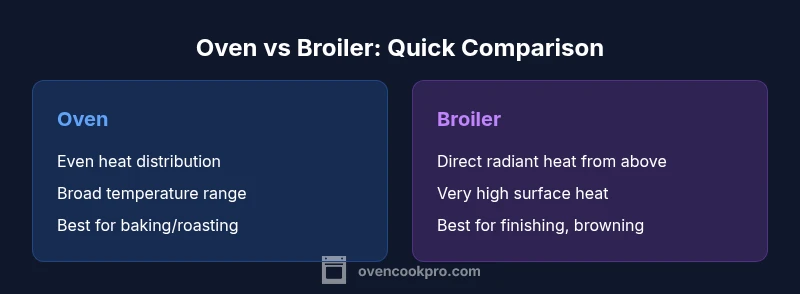
Understanding the difference between oven and broiler is essential for home cooks who want reliable results. An oven is a large chamber that heats food with circulating air from bottom, top, or both, creating even, predictable results suitable for baking, roasting, or slowly cooking. A broiler is a high-heat, top-down radiant heat source that delivers intense energy to the surface of food, promoting quick browning and char without necessarily cooking the interior through. This distinction matters in everyday cooking because recipes often rely on initial oven heat for cooking through, followed by broiling to finish with a browned crust or melted topping. According to Oven Cook Pro, recognizing when to switch between these two heat sources can transform textures—from tender, evenly cooked vegetables to caramelized, crisped finishes. In practice, use the oven for mass cooking and even browning, and reserve the broiler for finishing touches that require rapid surface heat. This conceptual clarity helps homeowners plan meals with confidence and minimizes surprises at dinner time.
The Oven Cook Pro team emphasizes that the oven and broiler are complementary tools, not interchangeable for most tasks. By understanding their roles, you can tailor heat exposure to the dish’s needs and achieve consistent results across baked goods and roasted proteins. In this section, we’ll define each function, outline their core capabilities, and establish a framework for using both tools in concert for better flavor and texture.
Comparison
| Feature | Oven | Broiler |
|---|---|---|
| Heating method | Circulating heat from bottom/top elements for even cooking | Direct radiant heat from the top element for rapid browning |
| Typical temperature range | Broad bake/roast range (roughly 200–500°F) | High-heat, finishing heat (often 450–550°F) |
| Food placement | Center or lower racks for even cooking | Top rack or closest proximity to the heating element for browning |
| Best use | Baking, roasting, casseroles, cookies, pastries | Finishing, browning, melting cheese, crisping surfaces |
| Cooking time focus | Longer, steady cooking with even heat distribution | Short, intense bursts; requires vigilance |
| Ease of use | Versatile and forgiving with planning | Requires quick action and close monitoring |
The Good
- Oven provides versatile, even heating for a wide range of dishes
- Broiler delivers fast browning and finishing without long cooking times
- Both tools, when used correctly, can yield professional textures and finishes
- Using the two together lets you bake things through in the oven then finish with browning under the broiler
Drawbacks
- Broiler can burn delicate foods if left unattended
- Oven heat can be slower for finishing tasks that rely on surface browning
- Broiling is not suitable for long, even cooking without risk of overcooking
- Some ovens require rearranging food or repositioning pans to avoid uneven browning when using the broiler
Use the oven for most cooking tasks and reserve the broiler for finishing touches to browning and texture.
The oven is the workhorse for even cooking and thorough heat penetration. The broiler is a finishing tool that delivers surface browning and caramelization in minutes. Mastering both will expand your cooking repertoire and improve results across baking, roasting, and finishing steps.
Questions & Answers
What is the primary difference between an oven and a broiler?
The oven provides even, controlled heat from multiple elements to bake or roast food, while the broiler delivers intense, direct heat from the top to quickly brown or finish a dish. They serve different purposes and are often used in sequence for best results.
The oven bakes evenly. The broiler browns the top quickly. Use both when you want thorough cooking plus a crisp finish.
Can I bake and broil in the same dish?
Yes. A common approach is to bake or roast the dish in the oven first, then finish under the broiler for a browned crust or bubbly, crisp topping. Monitor closely to avoid overcooking or burning.
Yes, start in the oven and finish under the broiler for a crisp top.
What temperature should I use for broiling?
Broiling typically uses high heat from the top element. Most recipes assume a high setting close to the oven’s top range. Always follow the recipe and watch closely to prevent scorching.
Broil on high heat and watch it closely to prevent burning.
How do I prevent burning when broiling?
Keep a close eye, position the rack appropriately, and use a preheated pan if needed. Start with shorter time intervals and check frequently, since broiling happens quickly.
Watch it like a hawk—the top heat can go from perfect to burnt fast.
Is broiling healthier than baking?
Health impact depends on the food and preparation. Broiling uses intense heat which can reduce fat, but it can also concentrate fats on the surface. In general, both methods can be healthy when used with mindful ingredients and portions.
Both can be healthy when you choose lean ingredients and moderate amounts.
Do you need to preheat the broiler?
Many recipes call for preheating the broiler for a few minutes to ensure immediate surface heat. Check your oven’s manual, as some broilers are active only when the oven is on.
Preheat the broiler if your recipe suggests it, but follow your oven’s guidance.
Main Points
- Start with the oven for even cooking and set it to the appropriate bake or roast mode
- Switch to the broiler for browning and finishing touches to enhance texture
- Position food on the correct rack to optimize heat exposure
- Keep a close eye on broiled dishes to prevent scorching
- Use the two tools sequentially to maximize flavor and crust
- Always preheat as needed and monitor timing to avoid overcooking