How to Use Oven Broiler: A Complete Step-by-Step Guide
Learn how to safely and effectively use the oven broiler for browning, searing, and finishing dishes with expert guidance from Oven Cook Pro.


Using the oven broiler correctly tops off many dishes with quick browning and crust development. You’ll learn preheating, rack placement, timing, and vigilant monitoring to avoid scorching cheese or burning edges. This guide provides a practical, step-by-step path to safer, more consistent results when finishing meals at home.
How to use oven broiler: what it is and when to use it
When you’re aiming for a fast, high-heat finish on a dish, the oven broiler is your best friend. The broiler sits at the top of the oven and radiates intense heat downward, creating browning and a crust in minutes. If you’re asking how to use oven broiler, start with understanding heat, placement, and timing. According to Oven Cook Pro, the broiler delivers radiant heat that browns surfaces quickly and can seal in moisture when you watch closely. Use it to finish gratins, melt cheese atop casseroles, sear the surface of steaks, or crisp vegetable edges.
Not every recipe needs the broiler, and overuse can dry out delicate proteins or burn breadcrumbs. Check the recipe for a final browning step, then adapt according to your oven’s behavior. Read your manual for rack distance recommendations and whether your door should stay closed or slightly ajar while broiling. This section sets the foundation: recognize when to employ the broiler, how to position food, and how long to watch it during the finish.
Safety first: preheating, placement, and fire risk
Broiling is intense, so safety comes first. Preheat the broiler only after you have your pan and food ready, and confirm you’re using a broiler-safe pan. Place the rack so the food sits about 4–6 inches from the heat source for most foods; closer placement cooks faster but increases burn risk. Always keep a dry kitchen towel handy and never leave the oven unattended while the broiler is on. If smoke appears, switch off the heat and move the pan away from the source.
To minimize fires, scrub the broiler pan and rack to remove grease buildup before cooking. Have a timer and a heat-safe mitt within reach. If you’re ever unsure about a flame or excessive smoke, turn the oven off and open a window to ventilate. These precautions help you stay safe while achieving a crisp finish.
Prep: choosing foods and prepping for broiling
Food prep makes or breaks broiling results. Pat meats dry to remove surface moisture; moisture inhibits browning. Lightly oil and season foods just before broiling to promote browning without smoking. Cut cheese or vegetables into uniform pieces for even exposure to the heat. Use a pan or rack that conducts heat well and clean it between uses to prevent flavor carryover from previous meals.
A simple rule: drier surfaces brown better under high heat. If you’re broiling multiple items, keep their sizes consistent so they finish together. This section helps you prepare dishes that will benefit from a quick, intense finish.
Techniques by food type: meat, fish, vegetables, and cheese
Different foods respond differently to broiling. Meats like thin steaks or chicken cutlets benefit from a brief high-heat finish after a short cook, while fish needs careful timing to avoid drying. Vegetables with natural sugars (like peppers or zucchini) caramelize rapidly under the broiler, so monitor closely to prevent scorching. Cheese tops should be watched constantly to prevent greedy bubbling or burning. Cheese melts beautifully when the heat is high and the cheese has been evenly distributed across the surface.
By understanding how each category reacts to top-heat browning, you can tailor times and rack positions to achieve the perfect crust and interior texture. This section translates general tips into practical, food-specific guidance.
Browning cues, doneness tests, and finishing touches
A good broil yields a brown crust with a moist interior. Look for deep, even browning and a crusty edge on meats, or a bubbly, lightly charred cheese top. Doneness can be tested by a quick touch test or a thermometer for precision. Rest meat briefly after broiling to redistribute juices and improve tenderness. For vegetables, a final toss with a little finishing oil or citrus zest can brighten the dish. Always turn off the broiler and let the oven cool before handling the pan.
As you gain experience, you’ll develop a feel for when to pull items from the heat. The Oven Cook Pro Team recommends finishing with a brief rest and a final check for texture and aroma before serving.
Tools & Materials
- Oven with functional broiler(Ensure the broiler element works and is clean)
- Broiler-safe pan or rack(Metal pans with rims work best)
- Tongs or a spatula(For turning and transferring food safely)
- Aluminum foil or a baking sheet(Catches drips and aids cleanup)
- Kitchen timer(Keeps you accurate on short cook times)
- Instant-read thermometer(Helpful for doneness checks)
- Paper towels and heat-safe mitts(For handling hot pans and drying surfaces)
Steps
Estimated time: Estimated total time: 15-25 minutes
- 1
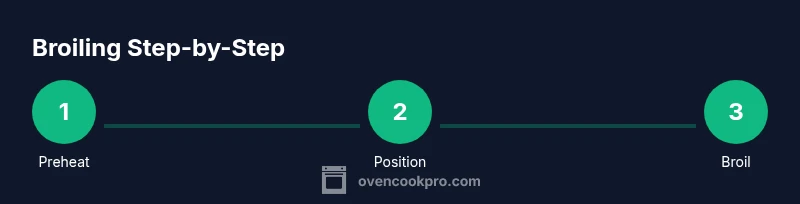
Preheat the broiler and position the rack
Turn on the broiler and allow the oven to reach its operating temperature. Place the rack 4–6 inches from the heat source, adjusting based on the thickness of the food. Use a timer to track how long the preheat lasts.
Tip: If your oven has a door switch for broiling, know whether to keep the door closed or ajar per your model. - 2
Prepare the food and pan
Pat foods dry and lightly oil or season as needed. Arrange pieces in a single layer on the pan or rack, leaving space between items for even browning.
Tip: Even spacing prevents steaming and uneven browning. - 3
Position under the broiler
Slide the pan into the prepared rack position. Keep a close eye during the first minute to gauge heat intensity and prevent sticking or scorching.
Tip: Consider rotating the pan halfway through to promote browning on all sides. - 4
Broil with frequent monitoring
Stay by the oven and watch for rapid browning. Use tongs to rotate or flip items as needed. For delicate items, shorten the time to prevent burning.
Tip: If smoke appears, evacuate the area briefly and check for grease buildup. - 5
Flip or rearrange as needed
Turn larger pieces to ensure uniform surface browning. Cheese-topped items may need a quick stir or spooning of melted cheese to recoat.
Tip: Keep total broiling time short to avoid over-browning. - 6
Check for doneness
For meat, use a thermometer or touch test to confirm interior temperature. For vegetables and cheese, look for a deep brown color and bubbling cheese.
Tip: When in doubt, pull early and finish with residual heat off the burner. - 7
Rest and serve
Let broiled items rest 2–5 minutes to reabsorb juices. Slice and plate with a finishing touch like herbs or lemon.
Tip: Resting improves texture and flavor. - 8
Clean up after broiling
Soak and scrub the pan if needed to remove grease. Wipe the oven interior if there are hot spots or spilled crumbs after cooling.
Tip: Regular maintenance reduces smoke and flare-ups.
Questions & Answers
What is the broiler and how is it different from a grill?
The broiler is an intense heat source from the top of the oven. It browns surfaces quickly and is best used for finishing touches, not full cooking. A grill uses radiant heat from below or outdoors and often sears with a different flavor profile.
The broiler is the oven's top heat source for finishing. It browns fast, unlike outdoor grilling, which uses a different heat source and cook style.
How do I preheat the broiler properly?
Turn on the broiler and let it reach full heat. Place your rack at the right distance before adding food, and avoid opening the door repeatedly during preheating to maintain heat.
Turn on the broiler and wait for it to heat up, then position your rack before placing food.
What foods are best broiled?
Thin steaks, sliced chicken, fish fillets, vegetables with high surface sugars, and cheese-topped casseroles all benefit from a high-heat finish. Avoid very large, thick cuts unless you pre-cook them first.
Best bets are thin cuts of meat, fish, and cheese-tinished dishes; thick cuts may need pre-cooking.
How can I prevent burning cheese under the broiler?
Watch closely and place cheese near the edge of the pan where it melts evenly. Use a timer and lower the heat by moving the rack slightly away if excessive browning occurs.
Keep an eye on it and adjust the rack to protect cheese from burning.
Can I broil with the oven door open?
Some models require the door to be slightly ajar for broiling to maintain heat balance, while others work with the door fully closed. Always consult your manual for your specific oven.
Check your manual: some ovens require the door ajar, others do not.
How do I adapt broiling for gas vs electric ovens?
The basic technique remains the same, but heat intensity and airflow differ. Gas ovens may heat more unevenly, so rotate foods and rely on shorter cook times to avoid scorching.
Heat behavior varies by fuel type; rotate and monitor closely.
Watch Video
Main Points
- Preheat and position correctly for consistent browning
- Dry and oil foods appropriately to promote searing
- Monitor closely and flip as needed to avoid burn
- Rest broiled foods briefly to maximize juiciness
- Clean your equipment to reduce smoke and flare-ups