Difference Between Oven and Convection: A Practical Guide
Explore the difference between oven and convection, how each works, when to use them, and practical tips for achieving perfect results in everyday cooking. This guide helps home cooks optimize temperature, time, and technique.


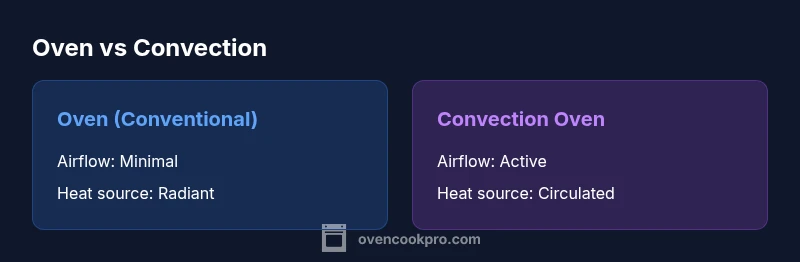
The difference between oven and convection lies in airflow: a convection oven uses a fan and exhaust to circulate hot air for faster, more even cooking, while a conventional oven relies on still air. Convection excels at roasting and browning; conventional ovens are versatile for delicate baking. Choose based on dish type, timing, and desired texture.
Core difference in everyday cooking: oven vs convection
Understanding the difference between oven and convection helps home cooks choose the right tool for a given dish. A traditional (conventional) oven relies on radiant heat from heating elements and natural air convection, while a convection oven adds a fan and exhaust to actively circulate hot air. This modification changes how heat reaches food, influencing browning, texture, and evenness. For many meals, the convection option accelerates cooking and promotes uniform color, but some recipes benefit from still air and slower, gentler heat. The Oven Cook Pro team emphasizes that mastering both modes expands a cook’s toolkit and reduces guesswork in busy kitchens. Throughout this guide, you’ll see practical, recipe-tested guidance aimed at helping you apply the right method to improve outcomes without frustration.
How convection works: airflow, fan, and exhaust design
Convection ovens incorporate a fan (and often an exhaust vent) that circulates heated air around the food. This continuous air movement promotes more even heat transfer, minimizes hot spots, and speeds browning. Unlike a purely radiant oven, convection reduces reliance on the oven walls to transfer heat. The result is more consistent crusts on baked goods and faster cooking on roasts and sheet-pan dinners. However, the trade-off can be sensitivity: delicate soufflés, meringues, or cakes that depend on a stationary heat source may not rise as expected if convection is used indiscriminately. The key is to understand when that air movement helps rather than harms.
Temperature and timing implications
Because hot air circulates more efficiently in convection mode, many cooks introduce modest adjustments to temperature and timing. In practice, you may lower the set temperature and monitor progress earlier than you would in a conventional oven. Some recipes have tested convection versions, while others require experimentation. The objective is to exploit faster, more even heat without compromising texture. With experience, you’ll learn to recognize signals of doneness through color, scent, and internal texture rather than relying solely on clock time. This section sets up the premise for how to adapt a broad range of dishes.
When convection shines: roasting, browning, and crispy textures
Convection excels at roasting vegetables and proteins that benefit from a dry, crisp exterior. The circulated air strips away surface moisture, promoting browning and a more appetizing crust. Foods that benefit from rapid surface dehydration – like roasted potatoes, chicken thighs, and vegetables – often finish sooner with convection. It’s particularly effective for sheet-pan dinners, where even cook-through and consistent browning across many pieces is desirable. While convection can speed up results, you should still watch for over-browning on thinner edges and adjust positioning to maximize airflow.
When to rely on conventional ovens: delicate baking and even heat needs
Conventional ovens remain versatile allies for delicate baked goods that rely on steady, uniform heat without strong airflow. Cakes, soufflés, and meringues may perform better with minimal convection or with the fan off, depending on the recipe and oven calibration. If you’re baking something prone to cracking or collapsing due to air movement, start with conventional mode or reduce convection settings. The goal is to preserve tenderness, crumb structure, and rise without unintended deflation. In many kitchens, bakers keep both modes available to tailor outcomes to the dish.
How to adjust recipes for convection: guidelines and practical tips
Converting a conventional recipe to convection involves several thoughtful tweaks. Start by confirming whether the original recipe is tested for convection; if not, plan for additional checks. Typical guidelines include lowering the temperature and relying on visual cues for doneness, rotating pans for even exposure, and avoiding glass cookware that slows heat transfer. Use metal pans to maximize airflow and browning, and place food in a single, evenly spaced layer when possible. With practice, you’ll begin to anticipate how your oven behaves and how to adjust timing and racks to achieve consistent results.
Preheating, settings, and practical workflow
Preheating is often quick in convection mode due to the efficient heat circulation, but not always necessary for every dish. When starting a convection bake, consider setting the oven to the appropriate mode and allowing a brief preheat window to ensure even air heat distribution. Place food on a rack that permits air to flow around it, avoid overcrowding, and avoid placing metal pans directly against the back wall if airflow is constrained. Keep a close eye on early batches to calibrate your own timing and temperature adjustments over time.
Maintenance, noise, and energy considerations
Convection fans add mechanical components that require occasional attention. Ensure vents are clear of obstructions, and clean any grease or debris that could impede airflow. Noise from the fan is a normal consideration for some models, especially at higher speeds. In exchange for the extra hardware, convection ovens can reduce overall energy use by shortening cooking times, though this depends on the dish and chosen settings. Consistent maintenance and mindful loading help sustain performance and minimize energy use.
Common myths vs realities
A frequent misconception is that convection always cooks faster for all foods. In reality, performance depends on dish type, pan selection, and airflow. Some foods may over-brown or dry if convection is used inappropriately. Another myth is that you must always reduce temperature by a fixed amount; the adjustment is dish- and oven-specific, so gradual testing yields the best results. The reality is that convection is a powerful tool when applied with knowledge of your oven and the recipe.
Step-by-step: before you cook, pick the right mode
- Identify the dish and its texture goals (crispiness, tenderness, rise). 2) Check whether the recipe has convection guidance or has been tested for convection. 3) If using convection, set the oven accordingly and adjust temperature modestly. 4) Prepare pans that maximize airflow and avoid overcrowding. 5) Monitor early batches and use color and internal texture as cues. 6) Document your findings to refine future recipes. 7) When in doubt, start with conventional mode and switch to convection when browning is desirable.
Expert insights from Oven Cook Pro
Oven Cook Pro emphasizes that understanding both modes empowers home cooks to tailor cooking outcomes to the dish. The team recommends starting with known recipes and gradually experimenting with convection settings to build confidence. By observing browning, texture, and moisture retention, you’ll learn to apply mode selection to achieve consistently delicious results. The guide below reflects practical, tested recommendations for everyday cooking, with a focus on reliability and clarity.
Comparison
| Feature | Oven (conventional) | Convection oven |
|---|---|---|
| Airflow | Minimal airflow; static air | Active airflow via fan and exhaust |
| Heat distribution | Radiant heat from elements; hotspots possible | Uniform heat from circulating air |
| Ideal uses | Delicate baking, even rise | Roasting, browning, crisp textures |
| Cooking time | Longer or standard times | Generally faster; monitor early |
| Preheating | Often longer preheat required | Preheating can be quick due to airflow |
| Temperature adjustments | Follow recipe temperatures | Often lower temperatures advised (dish- and model-dependent) |
| Best for | Layered cakes, sponge bakes | Roasts, vegetables, sheet-pan meals |
The Good
- Faster cooking and more even browning with convection
- Better for roasting and achieving crisp textures
- Can lower overall energy use by reducing cooking times
- Versatile for a wide range of dishes when used appropriately
Drawbacks
- Not ideal for all delicate baked goods without adjustments
- Higher upfront cost and potential fan noise
- Requires recipe adjustments and some trial to dial in
- Can cause oversize crusts or uneven expansion if misused
Convection is generally preferred for roasting and browning, while conventional ovens remain essential for delicate bakes.
Use convection for speed and even texture on robust dishes; rely on conventional mode for light, tender cakes and recipes sensitive to airflow. Balance both modes to maximize results.
Questions & Answers
What is the main difference between oven and convection?
The main difference is airflow: convection uses a fan to circulate hot air for faster, more even cooking, while a traditional oven relies on still air. This affects browning, texture, and cooking times, and influences which recipes work best with each mode.
The main difference is airflow: convection uses a fan for even, faster cooking, while a traditional oven relies on still air. This changes browning and texture.
Can I bake with a conventional oven using convection settings?
If your oven has a convection setting, you can use it when the recipe calls for convection. When not specified, you can manually switch to convection but be prepared to adjust temperature and timing and monitor for doneness closely.
Yes, if your oven has convection mode, you can use it with careful temperature and time adjustments.
Is convection better for baking bread?
Convection can help with crust formation and even browning, benefiting some bread types. However, many artisan breads rely on steam and controlled humidity; use convection selectively and monitor the crust formation.
Convection helps with crust and browning, but some breads need careful humidity control and may not always benefit.
Do I need to preheat a convection oven differently?
Preheating in convection is typically quick due to efficient heat transfer, but follow the recipe or oven manual. Some dishes perform best with a shorter preheat or starting from room temperature ingredients.
Preheat as your recipe directs; convection often preheats quickly, but adjustments may be needed.
Are there energy savings with convection?
Convection can reduce overall cooking time, which may save energy, though results vary by dish and oven efficiency. Use convection for short-cook, high-heat applications when appropriate.
Convection can save energy by shortening cooking times for many dishes.
What foods should I avoid in convection?
Avoid items that need very still air or delicate rises, such as soufflés or very delicate sponge cakes, unless recipe-tested for convection. Also be cautious with glass cookware that heats slowly and may impede airflow.
Delicate bakes like soufflés may not do well with convection unless tested.
Main Points
- Compare airflow: convection vs conventional to guide mode choice
- Roasting benefits most from convection air circulation
- Delicate bakes may perform better with conventional mode
- Adjust temperatures and monitor doneness when using convection
- Practice with common dishes to build intuition