Average Oven Size: A Practical Guide for Home Cooks
Explore how the average oven size influences kitchen layout, capacity, and performance. This guide covers standard widths, heights, and configurations for single, wall, and double ovens, with practical planning tips for your space.


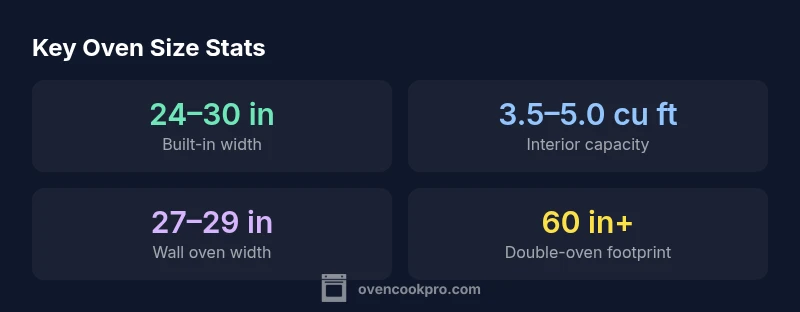
Average oven size typically refers to built-in units that are 24 to 30 inches wide with interior capacities around 3.5 to 5.0 cubic feet. Wall ovens usually fit openings around 27 to 29 inches wide, with double ovens needing wider, often 60 inches total. When planning, balance available cabinet space with clearance for doors and ventilation.
What 'average oven size' means in practice
In everyday kitchen planning, the term average oven size helps homeowners compare options across brands and configurations. According to Oven Cook Pro, understanding this size category isn't about chasing a single number; it's about matching your space, budget, and cooking needs. For many households, the practical starting point is the standard built-in width of 24 inches or the more expansive 30 inches. Inside these shells, usable cavity space typically falls in the 3.5 to 5.0 cubic feet range, enough for most weekday roasts, sheet pan dinners, and holiday baking. When you include wall ovens, double units, or combination appliances, the size vocabulary grows to include widths near 27–29 inches and total cabinet widths up to 60 inches or more. In all cases, the key is to align the oven’s footprint with your kitchen’s cabinet depth, ventilation clearance, and the door swing.
How oven size is measured: width, height, and depth
Ovens are three-dimensional equipment, so precise measurements ensure a proper fit. Width determines whether the unit slides into a cabinet opening; height must align with adjacent cabinetry for a seamless look; depth affects door clearance and ventilation. Start with the exterior dimensions published by the manufacturer, then cross-check with your cabinet opening allowances. Add 1/8 to 1/4 inch for breathing room around sides and top to account for heat expansion and installation tolerances. Don’t forget to measure the oven door swing — you need space to open fully without hitting nearby drawers or walls.
Common configurations and what they imply for space
The most common configurations are built-in single ovens (24
and 30
widths) and wall ovens (usually 27
widths per unit). Double ovens combine two compartments, often within a 60
footprint. Each configuration has its space footprint: single ovens sit comfortably under a countertop; double units demand a wider opening and may require upgraded cabinetry or a dedicated wall cavity. When you choose a configuration, map out work zones in the kitchen: prep in front of the stove, baking near a roomy oven, and easy transfer to a cooling rack or counter.
How size affects capacity and cooking performance
Larger interiors generally enable bigger roasts and more sheet pan space, but not all extra width translates to better performance. Oven insulation, rack configuration, and convection options influence cooking outcomes just as much as absolute size. A 30
unit with efficient airflow can perform on par with a 24
unit in many routines. The key takeaway is not only capacity but also how heat is distributed and how easily you can access racks without crowding the cooktop. If you bake frequently, consider interior geometry and rack spacing to maximize convection and browning versus even heat distribution.
Planning your kitchen around the average oven size
Begin by surveying your kitchen space: cabinet depth, wall thickness, and the required clearance around the oven. Measure the opening for width, height, and depth, then add a clearance cushion for thermal expansion and door swing. Align your choice with the overall kitchen layout: are you replacing an existing unit, or installing into new cabinetry? Consider ventilation and any adjacent appliances to avoid heat buildup. If you’re upgrading from a smaller unit, plan for a temporary setback in cabinet depth and ensure the new oven can be integrated cleanly with existing plumbing or electrical circuits.
Pros and cons by size category
Small (under 24–inch” width): saves space, but limits capacity for large meals. Standard (24–30 inches): balance of capacity and fit; most households find success here. Large/double (60 inches total for doubles): expansive capacity, but demands more space, stronger cabinetry, and often higher installation costs. Think about your peak cooking periods, how often you bake in bulk, and future needs, such as entertaining or growing family size, to pick the right balance between footprint and function.
Practical tips: measuring, buying, and installation
Before buying, double-check the cabinet opening dimensions, door swing clearance, and the appliance’s ventilation requirements. For installations, hire a licensed professional to verify electrical or gas connections and ensure proper clearance from combustible materials. If you’re moving from a single to a double oven, you may need to adjust wiring, routing, or the surrounding cabinet structure. Always keep the manufacturer’s installation instructions on hand and measure twice before final removal of the old unit.
Maintenance considerations for different sizes
Larger ovens may require more careful cleaning access and more frequent gasket inspections due to increased door area. Smaller units can be easier to maintain but might force you to manage space differently, as you juggle the oven clearance with adjacent cabinets and drawers. In any case, schedule routine checks for door seals, racks, and interior lighting. Use the right cleaners specified by the maker to avoid damage to enamel and chrome surfaces and maintain energy efficiency over time.
Final checks and next steps
List your priorities: do you value maximum baking capacity, or a more compact footprint for a smaller kitchen? Verify the return policy and warranty, especially for larger models that require specialized installation. Create a simple blueprint of your kitchen with measured openings and draw in potential oven placements. With a clear plan, you can confidently choose the average oven size that fits your space, your budget, and your cooking style.
dataTableHeaderNote1NewlineVeryLongSectionPlaceHolder1":""],
dataTable
caption for table
Size ranges for common oven configurations
| Category | Typical width | Notes |
|---|---|---|
| Built-in single ovens | 24–30 inches | Common width options |
| Wall ovens (single) | 27–29 inches | Standard width for single wall units |
| Double ovens | 48–60 inches | Two units side-by-side, wider opening |
Questions & Answers
What is considered the average oven size for most kitchens?
Most homes use built-in single ovens in 24–30 inch widths. Wall and double ovens widen the footprint but offer more capacity for large meals or entertaining. Always verify your cabinet opening before purchasing.
For most kitchens, a 24–30 inch built-in oven is the sweet spot, with larger setups for special layouts.
How do I measure for a new oven in an existing kitchen?
Measure the cabinet opening (width, height, depth), check door swing clearance, and confirm ventilation space. Compare these measurements to the oven’s exterior dimensions and add a cushion for heat expansion.
Measure width, height, depth, and door clearance; don’t forget ventilation space.
Do I need a permit or professional installation for a new oven?
Electrical or gas connections often require licensed professionals. They’ll verify clearances, ventilation, and safe installation per local codes. Check manufacturer instructions for the unit you choose.
Professional installation is usually required for safety and code compliance.
What should I consider besides width when choosing oven size?
Also assess interior capacity, rack configuration, convection options, and the surrounding cabinet depth. These factors influence how you cook and how often you’ll use the oven.
Look beyond width to capacity, racks, and features that affect cooking results.
Are freestanding ranges a substitute for built-in ovens in terms of size?
Freestanding ranges combine oven and cooktop in one unit and have different footprint considerations. If space is tight, a compact range might be better; for flexibility and even baking, a separate oven set could be advantageous.
A freestanding range can save space if you don’t need separate ovens.
“Choosing the right oven size is foundational to kitchen flow and cooking efficiency. A well-sized unit not only fits your space but also supports reliable performance over years of use.”
Main Points
- Know your space: measure width, height, and depth before choosing an oven
- Plan for door swing and ventilation to avoid clearance issues
- Single 24–30 inch ovens balance capacity and cabinet fit
- Double ovens offer high capacity but require a wider cabinet opening